A shallow tray of water can rescue an awkward watering session when a dry potting mix refuses to absorb a pour from above. Water enters through the drainage holes and moves upward through the mix, giving the root ball another route to moisture. That usefulness has made bottom watering popular, sometimes as a universal routine. It is better understood as one technique with clear limits. The plant still needs an appropriate drying interval, a draining container, and a root zone that is not left submerged. Watch what the mix actually does rather than assuming every pot will absorb the same amount in the same time.
Check that the plant needs water before preparing the tray. Bottom watering does not correct a root ball that is already wet, and it can extend the problem if a drooping plant is watered without checking moisture. A fern and a succulent have different requirements even when their pots look similar. Feel below the surface or use a probe, then consider the container's weight. A heavy pot with wet lower mix needs inspection rather than another soak. The technique is most useful when water can move through the mix by capillary action and the container has clear openings through which it can enter.
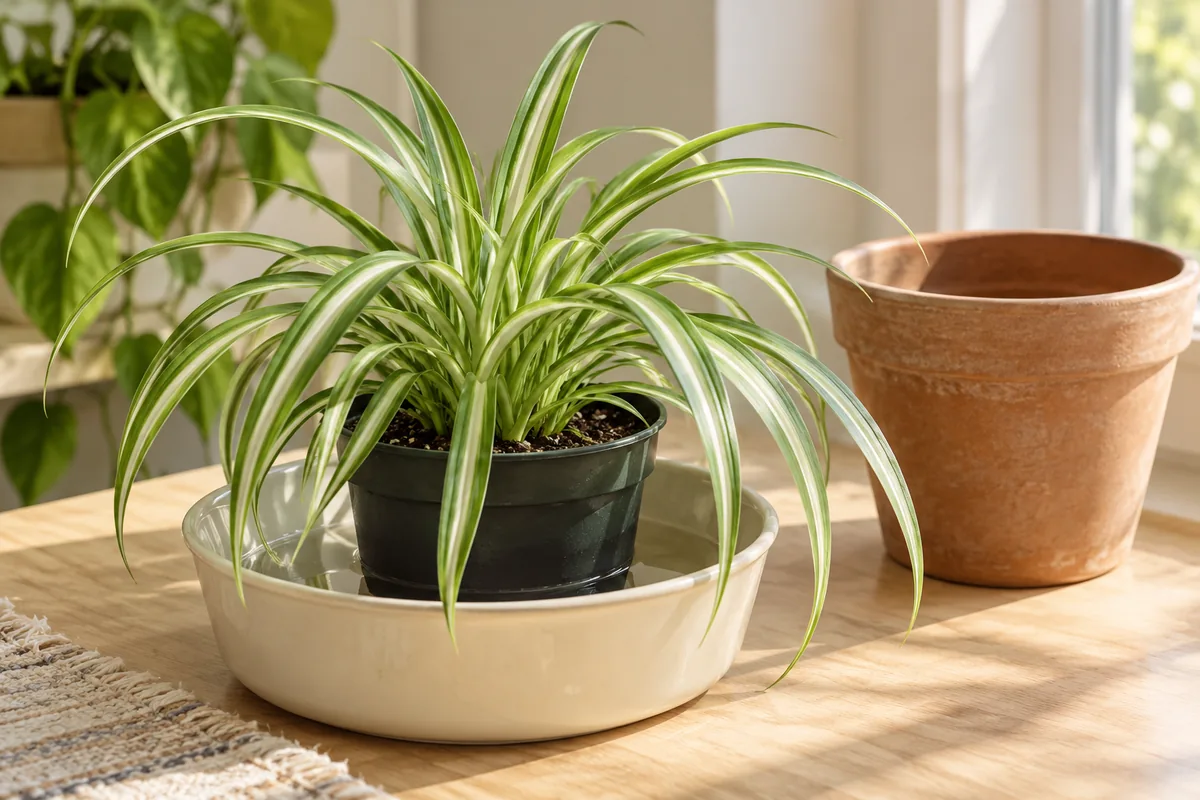
Use a clean tray or basin and a modest depth of water that reaches the lower drainage holes without flooding the plant's crown. Place the pot steadily and observe as the mix absorbs moisture. Coarse bark, fine peat based material, and mineral rich mixes behave differently, so a universal soaking time is unreliable. Check the pot's weight and the moisture higher in the root ball after a short interval. Add only what is necessary for the intended watering. The aim is to moisten the roots evenly, not to keep topping up a reservoir beneath an ordinary container until the entire pot stays saturated indefinitely.
Remove the pot once the root ball has absorbed enough water and let it drain fully. Empty the tray afterward. A container left standing overnight can remain much wetter than intended, especially in a cool room with slow growing roots. If the upper mix never changes despite prolonged soaking, inspect the material and root arrangement rather than simply extending the time. A badly shrunken or deteriorated mix may need a different rewetting approach or repotting. Water entering from below is not proof that the whole root system has received a suitable drink. Compare the result with the plant's needs and the condition of the mix.
Bottom watering can keep splashes off foliage and reduce disturbance of a loose surface. It can also make a dense crown easier to water without pouring into its center. Those practical advantages do not remove the need for cleanliness. Use fresh water for separate pots when a shared tray could transfer unwanted material between containers. Clean the basin after use and avoid soaking one pot in runoff from another. A small nursery container is easier to manage this way than a very heavy floor planter. Choose the technique that lets you observe the roots and drainage without creating a handling problem.
Dissolved minerals and fertilizer residues can accumulate because bottom watering does not routinely carry them out from the top through the drainage holes. Watch for a pale crust on the surface, pot rim, or drainage openings. Periodic top watering and a suitable flushing routine can help move residues out of a freely draining container. Follow fertilizer directions and account for nutrients already present in fresh mix. Using water with lower mineral content may be useful where the local supply leaves substantial deposits. A surface that looks neat after bottom watering can still conceal a growing concentration of salts, so keep the whole root zone in mind.
Do not confuse an ordinary pot in a tray with a purpose designed reservoir planter. A reservoir system uses a particular structure, water level, and mix to manage moisture, and its instructions should be followed. Leaving a standard nursery pot in standing water creates a different arrangement. Plants that need substantial drying between drinks may be poorly suited to a continuously supplied lower root zone. If you change methods, watch the moisture pattern closely over several cycles. The same plant may use water differently after repotting or moving to a brighter window, so a technique that once worked needs occasional review rather than permanent automatic use.
A flexible routine often uses more than one method. Top watering can provide an even drink and help carry residues away, while a controlled bottom soak can be useful when the mix is difficult to rewet or the foliage blocks access. The deciding factors remain the plant, the root ball, and your ability to drain the container afterward. Record how the pot feels when fully moistened and when it is ready for water again. That comparison matters more than loyalty to a particular method. Bottom watering works best as an observed practical tool, with a clear end point and an empty tray when the session is finished.