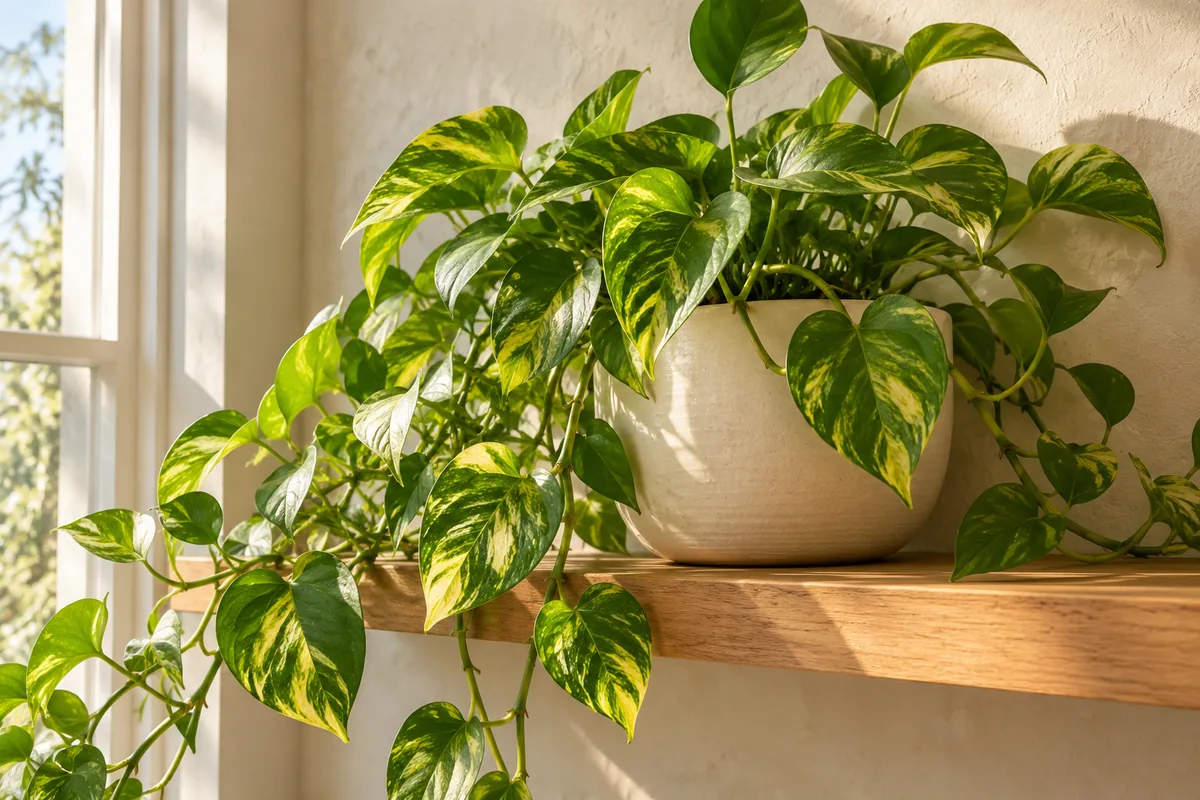
A pothos vine can travel a surprisingly long way before anyone notices that the top of its pot has become sparse. The leafy end keeps moving across a shelf while older sections receive less light and lose some of their fullness. Keeping golden pothos attractive is partly a matter of looking back toward the pot. Give the crown useful daylight, inspect the soil before watering, and shorten a few vines when they begin outgrowing the space. These small decisions produce a more convincing display than letting every stem run as far as it can and trying to hide the bare sections later.
Golden pothos grows best with bright indirect light. A shaded position may keep the plant alive, yet its stems often lengthen and the golden markings become less prominent. Place the pot where the leaves at soil level can see the window, rather than behind a tall ornament or beneath a deep shelf. Avoid sudden exposure to a hot afternoon sunbeam. Leaves formed in subdued light need time to adjust to stronger conditions. Turn the pot occasionally if the crown starts leaning strongly toward one side, and check that trailing vines are not disappearing into a dark space behind furniture.
Feel the potting mix before adding water. Let the surface and some of the upper root zone dry, then water the whole root ball thoroughly and allow excess water to leave the drainage holes. A soft, drooping vine with very dry soil needs a different response from one sitting in heavy wet mix. Look at the container and the moisture first rather than treating every drooping leaf as an invitation to water. Decorative outer pots are convenient, provided collected water is emptied promptly. Roots hidden in a puddle can decline even when the upper surface looks pleasantly dry.
A modest container with an open houseplant mix makes the watering pattern easier to judge. Coarse bark or a suitable porous amendment can help a dense commercial mix drain more freely. Pothos does not need a large pot to support a long vine. Repot when roots have filled the existing container and the plant begins drying unusually fast or repeatedly lifting the root ball. Inspect the roots before moving up a size. Loosen circling roots gently where possible and keep the stem bases at their previous depth. A dramatic jump in pot size usually complicates care instead of improving growth.
Pruning is the simplest way to bring a trailing plant back into proportion. Choose a point just above a node on the remaining vine and make a clean cut with a suitable tool. New growth can develop from nodes below the cut, depending on the plant and conditions. Shorten selected stems rather than trimming every vine to exactly the same length. This leaves a natural outline and maintains foliage while new shoots develop. The removed sections can become cuttings if they include nodes. A leaf with its stalk and no section of the vine does not provide the same starting material.
For a fuller crown, root several cuttings and add them around the edge of the pot after they establish. Keep the new roots lightly moist while they settle into the mix, then return to the normal drying pattern. Vines can also climb a support, which changes the display and may encourage larger leaves as the plant matures. Attach the main stems loosely and avoid pinning leaf stalks. A trailing pothos normally keeps smaller juvenile leaves indoors. There is no need to force a climbing habit if a shelf display suits the room; simply provide enough light along the route the vines follow.
Dust dulls the foliage and makes it harder to notice changes in leaf color. Wipe leaves gently with a damp cloth and inspect the undersides while each vine is accessible. Remove yellow leaves once they release easily or trim their stalks close to the stem without damaging the node. Use a general houseplant feed only while growth is active and follow its dilution instructions. More fertilizer cannot compensate for a dark position or a root ball that never dries. A pale leaf near the base may reflect age, while a rapid run of yellowing leaves warrants a check of watering and drainage.
Watch the spacing between the newest leaves as a practical measure of the growing position. Shorter gaps and leaves of a reasonable size usually indicate that the vine is receiving useful light. If each new section becomes longer and thinner, improve the position before making repeated cuts. Keep vines away from doorways where they may catch and from surfaces that stay damp after watering. A pot that remains leafy at the crown and carries several different vine lengths will usually look fuller than a single very long runner. Regular observation keeps the plant graceful without turning its care into a rigid routine. Check the crown after arranging books or ornaments nearby, since a small change on the shelf can shade the newest shoots.