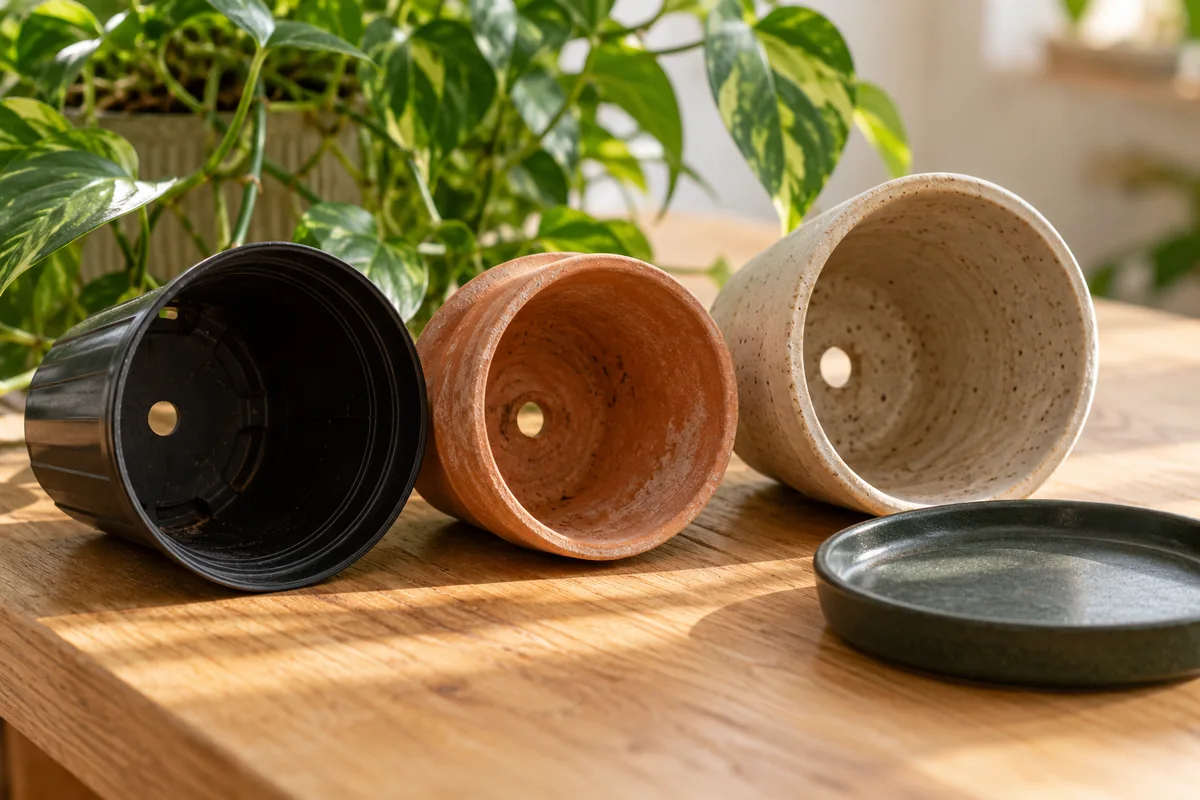
The largest pot on the shelf can seem like the generous choice, especially when a plant is beginning to crowd its current container. Roots need room to grow, yet the space around them also holds water. A small root ball placed in a much larger volume of mix may use only a fraction of that moisture between waterings. The outer area can stay damp while the plant itself makes little progress. A better choice begins with the roots you have, not the size you hope the plant will reach. Remove the inner pot from its cover and assess the actual growing container before choosing its replacement.
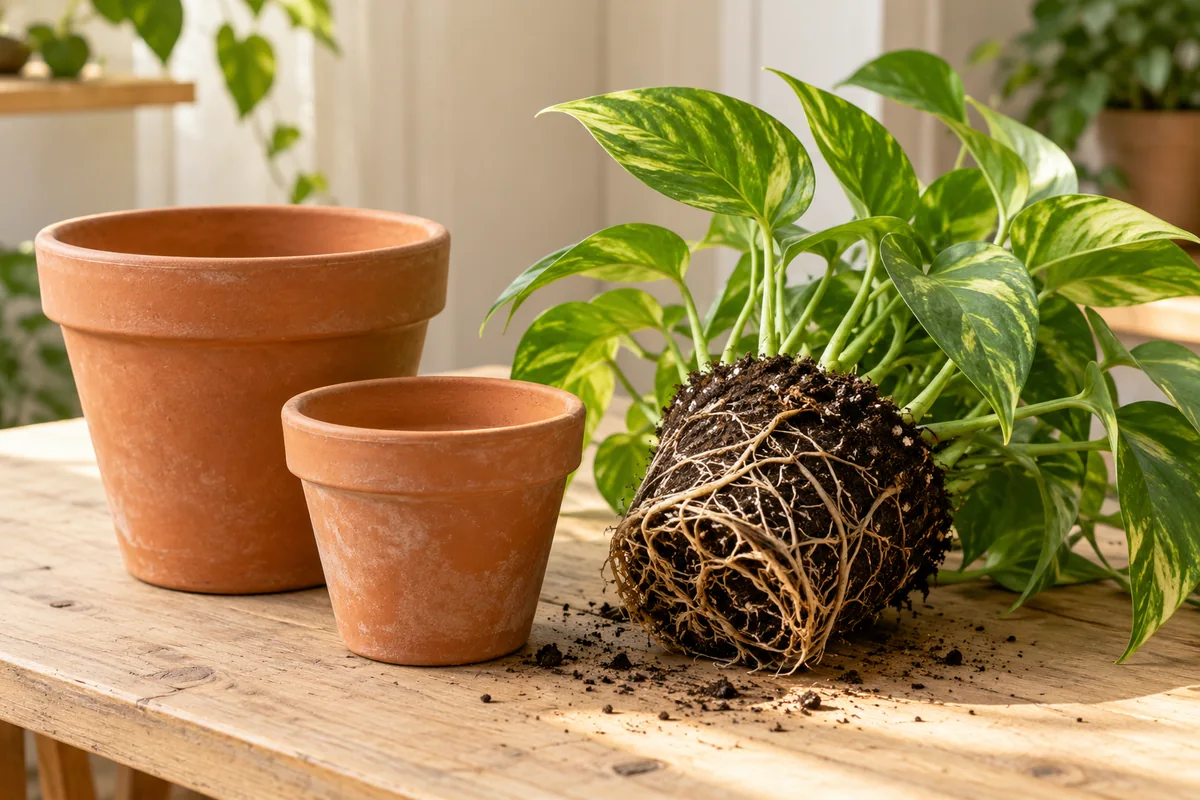
Check whether the plant needs a larger container at all. A few roots visible at the drainage holes are one clue, but they do not describe the whole root ball. If the plant slips out easily, support it and look for a dense network circling the outside, limited loose mix, or a root mass that has taken the exact shape of the pot. Faster drying and reduced growth can support that observation. A plant with plenty of mix remaining between its roots may need refreshed growing medium or better light rather than more space. Do not enlarge the container automatically just because another year has passed on the calendar.
For many established houseplants, moving up by one ordinary pot size is a reasonable starting point. Compare the internal dimensions, since thick walls and tapered shapes can make two pots with similar exterior widths hold different volumes. There should be room for a modest layer of fresh mix around the root ball without creating a broad empty ring. Height matters too. A tall narrow pot can contain much more material beneath a short root system than you expect. Hold the old pot beside the new one and imagine the root ball sitting at its original planting depth. That simple comparison often reveals an excessive increase before any mix is opened.
Consider the plant's growth habit. A spider plant with thick crowded roots may fill a suitable new pot relatively quickly during active growth. A mature Zanzibar gem can move more slowly and stores water in substantial underground structures, so oversized containers deserve particular caution. A shallow rooted plant may fit a broad bowl better than a deep planter, provided drainage and watering remain suitable. A tall specimen also needs stability, yet stability does not require burying the roots in a large reservoir of unused mix. A sturdy outer container around an appropriately sized nursery pot can supply weight while keeping the root zone manageable.
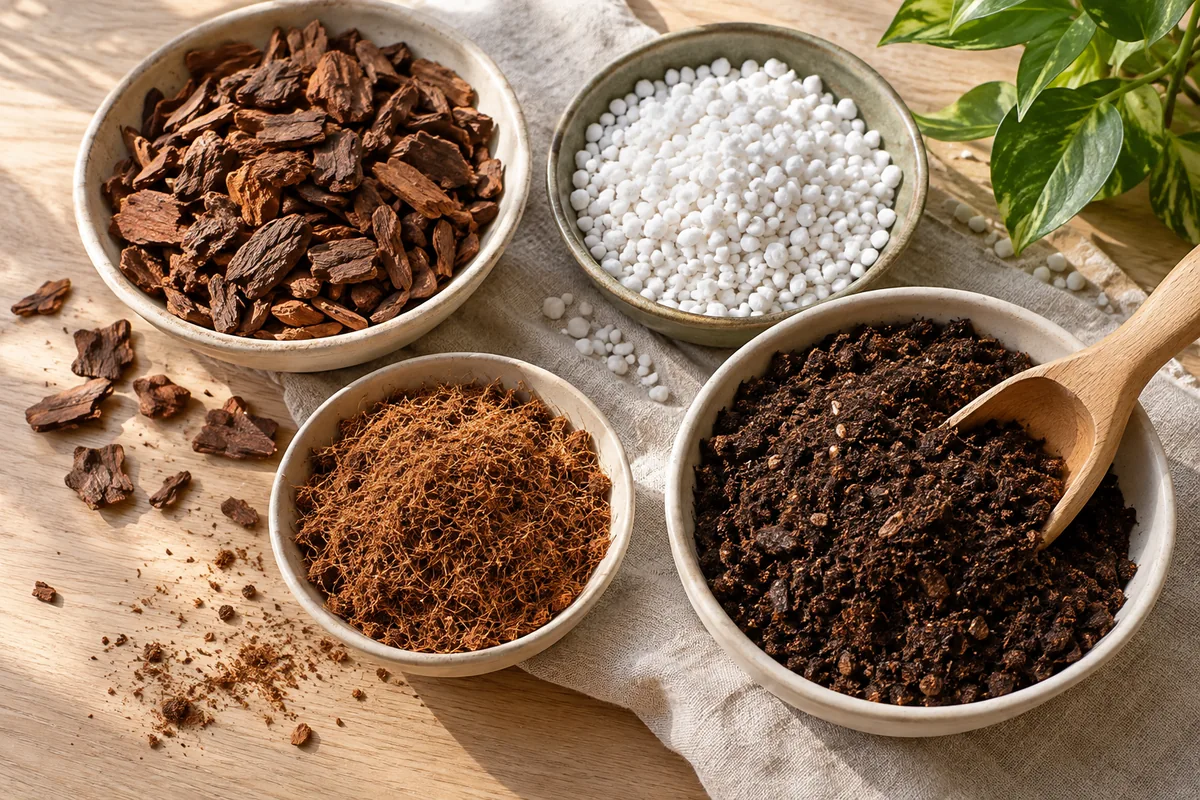
Match the growing medium to both the species and the container. Coarse bark, fine coir, mineral particles, and composted ingredients retain moisture differently. A pot with good drainage can still hold a persistently wet mix if its texture is unsuitable or its volume greatly exceeds the roots. Avoid adding a layer of stones to compensate for an oversized pot. Fill the root zone with an appropriate medium instead. If a decorative container is much larger than the plant needs, use it as an outer cover with a separate inner pot. Keep the inner base above any collected drainage water and inspect that hidden space after each watering.
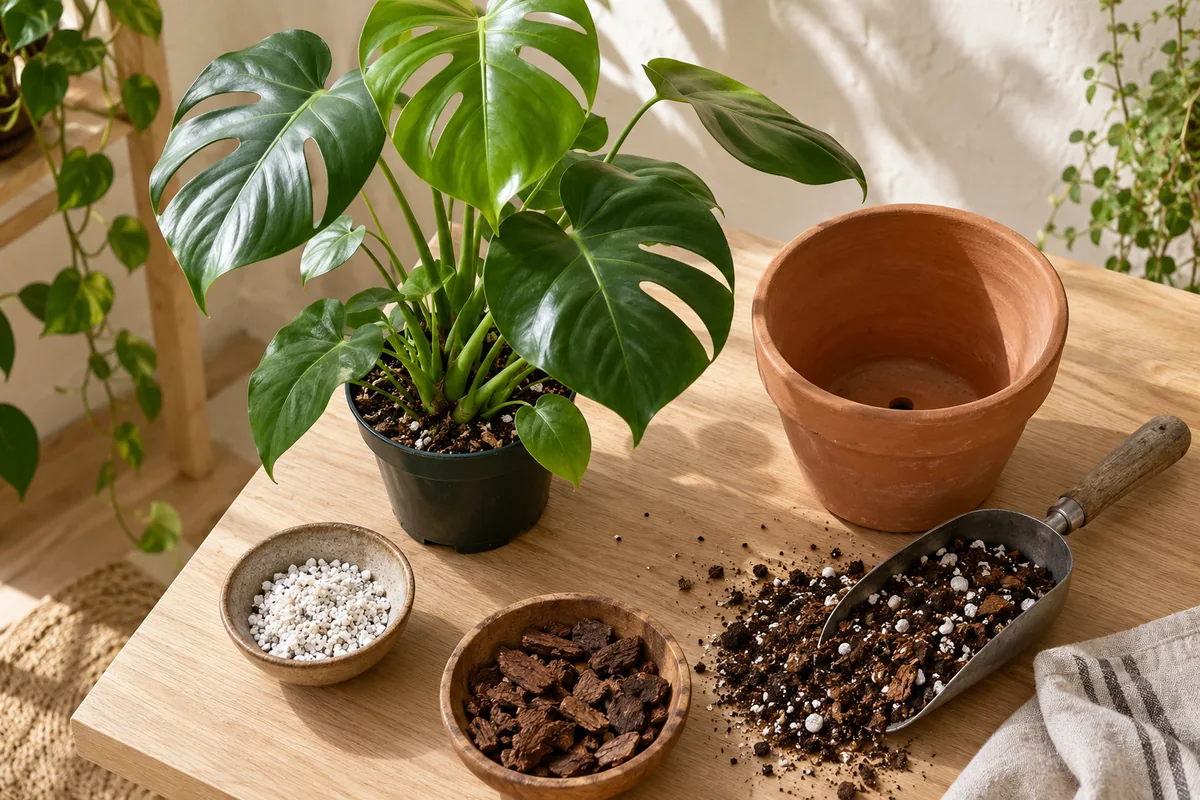
Repot without burying the stem or crown more deeply. Place enough prepared mix beneath the root ball to bring the old surface to a comfortable distance below the rim. This leaves room for watering without changing the plant's original depth. Fill the sides gently, allowing the mix to settle around the roots without heavy pressure. If roots have circled tightly, loosen only what is practical for that species and avoid tearing the entire ball apart merely to make it look neat. Use clean tools for any necessary cuts. The final container should support the plant firmly through its mix and appropriate staking, not through forceful compaction.
Expect the watering interval to change after the move. New mix may hold more moisture than the depleted material it replaces, and the slightly larger container increases the reserve available around the roots. Check the center as well as the fresh outer ring where possible. A pot that was ready twice a week before repotting may need longer now. Learn its new weight after watering and complete drainage, then compare it as the mix dries. Keep the plant in a suitable stable position during this period. Moving it into much dimmer light at the same time makes the change in moisture use harder to interpret.
A well chosen pot gives the roots a useful next step rather than a distant final destination. Over the following months, look for normal new growth and a predictable drying pattern. If the plant continues filling its container, another modest move can be made when the roots justify it. If growth is slow, inspect light and root conditions before choosing yet another larger pot. The right size is not a fixed number for every plant of the same height. It is a practical relationship between the existing roots, the growing medium, the container shape, and the environment in which that plant will spend its next period of growth.