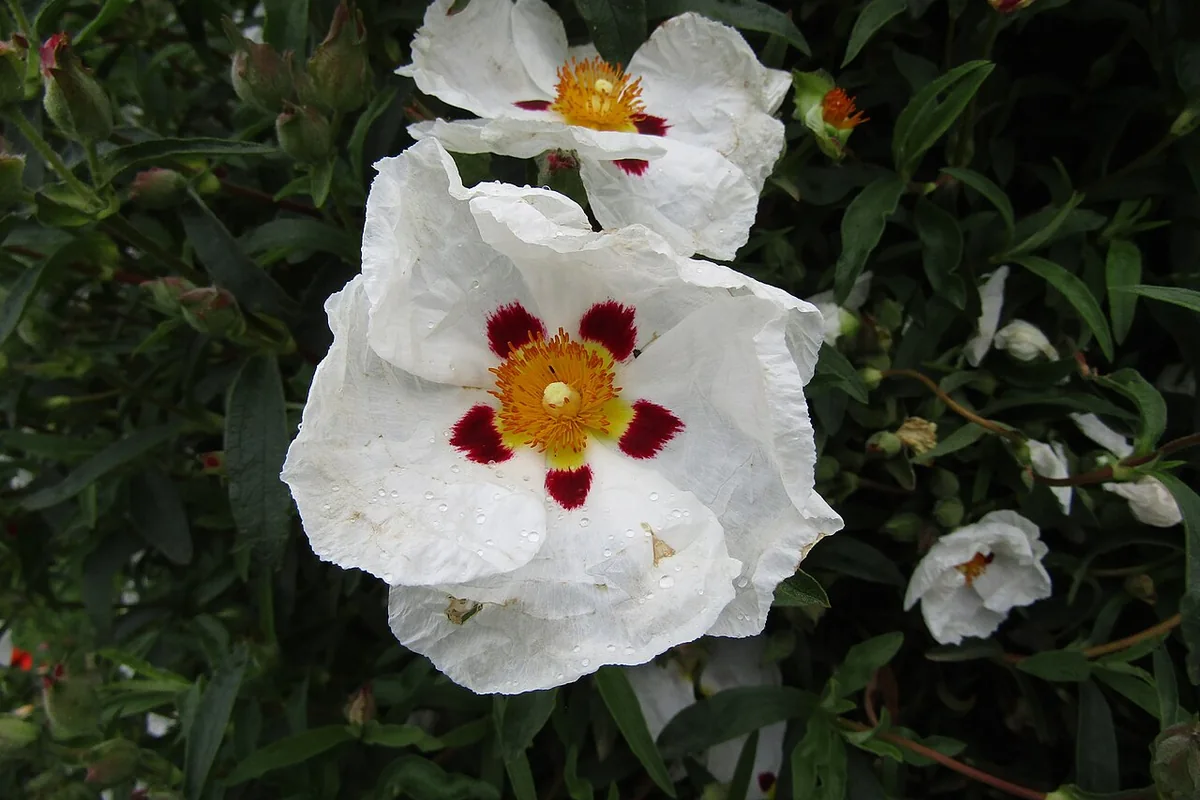
Sageleaf Rockrose brings small textured sage like leaves and white flowers on a spreading shrub to a container collection. The botanical name is Cistus salviifolius, and keeping that name attached to the pot helps distinguish this plant from other flowers sold under a similar common label. Plan for the living structure as well as the flowers, with space to see its natural outline and reach the roots for watering. The container should suit the permanent woody framework as well as the flower display. A compact named selection is often easier to manage than a vigorous species seedling, but the exact label still matters. Picture the mature width before placing the plant among closely packed pots. Stems need light near their bases, and the keeper needs enough room to water the roots without continually wetting a crowded crown.
Choose full sun with enough space for a low spreading outline for sageleaf rockrose. This preference is the starting point for the growing position, rather than a promise that every bright looking part of the home will behave alike. An indoor corner that seems pleasantly bright to a person may be insufficient for a sun loving flowering shrub. Use an outdoor position when the season permits, with acclimation after indoor storage. A sheltered site does not have to be a closed humid enclosure. Look for useful sunshine together with airflow around the branches. Crowded neighbouring foliage can gradually shade the lower framework even when the upper flowers still receive light.
For Cistus salviifolius, the practical watering principle is to water a container after the upper root zone dries. The important distinction is the condition of the occupied root ball, not whether the pot happens to stand indoors or outside on a particular day. Drought tolerance in established ground is not a promise that a small pot can remain dry indefinitely. Feel the mix and learn the weight of the occupied root ball. When water is needed, apply enough to wet it evenly and let the excess escape. In cold weather, distinguish a dry surface from a wet lower layer. Keep the stem base open rather than hiding it beneath a damp ornamental mulch.
Use a lean gritty mix with particularly good winter drainage when potting sageleaf rockrose. The stem and root arrangement deserves as much attention as the decorative colour of the container. Drainage begins with the container opening and the structure throughout the mix, rather than a thick hidden layer of stones. Use a pot stable enough for a woody crown but only sensibly larger than the roots it contains. Repot with minimal unnecessary disturbance and retain the existing planting level. Avoid surrounding a small root ball with a large mass of rich damp material that remains wet long after the plant has stopped growing.
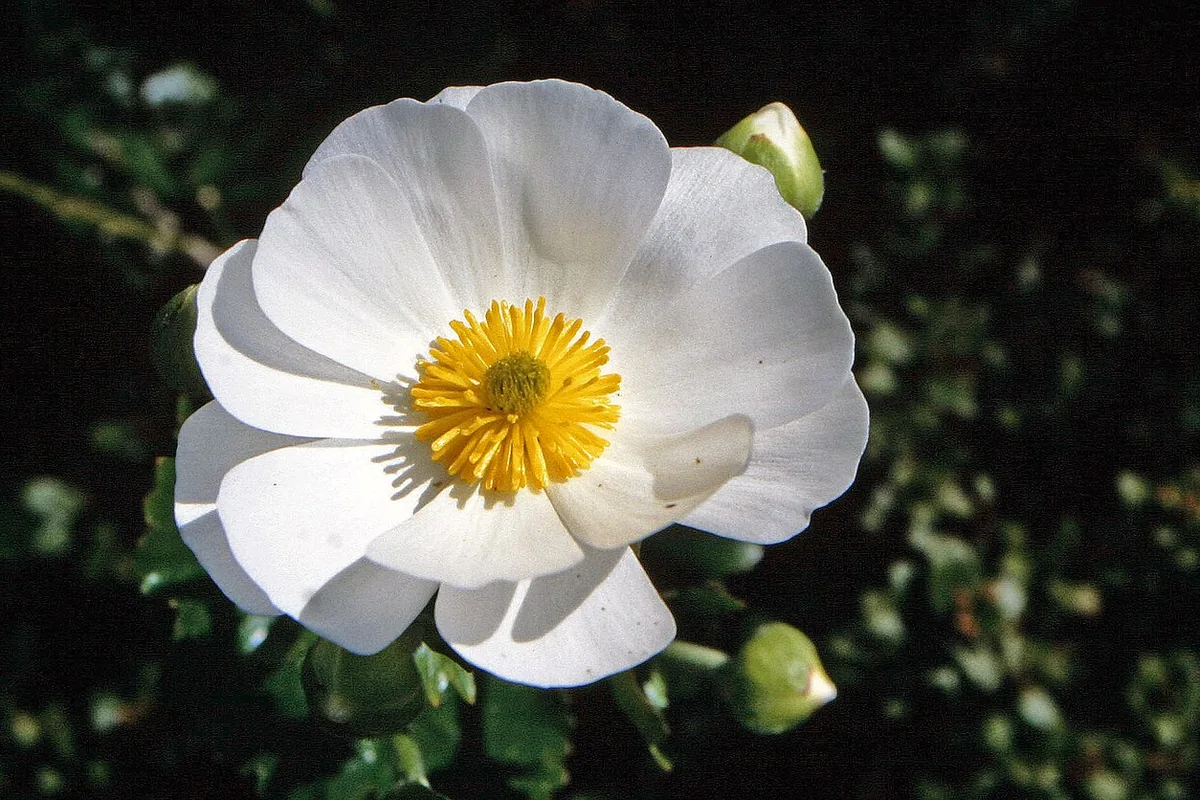
The flowering behaviour of sageleaf rockrose is worth watching closely: white saucer flowers open in succession through the main spring to summer display. Expectations should be based on this plant and the selected cultivated form, rather than a photograph of an unrelated species carrying its peak display. The flower season is part of the plant's rhythm, so a temporary pause does not automatically need a stronger feed. Useful sunlight and an appropriate root environment come first. Apply a suitable fertilizer sparingly during genuine growth, taking account of nutrients already in fresh mix. Observe where flowers are carried and when the next shoots form. This makes it easier to keep a pleasing outline without repeatedly removing the next display.
For routine shaping, lightly shape while stems remain leafy because hard rejuvenation can fail. That timing and method belong to the way Cistus salviifolius builds its flower bearing growth. Woody branches do not all reshoot equally after severe cutting. Preserve a leafy framework and begin size control while the plant is young enough to respond. Remove spent flowering material with an understanding of where live buds remain. If a shrub is already much larger than the container, compare selective renewal with replacing it by a manageable young plant. Repeated harsh trimming is rarely a sound substitute for choosing an appropriate size at the beginning.
When the season changes, shelter the root pot from extreme cold and persistent winter saturation. The seasonal routine for sageleaf rockrose therefore needs a review of its actual growth, rather than an automatic continuation of the busiest summer watering pattern. Shelter needs to address cold wet roots as well as the air above the branches. Keep drainage holes clear and avoid a saucer that stays full through repeated winter rain. A suitable cool bright protected place is often more useful than a hot dry living room. Check moisture occasionally even when the plant is growing slowly, and do not use the heavy summer feeding and watering routine through a dim season.
To raise another sageleaf rockrose plant, root suitable semi ripe cuttings or raise species from seed. The best route depends on the material that this species can provide and whether preserving a selected cultivated form matters. Choose propagation material that is firm enough to handle but still capable of rooting. Use clean tools and keep each batch identified, especially where several similar scented or grey leaved shrubs are grown together. A small draining container makes moisture easier to judge. Protect cuttings from severe sun while maintaining adequate light and airflow. Seedlings may vary, so cuttings are usually the more predictable route when retaining a particular cultivated form is important.
One particularly useful point when keeping Cistus salviifolius is that crowding by larger neighbouring pots can shade the base and increase awkward bare growth. Start the next inspection with that detail in mind and compare the affected area with the rest of the plant. Inspect the interior framework as well as the flower covered tips. A growing gap at the base can indicate shade or an ageing branch, while soft dark tissue suggests another problem. Check the root zone before responding to limp growth. Separate routine seasonal changes from sudden decline by keeping notes on exposure, pruning and watering. The useful goal is a firm balanced plant that can repeat its cycle, rather than a permanently forced flush of soft leaves.