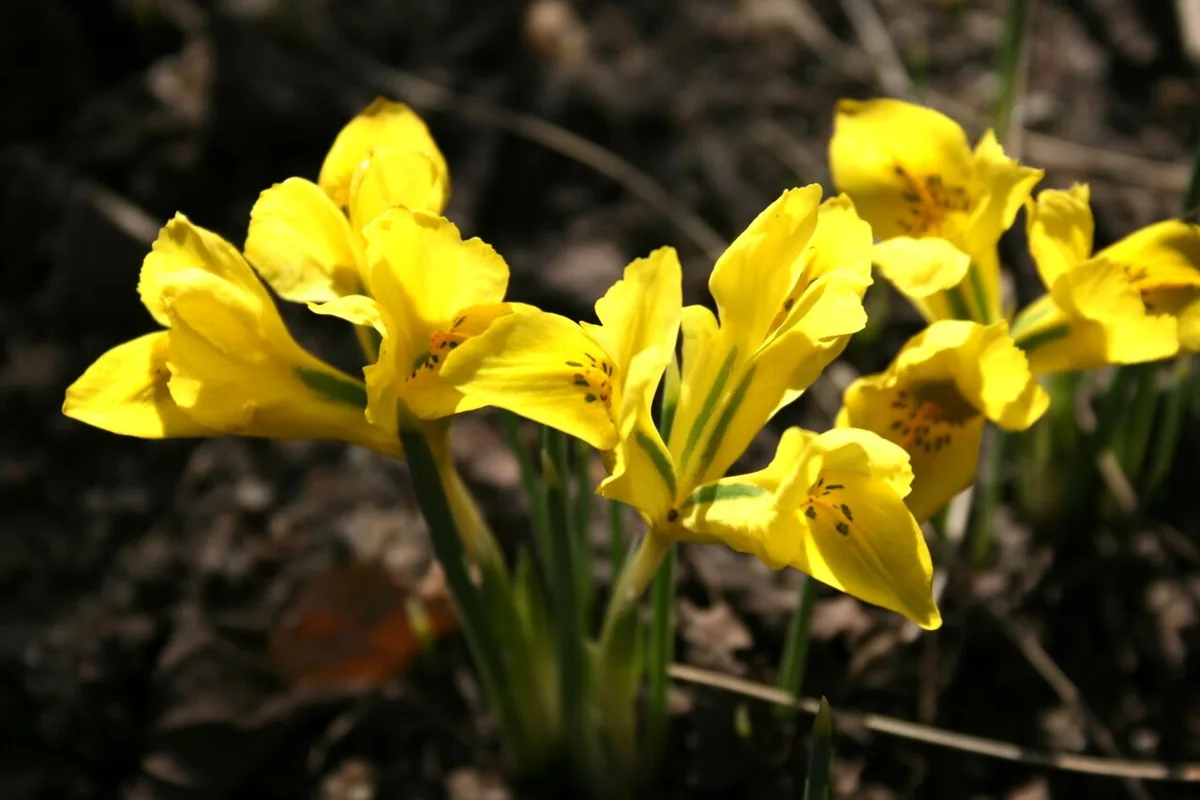
A pot of Danford Iris is easiest to manage when its identity and seasonal rhythm are clear from the beginning. Iris danfordiae is recognized by bright yellow dwarf iris flowers with fine spotting and a compact early habit. Buy a labelled plant and check its mature habit before surrounding it with other pots, since the photograph on a small nursery label rarely conveys its complete growing space. Its main container task is giving the early display sufficient light while protecting its later leaf growth. Inspect the small bulb and elongating leaves while the plant is still easy to handle, and note whether it is actively extending roots or simply carrying a purchased flower display. Those observations provide a more useful starting point than deciding that every blooming plant should receive the same daily treatment.
Strong light in late winter and early spring keeps its small display visible. Make that choice with the whole plant in mind, including leaves close to the rim that may be shaded by taller neighbors. A bright room and a useful growing position are not always the same thing, especially well back from a window. Move a newly purchased specimen gradually if its previous conditions are unknown. Check the temperature of the pot during the warmest part of the day, and maintain enough clearance for air to move around foliage. After any adjustment, give the next leaves time to respond before changing the position again or deciding that feeding is the answer.
Water carefully during growth while ensuring rain can leave the container quickly. Apply water to the actual root medium, then check that the outlet is working rather than assuming a decorative outer container drains. Compare the weight of the pot before and after a thorough watering to learn how quickly it uses moisture in its present position. The surface alone can be misleading, especially when old nursery material remains around the roots. Use a gentle stream and avoid washing compost into the small bulb and elongating leaves. Empty collected surplus promptly. A pause in growth usually changes demand, so a routine that worked during active leaf expansion should be reconsidered when temperature and daylight fall.
Choose a gritty pot with small bulbs planted at the recommended depth for dwarf bulb irises. Think about weight and access as well as appearance, especially if the pot will need moving between a growing position and a seasonal display site. A container that is too large can remain wet beyond the small occupied root ball. One that is too shallow may leave little room below the plant for roots and water movement. During repotting, hold the plant by a firm supported section rather than pulling on leaves or tender shoots. Keep the small bulb and elongating leaves visible enough for inspection. Make the finished planting secure, water according to the plant growth stage, and reassess moisture before assuming the fresh mix behaves like the old one.
The yellow flowers can emerge before neighboring spring planters have much foliage. Give developing stems clearance before buds expand, and support a heavy display early if its habit requires it. A plant bought in full bloom has already completed much of the preparation for that display, so judge continuing care by new roots and leaves as well as the current petals. Feed moderately only when the growing stage and the product instructions make it appropriate. Repeated strong feeding will not create mature growth instantly. Trim or remove faded flower parts without sacrificing the narrow leaves that continue after the flower. This keeps the display tidy while allowing the living plant to finish the less conspicuous part of its seasonal cycle.
Bulbs may divide into many small offsets after flowering and take time to regain blooming size. Follow the plant in front of you and its identified form rather than applying the calendar of a neighboring species. Keep a simple note of when shoots emerge, roots extend, and leaves begin to yellow. Those events are more useful than a promise that flowering will happen on the same date every year. Protect a container root zone more carefully than a plant established in open ground because it experiences temperature changes from several directions. If the plant needs storage or shelter, prepare that place before weather changes make moving a heavy or fragile display difficult.
Retain sound offsets through summer and replant them without losing the tiny pieces. Treat multiplication as a separate growing project rather than a quick extension of the current floral arrangement. Prepare clean tools, labels, and appropriately sized containers first. Preserve sound roots wherever practical and keep delicate growing points from being crushed while moving material between pots. Establishing plants need moisture matched to their reduced root system, not an automatic copy of the parent watering volume. Keep them where progress can be checked without disturbing the medium repeatedly. A plant that begins extending roots and new growth is making useful progress even when it has no flower to show for the effort.
A lack of flowers the following year can result from small divided bulbs rather than poor feeding. Make inspection part of normal care rather than waiting until the whole plant changes. Look beneath foliage and around the container edge, and distinguish a single ageing leaf from a pattern moving through new growth. Check the medium and the small bulb and elongating leaves before making a large watering correction. If insects are found, isolate the pot while identifying them and use only an appropriate treatment. Avoid combining repotting, heavy feeding, and a strong exposure change as one response. A settled Danford Iris is easier to understand when changes are made deliberately and its next growth can show their effect.