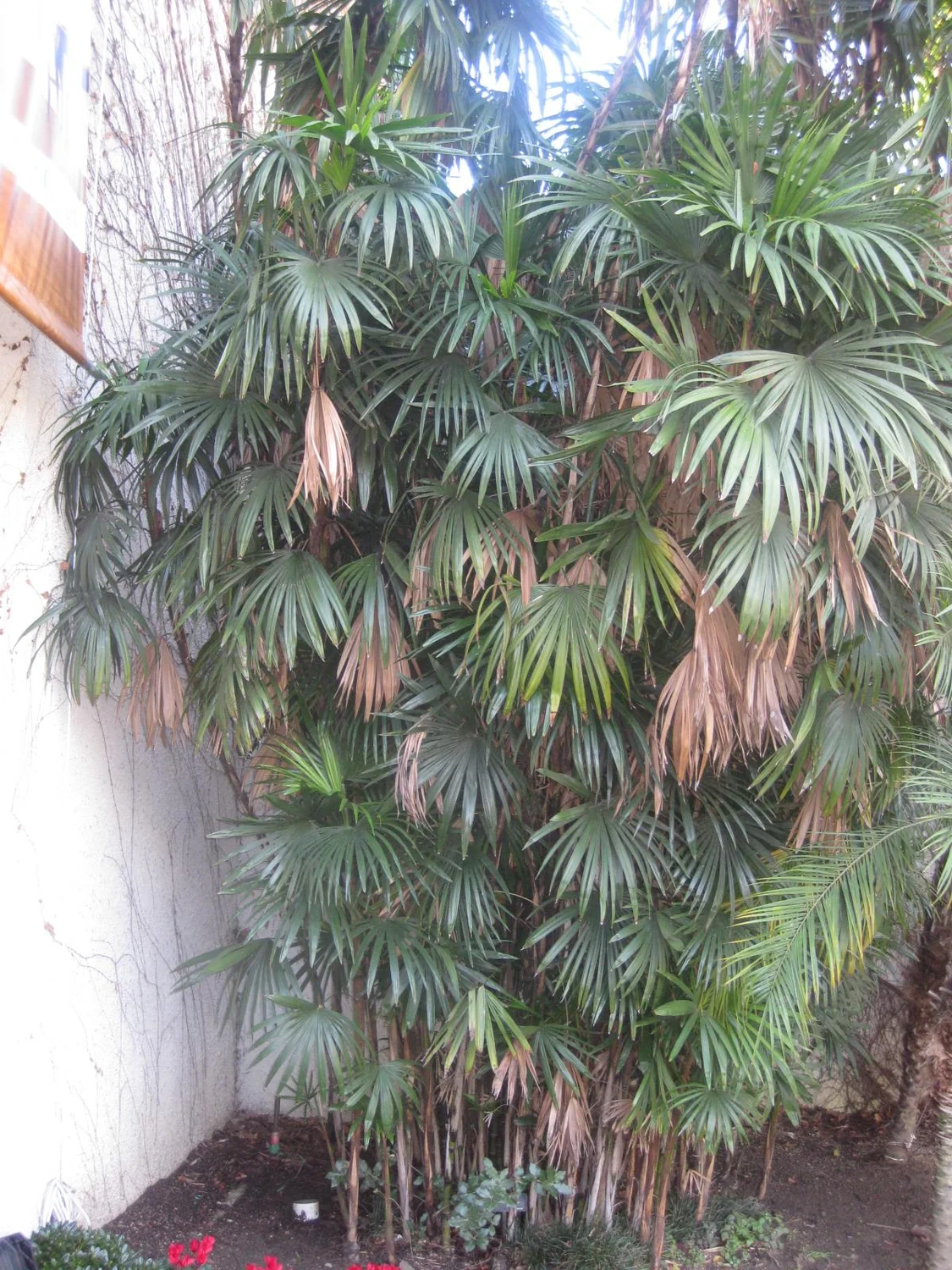
The Finer Structure of Slender Lady Palm
Rhapis humilis is worth seeking when the broad fans of a familiar lady palm feel too solid for a room. Its leaves divide into narrower segments, giving the canopy a finer, more open texture. Multiple slender stems arise in a clump, with dark fibers around the canes contributing to the mature appearance. It is still a substantial palm rather than a small fernlike accent. A young pot may seem easy to fit beside furniture, but its eventual spread needs to be considered. The narrow leaf segments do not prevent a well-grown clump from occupying real space at shoulder level.
Kew's taxonomic account places its native range in southern China. Its cultivated history and similarity to Rhapis excelsa have sometimes complicated labels in the ornamental trade. Keeping the exact name is therefore useful, especially if a collection includes both species. The word humilis should not be read as a guarantee of permanent dwarf size; botanical epithets are not a substitute for a mature habit description. Before buying an expensive specimen, compare several clear leaves and ask about the source. A generic lady-palm label may conceal a perfectly good plant, but it does not establish which species has been supplied.
A Bright Place for Open Fans
For indoor placement, aim for bright indirect daylight reaching the outer and inner canes. A glazed stair landing or roomy office lounge can suit the open fans better than a crowded desk. Avoid placing the clump where a heating vent dries one side while a window chills the other. The finer segments reveal physical wear readily, so clearance from doors, blinds, and passing shoulders matters. If a plant has been raised in shade, introduce any gentle direct sun progressively. A tropical-looking canopy does not mean the existing leaves are prepared for the strongest light on a newly available south-facing sill.
Moisture should be judged in the actual root ball. Let the upper mix begin to dry, water evenly, and check that excess can leave. A planter containing many canes can conceal the soil completely; move foliage gently aside rather than guessing from the condition of the outer leaves. During cooler, darker months, the root system will usually need water less often. The interval should reflect that change. If the pot feels heavy for a long period, investigate drainage and medium condition before adding another dose. A permanently damp interior is not improved by drying only the visible surface with warmer room air.
Container Roots and Individual Canes
An open loam-based or suitable houseplant container mix can support the clump while retaining useful moisture. The roots should not be packed into dense outdoor clay. Choose a draining vessel with enough weight to keep the canopy steady and enough access to inspect the base. Repotting is a considered event rather than an annual decorative ritual. Where the plant is still manageable, move the root mass intact and keep cane bases at the previous level. An established large clump may be divided, but retain several stems and sound roots on each section so the resulting plants have meaningful resources for recovery.
Shaping the plant means understanding its rhizomes and individual canes. A complete dead cane can be removed, and crowded established clumps can sometimes lose an unwanted stem without losing their overall character. Cutting the top off every green cane to shorten the whole display is a different matter: those palms do not branch in response like clipped woody shrubs. Preserve the growing point on retained stems. The fibrous covering is normal and need not be stripped away aggressively to reveal a tidier surface. Keeping loose dead debris out of the pot is sufficient without scraping living tissue for cosmetic uniformity.
Following New Fans and Checking Their Undersides
Feed gently when new leaves and basal growth show the plant is active. A shaded slow-growing clump cannot use the same inputs as a rapidly expanding plant in a warm bright nursery. Suitable fertilizer should be applied according to its label, and a new potting mix may already supply nutrients. Before treating brown tips as a deficiency, consider water history, salts, and damage from moving air. Photographing the same fan over time can help distinguish a stable cosmetic scar from a spreading problem. The newest sound leaves are more useful evidence of current conditions than the oldest weathered outer ones.
Inspect beneath leaf segments for scale or mites, and look around cane bases where infestations can remain hidden. Sticky residue on a nearby surface may reveal a problem before it becomes obvious in the overall canopy. A new purchase should be observed apart from valuable established plants until its condition is clear. If treatment is needed, identify the pest and use an appropriate labelled method rather than layering unrelated products. Dust removal with a supported damp cloth also creates an opportunity to inspect. Keep cleaning gentle because a narrow segment can fold or tear when pulled firmly against its natural direction.
Choosing a Recipient for a Specialized Palm
Slender lady palm is a more specialized gift than the common small houseplants sold beside a checkout. It suits a recipient who has a settled bright space and appreciates fine foliage rather than dramatic flowers. Its repeated thin segments can personally suggest precision, patience, or quiet coordination; there is no need to present those associations as a fixed cultural meaning. Ask before supplying a large clump. A recipient living upstairs without a lift may reasonably prefer a smaller plant that can be handled alone. Include the identity and growth habit, particularly the point that retained cane tops should not be clipped for height.
Over several years, a carefully situated Rhapis humilis can become a nuanced arrangement of canes and fans at different stages. The aim is neither maximum density nor an artificially stripped silhouette. Maintain enough light and space for the younger growth to replace older leaves, and consider a planned division only when the clump genuinely requires it. If the original position becomes too narrow, solve the space problem directly rather than repeatedly damaging the newest fans. The plant's charm comes from its fine structure, best appreciated when care leaves room for the differences between individual stems to remain visible.