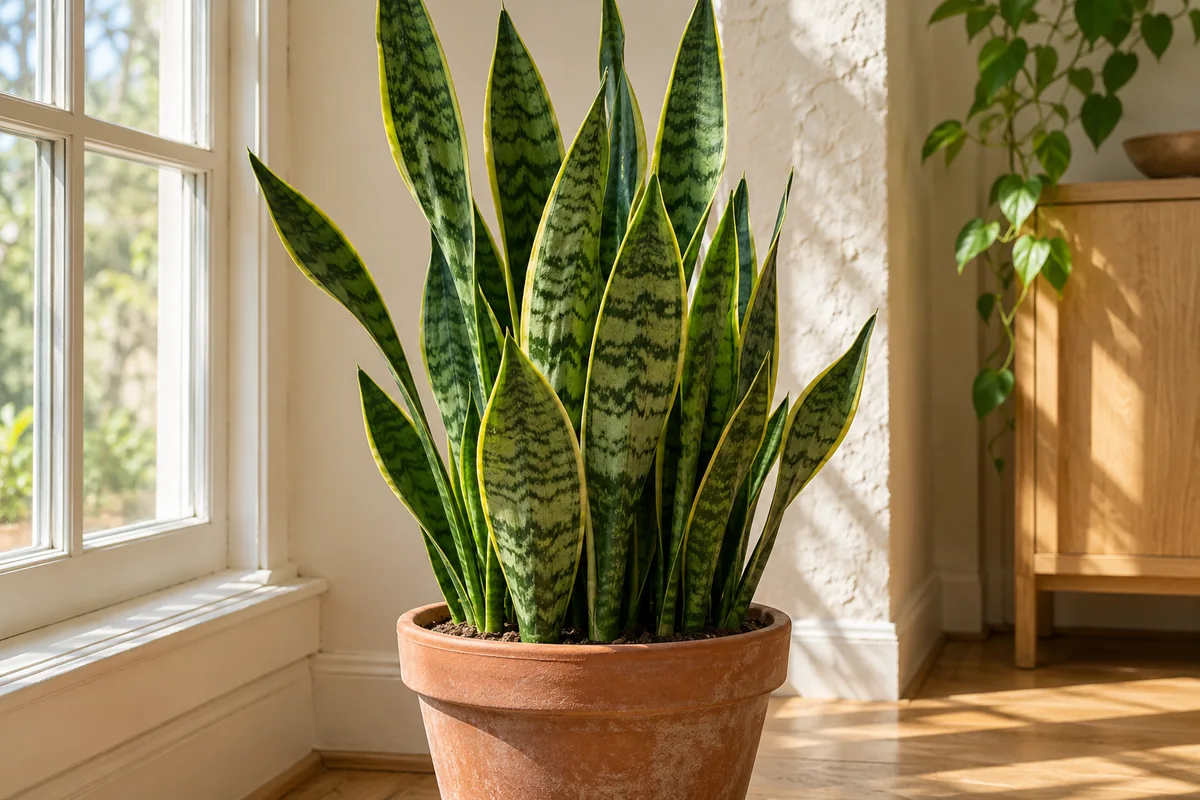
The mistake with a snake plant often happens while it still looks unchanged. Its firm upright leaves can hold their shape for weeks, so a pot that remains wet does not immediately announce a problem. By the time a leaf softens at the base, the roots may already have spent too long without enough air. This is a plant that rewards patience with the watering can. Give it a container that drains, a position with real daylight, and enough time for the mix to dry through. The routine becomes simple once the condition of the root ball matters more than the calendar.
Snake plant, Dracaena trifasciata, tolerates dimmer rooms better than many familiar houseplants, yet it still needs light to grow. A bright position out of the strongest afternoon sun often produces steadier new shoots. Plants kept well away from windows may change very slowly and use very little water. If you move a specimen toward direct sun, do so gradually over several weeks. A leaf that formed in shade can develop pale dry patches after a sudden change. Keep foliage clear of cold glass and avoid placing the pot directly in the stream of a heating or cooling vent.
Check moisture deep in the pot rather than stopping at the dry surface. A wooden probe or the weight of the container can help show whether the lower mix is still damp. Wait until the root zone has dried substantially before watering again. Then wet the mix evenly, allow drainage, and empty the saucer. Avoid pouring water into the tight centers between leaves. Small, frequent splashes keep the upper mix damp without providing a useful soak for all the roots. In cooler, darker conditions, the interval between thorough waterings may become much longer than it was during an active summer period.
The potting mix should hold some moisture after watering and release it without remaining dense or muddy. A suitable succulent mix can work, particularly when it includes a generous proportion of coarse porous material. Examine the texture rather than trusting the label alone, since commercial mixes differ widely. An unglazed clay pot often dries sooner than a glazed container in the same room. Both need drainage holes. Leave the base unobstructed and use an outer decorative pot only if the inner container can be removed for watering. Water concealed beneath a nursery pot is easy to overlook for several weeks.
Repot when thick underground stems and roots have occupied the container, or when the pot becomes distorted or unstable. Snake plants usually prefer a snug arrangement, so increase the diameter modestly. Remove the root ball carefully, keeping firm roots and trimming only material that is clearly soft or collapsed. Set the plant at its former depth and distribute the fresh mix around it without crushing the roots. Divisions should retain roots and a growing section of the underground stem. A tall leaf separated from the root system is different material and will need a separate propagation approach with a much slower timetable.
New leaves emerge from the base in compact groups and gradually extend upward. Their final height depends on the variety as well as the growing conditions. A short, naturally compact variety will not become a tall architectural specimen through heavier feeding. Use fertilizer sparingly during active growth, following the product directions and taking account of nutrients already present in fresh mix. Leaves that lean may reflect crowding, limited light, or a damaged base. Check these possibilities before adding a stake. A leaf that has folded sharply will not regain an unmarked surface, even after the growing conditions improve.
Wipe the broad leaf surfaces with a slightly damp cloth, supporting each blade so it does not bend. Dust tends to collect along the pale patterned ridges and near the soil line. Keep the pot surface free from fallen material that can conceal damp patches. A dry brown tip may remain as a cosmetic mark; trimming it does not solve its original cause. If you choose to tidy the tip, follow the natural outline and leave a narrow margin of dry tissue. Widespread softening deserves an immediate inspection of drainage and roots rather than a round of extra watering or feeding.
A useful record for this plant is simply the date of a thorough watering and the day the pot next feels dry. That gap will change as daylight and temperature shift. It provides a better guide than an instruction to water every week. Look for firm bases, consistent leaf color, and new shoots when conditions support growth. Keep expectations realistic during dim months, when a snake plant may remain almost still. Its upright shape works well precisely because it does not demand constant rearranging. A steady bright position and a careful drying interval allow that quiet habit to become an advantage indoors. Keep the lower leaf bases visible so early softening or trapped moisture can be noticed before several leaves begin changing together.