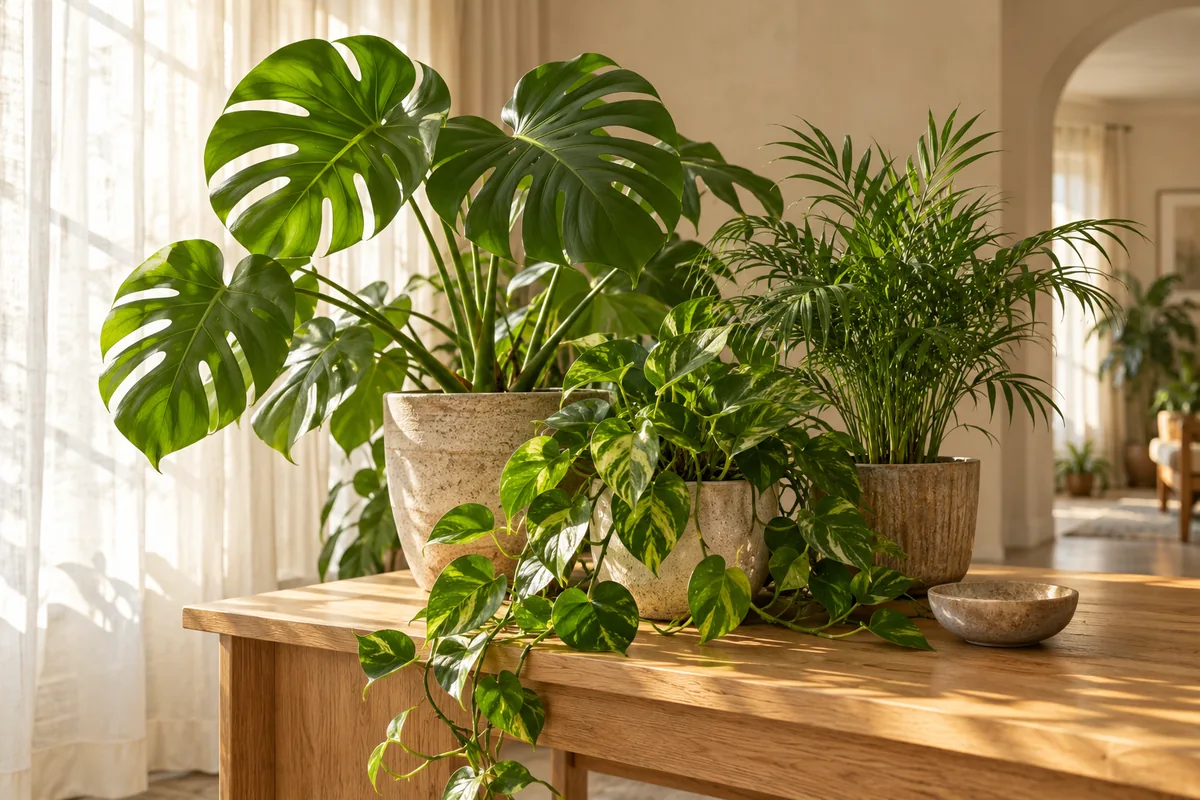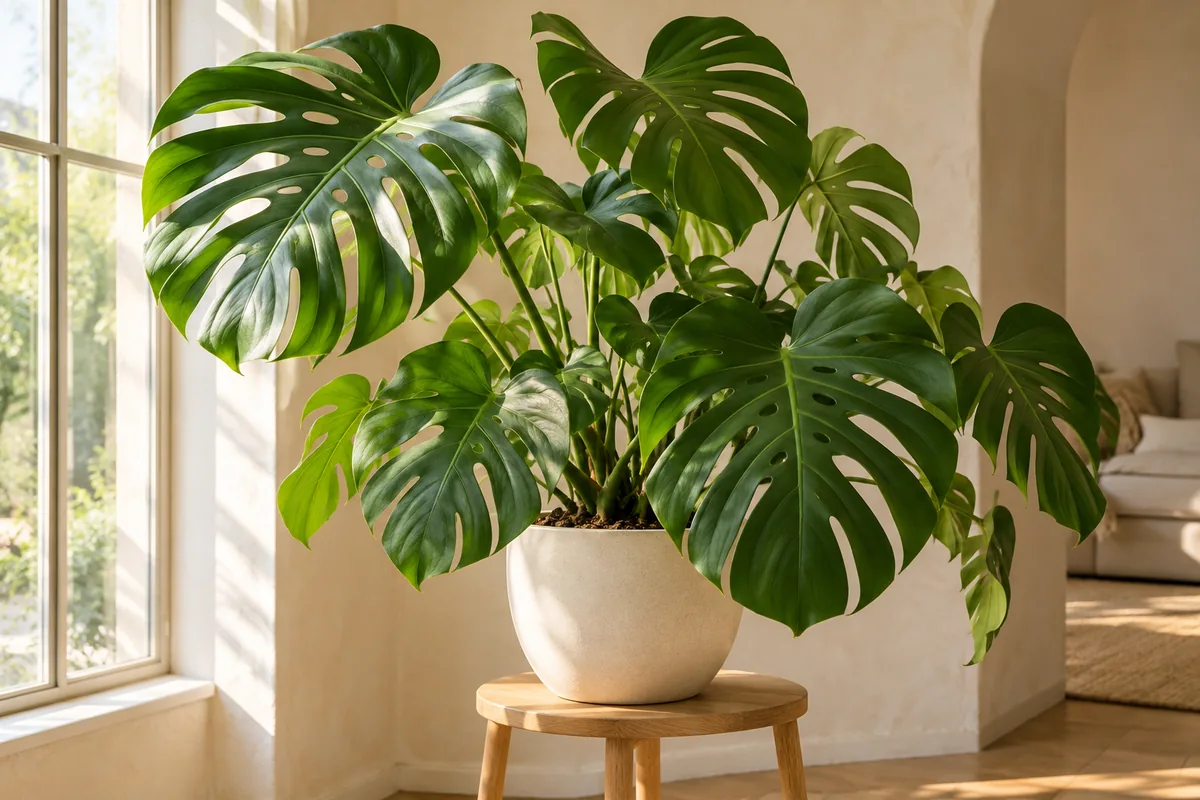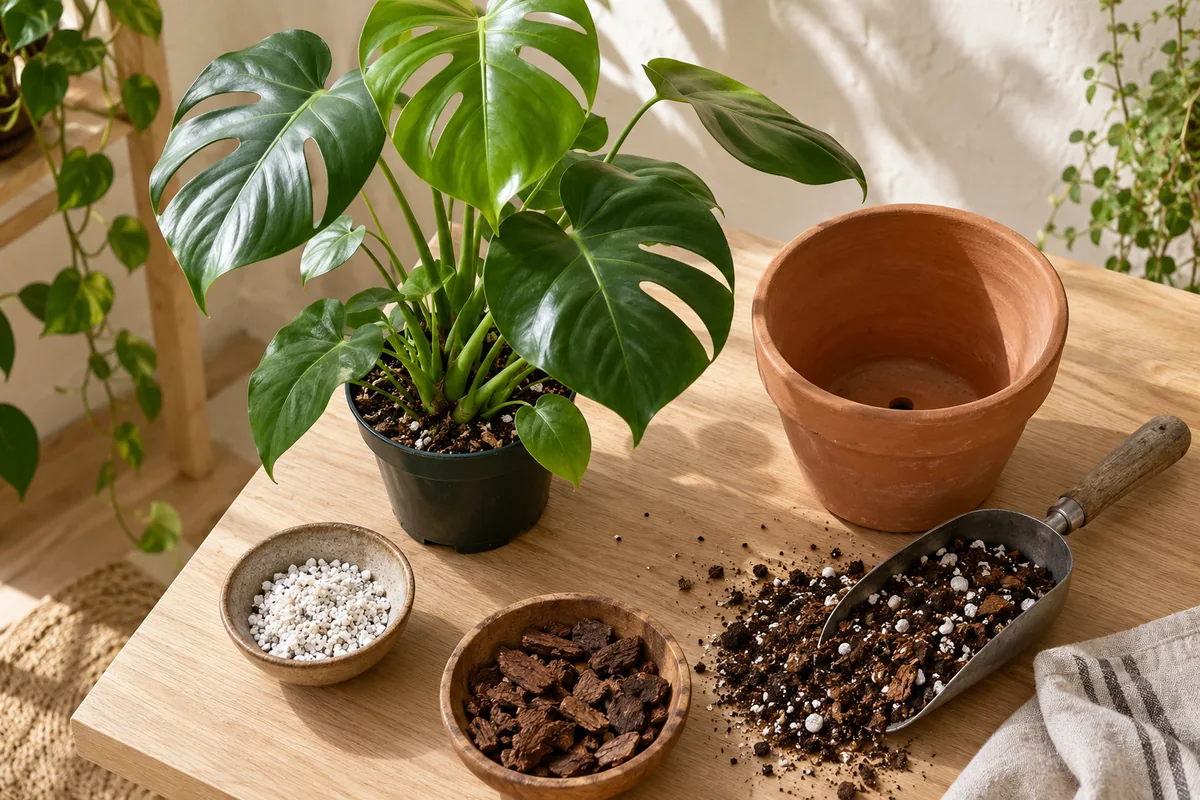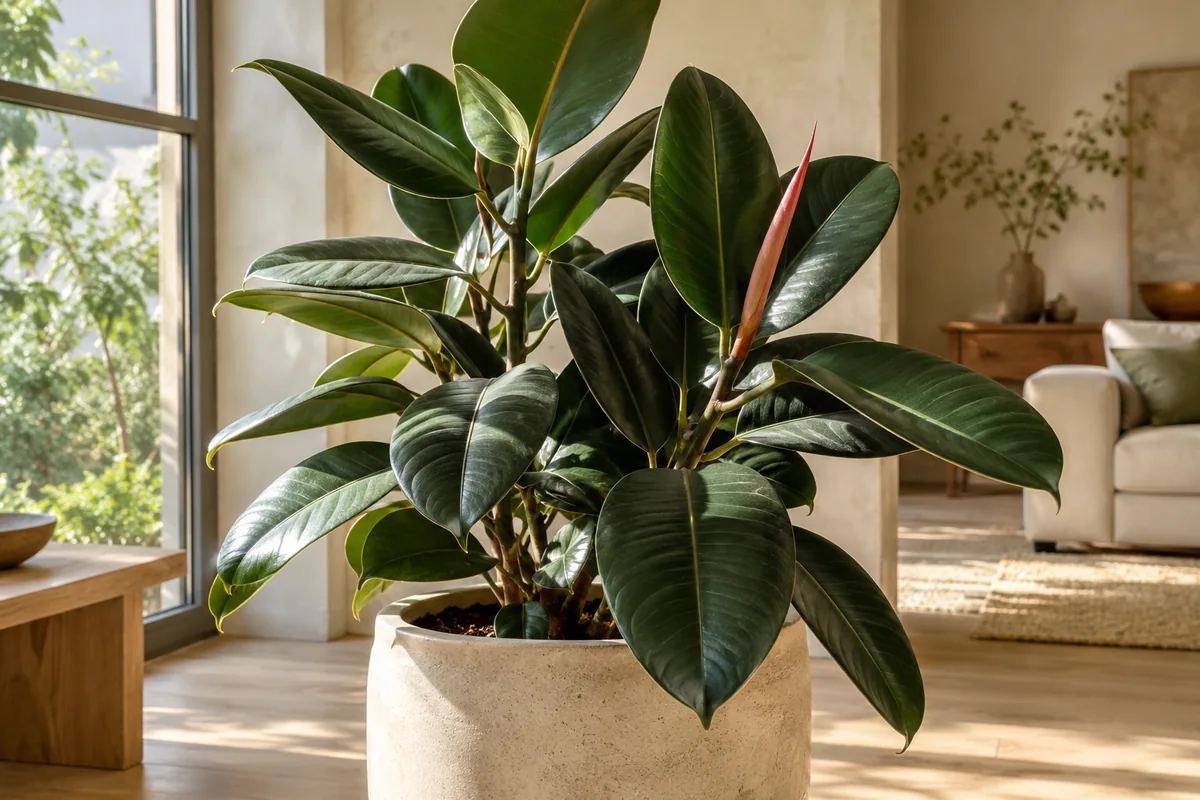
A bright window can provide excellent growing light and still become too hot for a plant during part of a summer day. The problem is often concentrated near the glass, behind a curtain, or inside a dark decorative pot. Check the actual conditions where the leaves and roots sit. A comfortable temperature in the center of the room does not describe every windowsill. Visit the plant during the warmest hours and notice the surfaces around it. Useful light should be considered together with heat and airflow, especially for plants that spent the cooler months close to an unobstructed pane and have not moved as the season changed.
Look at the path of direct sun across the plant. A few morning hours can create different conditions from a long afternoon beam, and the direction of the window is only part of that story. Overhangs, balconies, neighboring walls, and curtains alter the exposure. Feel the outside of the pot and the nearby shelf carefully. A dark pot can absorb considerable warmth, while a small root volume offers little buffer against rapid changes. Leaves pressed against glass have a different experience from leaves several inches into the room. Make a note of the hottest period so you can adjust the precise problem rather than moving every plant away from the window indiscriminately.
A sheer curtain can filter direct sun while retaining a useful bright position. Another option is moving the plant a short distance back or to one side of the beam. Make the change based on the plant's needs and observe the result. A sun tolerant succulent still needs good light, while a fern or calathea usually benefits from a gentler exposure. Avoid shifting a plant from intense sun to a dim distant corner for the whole season unless the window offers no workable alternative. Small position changes often provide enough protection. Keep the foliage clear of curtain fabric so it does not become trapped in a narrow warm space against the glass.
Watering should follow the root zone rather than the air temperature alone. A plant can droop in afternoon heat while its mix remains moist, and another can dry rapidly because its small terracotta pot loses water quickly. Check below the surface before adding water. When watering is needed, wet the root ball evenly and allow excess water to escape. A hidden reservoir inside a decorative cover can keep roots saturated through a hot period and into the cooler evening. Empty it after drainage. If water runs around a very dry root ball, apply it in slower passes so the material has time to absorb rather than assuming the first runoff proves complete watering.
Gentle air movement can reduce stagnant conditions, but a strong fan or cooling vent aimed at the leaves can increase moisture loss and create a different problem. Position the plant where the room air can circulate without a constant blast. Opening a window may help when outdoor conditions are suitable, though hot dry wind or abrupt cool drafts are reasons to choose another approach. Keep tall plants stable if airflow increases. A light pot with a large canopy can tip when curtains move or a window catches a gust. Heat management works best as part of the room arrangement, with the pot, foliage, furniture, and ventilation considered together.
Watch for dry pale patches on the leaf surfaces most exposed to sun. Existing marked tissue may not return to its original color, so evaluate the next growth after making an adjustment. Do not remove every imperfect leaf immediately if it still contributes useful green area. A whole plant that remains wilted after the hottest period needs a closer check of roots and moisture. Avoid applying fertilizer as a general response to heat marks or afternoon drooping. Extra nutrients do not cool leaves. Keep the plant's care steady while you determine whether the main issue is excess exposure, a drying root ball, persistently wet mix, or some combination of those conditions.
Young cuttings and recently repotted plants deserve particular attention near summer windows. Their limited or disturbed roots may not keep pace with a large demand from the leaves. Give them a sheltered bright position while they establish, then increase exposure gradually if the species requires it. Clear propagation covers can overheat quickly and should remain out of direct sun. Small glass water vessels can also warm considerably near a pane. Check these setups separately from mature potted plants, even when they share the same shelf. A position that suits an established rubber plant may be much too demanding for its newly separated air layer or a jar of unrooted vine pieces.
Review the arrangement after cloudy periods and during unusually hot weather. A plant accustomed to several gentle days may face a sudden strong afternoon when the sky clears. Keep a record of any curtain or position change that works, along with the time of the hottest exposure. This becomes useful next summer and can guide where you place new plants. The goal is a window position that provides enough light without asking the plant to cope with unnecessary extremes. Once the heat is managed, watering decisions become clearer and fresh growth is easier to assess. Continue checking through the season rather than treating one move as a permanent solution to every summer day.