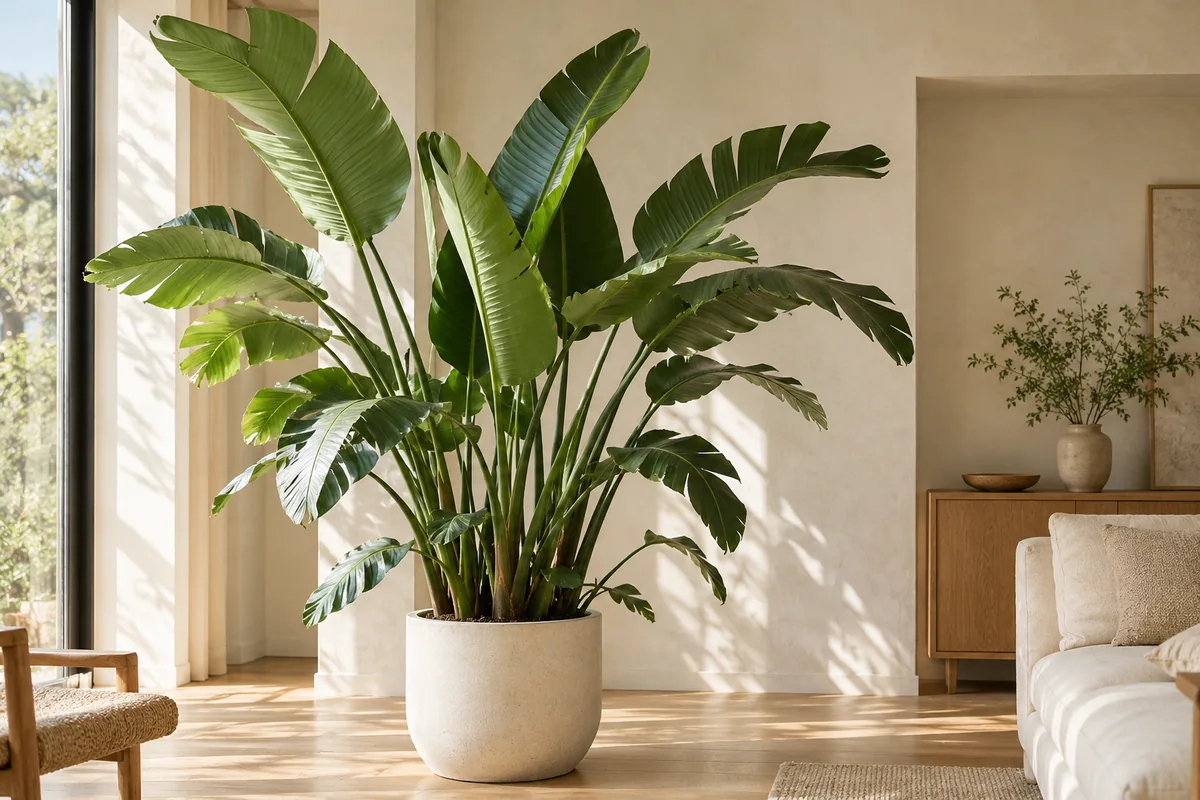
Bird of paradise can make a room feel smaller in a surprisingly short time. A single new leaf may extend well beyond the previous canopy, and its long stalk needs room to turn toward the light. Before choosing a floor pot, consider the full spread rather than the width of the container. Strelitzia nicolai is a large growing species, even when indoor conditions keep it below its outdoor scale. A bright open position with access for watering gives it a better future than a narrow decorative gap. The broad leaves are the main indoor display, so plan around their space and condition rather than expecting flowers.
Provide strong daylight and introduce direct sun gradually if the plant has been grown in shade. A large sunny window can suit it, depending on seasonal intensity and the heat near the glass. A position several feet back in a dim room may produce stretched stalks and slower growth. Window direction alone does not describe the exposure; look for nearby shading and the hours when light actually reaches the leaves. Move toward stronger light in stages to reduce marking on foliage formed under softer conditions. Keep the broad blades away from cold glass, heated airflow, and frequently used doorways where they are bent or torn.
Water after the upper portion of the root zone has dried, checking below the surface in a large container. Apply water slowly across the mix until excess drains, then empty the saucer or outer planter. A mature plant in bright active growth can use a substantial amount, while the same root ball may remain damp much longer during short dim days. Fixed quantities on fixed weekdays can miss that change. Learn the pot's weight when possible and use a probe to inspect deeper moisture. A dry crust over a wet center is common in floor pots and should not trigger another automatic soak.
Choose a stable container with drainage and an open mix that holds some moisture without becoming dense. The plant develops substantial roots, yet an enormous pot is not a shortcut to a large canopy. Repot when the roots have occupied the existing space and water management becomes difficult, increasing the size sensibly. Keep the original planting depth and avoid burying the bases of the leaf stalks. A heavy decorative outer planter can improve stability if the inner pot drains freely and collected water is emptied. Consider how the whole arrangement will be moved for cleaning, since a large watered specimen can become very heavy.
New leaves emerge tightly rolled and may take time to open fully. Do not pull apart the edges to hurry the process, because the soft tissue can crease or split. Some splitting along the leaf blade is normal in this plant's broad foliage and does not automatically indicate a care failure. Indoor handling, drafts, and friction can add marks, so leave clearance around the canopy. Support each leaf while wiping dust away with a soft damp cloth. Plain water is suitable for routine cleaning. Oils and glossy coatings are unnecessary and can leave a film that makes the natural leaf surface harder to inspect.
Older lower leaves eventually finish and can be removed near the base with a clean appropriate tool. Preserve useful green foliage rather than stripping the plant to create an artificially narrow silhouette. If several leaves yellow rapidly, inspect the roots, drainage, and recent changes in light or temperature. A single old blade aging is different from a whole canopy declining at once. Feed during active growth according to the product directions and consider nutrients already included in fresh mix. Extra fertilizer does not compensate for a dark position or constantly wet roots. Address the growing environment before attempting stronger applications.
Expect this species to become a substantial foliage plant rather than a permanently compact houseplant. Turn the pot gradually if growth leans toward one side, taking care that the container remains stable. A crowded clump may eventually need division, though its thick roots and size make that a deliberate project rather than a casual trimming task. Each division needs established roots and growing points. Plan it during active growth when conditions support recovery. If the room cannot provide enough light or lateral space, a smaller species may fit the setting better than repeated severe pruning of every new leaf.
Measure progress through the size and firmness of new leaves and the interval between them. Photographs from the same position can reveal whether stalks are becoming excessively long or the canopy is filling evenly. Check root moisture more often during bright warm periods, then adjust as daylight changes. A bird of paradise looks most convincing when its broad leaves can stand freely in a suitable bright space. Stable drainage, thorough watering followed by a measured drying period, and gentle treatment of unfolding leaves keep that generous outline manageable. Planning for its eventual size is part of its care from the very beginning.