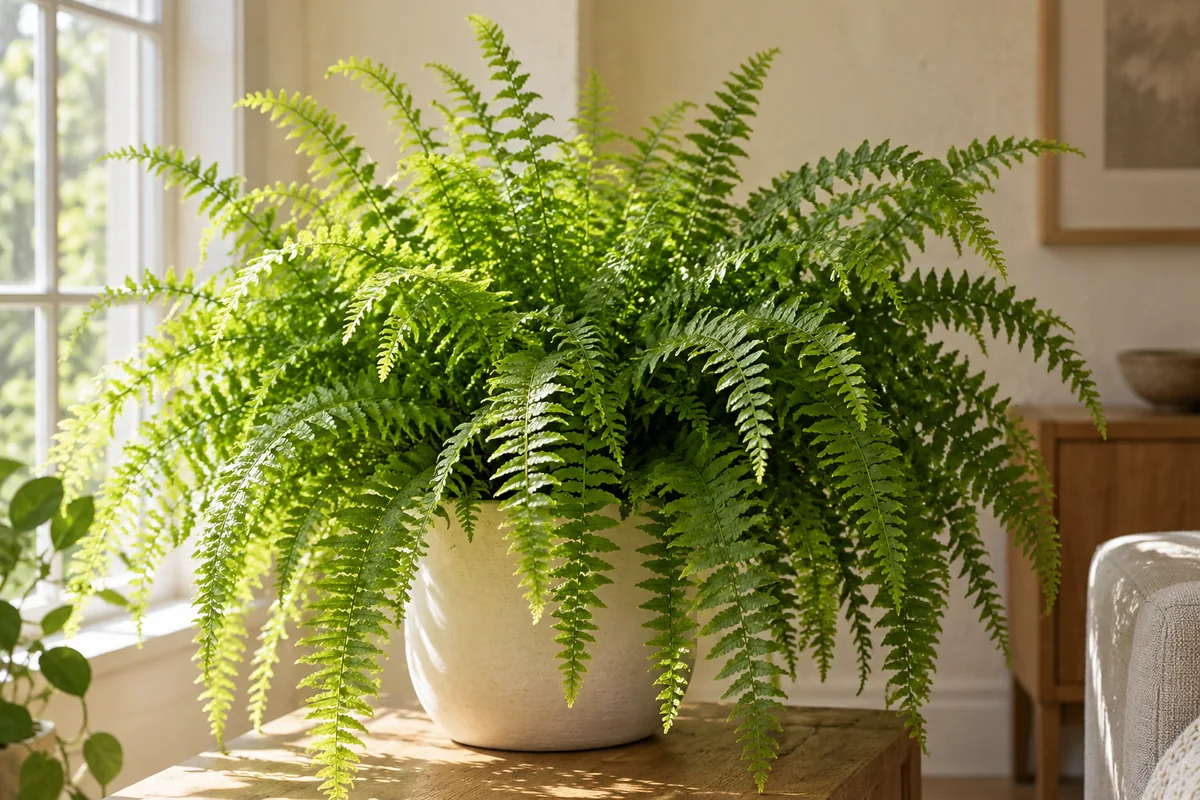
A Boston fern looks generous when its fronds can spill freely over the edge of a pot. That shape can also make watering awkward. Leaves hide the mix, a hanging basket sits above eye level, and a quick splash seems easier than taking the container down. The result is often a root ball that dries at the center while the outer fronds start shedding little leaflets. Make access part of the growing arrangement from the beginning. A fern that can be lifted, checked, and watered thoroughly is much easier to keep full than one displayed in a position that discourages proper attention.
Choose bright filtered daylight and protection from strong direct afternoon sun. A position near an east window or behind a light curtain can work, with the actual exposure depending on the room and outdoor shade. A dim corner may preserve some foliage for a while yet does little to support a dense stream of new fronds. Keep the fern away from hot airflow, radiators, and repeatedly opened cold doors. In a hanging arrangement, check whether light reaches the crown itself. Fronds dangling below the window do not compensate for a pot placed in a dark band above the frame.
Boston fern needs a more consistently moist root zone than a succulent or a thick leaved drought tolerant plant. Check the mix frequently and water before the whole root ball becomes dry. The goal is moisture with air spaces, not a pot that remains waterlogged. Wet the root ball thoroughly, let excess drain, and empty the saucer. Dense crowns can divert water away from the center, so apply it slowly around the surface. If the mix has dried and shrunk from the pot, several slow passes may be needed. Confirm that water is being absorbed rather than simply running down the outside.
Indoor humidity affects the fine fronds, especially when heating dries the air. A humidifier used according to its instructions can make a measurable difference in a suitable room. Occasional misting creates only a brief change and should not be treated as a substitute for an appropriate setting or reliable root moisture. A bathroom can suit a fern if it also has enough daylight and a stable temperature. A windowless damp room is still too dark for sustained growth. Leave room around the foliage for gentle air movement, and avoid enclosing a large wet fern tightly against walls or curtains where moisture remains trapped.
Use a mix that retains moisture and still drains freely. An open houseplant mix with appropriate moisture holding material works better than dense garden soil. Repot when roots fill the container and the root ball dries too rapidly to manage, choosing a modestly larger draining pot. A mature fern can also be divided into rooted sections during active growth. Each division needs an appropriate container and enough remaining crown to produce fronds. Keep the new sections lightly moist while they establish. Do not place a small division in a deep oversized pot simply to create a larger display, since the unused wet mix is difficult to judge.
Dry fronds can be removed near the base with a clean tool, taking care not to damage tightly curled new growth. A frond that has turned crisp will not regain its green leaflets, so judge improvements by the next flush. Some regular brown dots on the underside of mature fronds are spore structures, not automatically an insect problem. Look at their orderly pattern before attempting to wipe them away. Inspect the crown and undersides during routine tidying. Keeping old fallen material off the surface makes it easier to check moisture and notice changes without pulling the whole plant apart.
Feed lightly during active growth according to the product directions, using a suitable dilution for indoor foliage and taking account of nutrients in fresh mix. A fern that has dried severely should have its moisture routine restored before extra feeding is considered. Mineral buildup can contribute to damaged edges, so review the water supply and fertilizer strength if a white crust appears. Flush a freely draining pot when appropriate and let it drain completely. During a darker period, growth and water use may slow. Continue checking the root ball rather than automatically giving the same quantity at the same interval used in a brighter season.
Watch the curled new fronds at the crown. Their steady emergence and clean expansion offer a clearer measure of the setting than a few old dry tips. If the plant continues thinning, review light, root moisture, and dry airflow together, then make a practical adjustment that you can maintain. A lower stand near a bright window may serve the fern better than a high basket that is rarely checked. Give the fronds room to arch without being crushed by furniture. Reliable access and a gently moist root zone are the quiet details behind the full, soft outline people expect from a Boston fern.