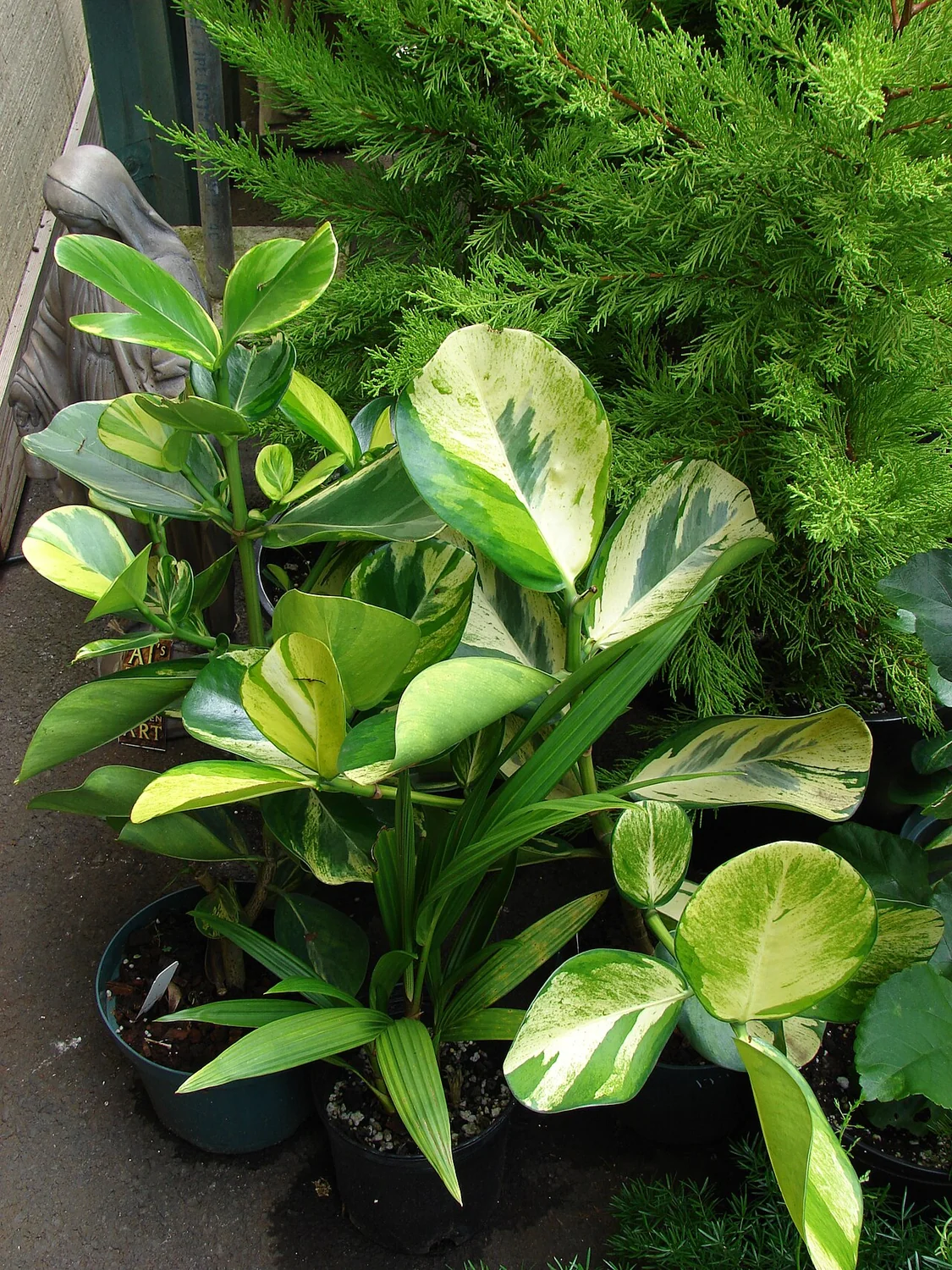
An autograph tree without damaged leaves
Autograph tree is a tropical evergreen with unusually thick rounded leaves and a substantial branching habit. Clusia rosea is native to tropical America, including the Caribbean and parts of the range from southern Florida toward northern South America. Mature outdoor trees can develop aerial or supporting roots and a spreading crown, while a container plant provides a smaller foliage display. The common name comes from the way a mark can remain visible on a leaf surface. That is a descriptive curiosity, not a reason to scratch messages into a living gift plant. Its natural leaves are attractive enough without permanently damaging them for decoration.
Accurate identification matters because several plants are traded simply as clusia. Small leaf hedge material has sometimes been sold under uncertain nursery names, and it should not automatically be treated as Clusia rosea. Retain a reliable grower's label or collection identification, particularly when comparing photographs of flowers or fruit. Young plants may be grouped to make a fuller pot, but each stem should have a firm sound base. A broad glossy canopy can conceal poorly drained roots beneath wrapping or decorative stones. Inspect the actual plant before buying a large display, and consider whether its eventual width can be accommodated beside a suitable window.
Light and a workable indoor position
Give the tree strong bright light, beginning with filtered exposure when the previous nursery conditions are unknown. Gradually introduce more direct sun if appropriate rather than transferring soft shaded leaves immediately against very hot glass. The thick blades tolerate a substantial surface area of light when acclimated, but they do not make a dim office into a sustainable growing environment. Look at new growth and the density of the crown. Long sparse extensions toward one window suggest that the arrangement needs improvement. A bright warm room or a protected conservatory is more suitable than a remote decorative corner receiving little natural daylight.
Water, roots, and a draining container
Check the root ball before watering. Let the upper mix lose some moisture, then irrigate the whole ball and drain freely when another drink is needed. Thick leaves can store some water, yet a small pot with active roots should not repeatedly be left until it is completely desiccated. Nor should the tree stand in collected water inside an outer planter. A pot kept warm and bright may dry much faster than the same plant in winter shade. Use those actual conditions to decide the interval. If water bypasses an old compact root ball, apply it slowly in repeated passes rather than flooding the container and walking away.
Select a stable pot with drainage and a medium that remains open after wetting. A substantial tree can become top heavy, but increasing the root volume far beyond what is occupied is not the only way to stabilize it. A broad heavy cover can support an appropriately sized inner pot, provided the water beneath can be removed. Repot when the roots fill their space or watering becomes difficult to manage, preserving the established stem level. Do not bury the trunk or an aerial root arrangement merely to create a smooth surface. Keep enough of the base visible to recognize softening or other changes promptly.
Training and ongoing maintenance
Pruning can limit width and encourage a useful branch structure. Shorten selected extensions above appropriate living growth rather than repeatedly shearing every outer leaf into a rigid mass. Large cuts and major root work are better separated from the unsettled period after delivery. The plant's sap should be handled cautiously, with gloves and protection for furnishings, and cut material belongs out of casual reach of children and pets. If aerial roots develop, consider their function and direction rather than removing them automatically. A container tree does not need to reproduce every prop root seen on a mature tropical landscape specimen to be growing successfully.
Clean the broad leaves with a damp cloth and support each blade so its stalk is not strained. Do not use the autograph quality as a test of leaf firmness. Inspect the undersides, branch joints, and stem surfaces for scale, mealybugs, or mites. A naturally thick blade can hide early pest damage unless it is viewed closely. Feed moderately while active growth and adequate light support the process, following the instructions for an indoor container product. Slow growth in a dim season is not an instruction to double the dose. If leaves yellow, examine roots, drainage, temperature, and recent changes before diagnosing a nutrient shortage from colour alone.
Flowers and fruit belong to the biology of mature plants under suitable conditions, but they are not a routine expectation for a small interior tree. Outdoor flowers can be pale pink and white, followed by capsules that open to reveal brightly coloured seeds. Those fruits are ornamental and potentially harmful, not apples for household eating. Prevent children and animals from tasting fallen material. Where the climate permits outdoor growth, check the species' local ecological status before planting an unwanted container specimen outside. A tree native in one place can be inappropriate or invasive elsewhere, so a general tropical origin is not a universal planting recommendation.
Meaning without unsupported promises
Pitch apple is another common name, connected with a resinous material historically used in boat caulking. That documented material history can interest someone who enjoys maritime crafts or tropical botany. Autograph tree also offers an obvious modern personal metaphor for a shared story or a new chapter, but the message should be written on a card rather than incised into a leaf. Neither name establishes a universal tradition of romantic or financial luck. The gift's significance can come from the giver's chosen association and the recipient's interests, while the plant retains its own accurate identity and undamaged foliage.
A gift matched to the recipient
This tree can suit a housewarming, a new bright studio, or a requested addition to a tropical foliage collection. Confirm that the owner has enough light and room for a broad crown, not merely enough floor space for the current pot. It is a less appropriate surprise for a narrow dim workplace or a household where ornamental fruit and cuttings would be within easy reach of children or chewing pets. Choose a manageable healthy specimen and a practical draining arrangement. Include the proper species name and explain the distinction from uncertain clusia trade labels. A living plant with clear expectations makes the personal message more durable than a damaged autograph leaf.