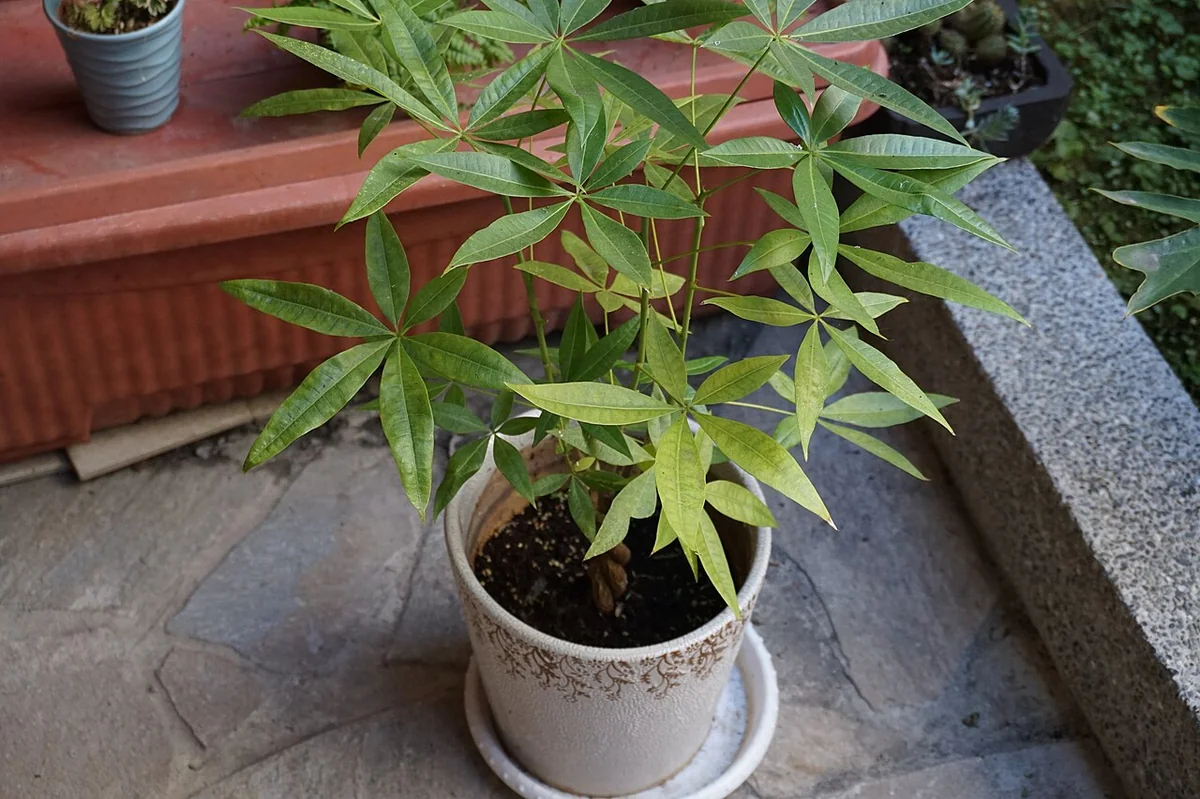
A tropical tree inside the money tree braid
Guiana chestnut is a tropical tree that reaches indoor gardens through an unusually recognizable nursery form. Several young stems may be braided together beneath a crown of shiny hand shaped leaves. The botanical species, Pachira aquatica, is native from southern Mexico through parts of tropical South America, where it occurs near rivers, wetlands, and other moist habitats. A mature outdoor tree is much larger than a braided houseplant and can produce spectacular flowers and large seed capsules. Inside a home, foliage and the trained trunks are the realistic attractions. Flowering or nut production should not be promised as the normal result of keeping a small pot beside a window.
The money tree name is culturally familiar but botanically imprecise. Retail plants labelled Pachira aquatica can sometimes be another species, particularly Pachira glabra, so ask for reliable identification if the distinction matters. A braid alone cannot identify a tree, because braiding is a technique applied to flexible young stems. Look at the condition of each trunk rather than judging only the combined crown. A firm clean base is important, and one failing stem can be hidden by several healthy neighbours. Remove packaging enough to inspect the actual pot before buying an impressive specimen for an interior display.
Light and a workable indoor position
Bright indirect daylight suits the indoor arrangement. A position close to an east window can provide useful morning light, while a hotter exposure may need a sheer screen or a little distance from the glass. Leaves raised under nursery shade can scorch if moved abruptly into strong sun. A dim room may allow short term survival while gradually weakening the canopy, so the word money should not distract from ordinary plant requirements. Observe the newest leaves and the length of the petioles. If all growth leans toward a remote window, the tree needs a better light arrangement rather than more decorative turning of the braid.
Water, roots, and a draining container
Its wetland background is often misunderstood in containers. A tree growing in a natural wet habitat has a root environment that differs from an indoor pot of decomposing compost. Standing drained water beneath the nursery container can deprive roots of air and contribute to decline. Check the upper mix and the deeper root ball, then water completely when another drink is needed. Let excess escape and empty the cover. A small quantity on a fixed weekly schedule may be either too much or too little as light changes. The aim is usable moisture with drainage, not a permanent puddle intended to imitate a riverbank.
Choose a practical inner pot and a mix with enough structure to remain open after watering. The swollen lower stems should not be buried to make the planting look tidy. When repotting becomes necessary, increase the container size moderately and keep the existing stem depth. Inspect a braided plant carefully for old ties at the base or hidden bands that have begun to constrict growth. Do not pull a tight established braid apart in an attempt to restore a natural appearance. The immediate maintenance priority is to keep each living trunk sound and uncompressed, while ensuring the root zone can be observed and watered evenly.
Training and ongoing maintenance
Pruning can reduce a vigorous extension and encourage a fuller crown, but the whole plant should not be stripped simply because it has become tall. Shorten selected stems above living nodes and wait to see the response before making further major cuts. The leaves are compound: an individual leaflet is not a complete stem cutting. Anyone interested in propagation should use suitable identified material and a method appropriate to Pachira. Keep the work separate from a stressed specimen's essential recovery care. A new gift plant usually benefits more from stable light and moisture than from immediate attempts to reshape every branch.
Warm conditions and avoidance of sharp drafts make the canopy easier to maintain. Keep it out of an air conditioning stream and away from winter doors that expose the trunk to cold repeatedly. A dry room may encourage browning or pests, but repeated wetting of the leaves does not substitute for ambient humidity. Clean the broad leaflets carefully with a damp cloth and check their undersides. Look for scale or cottony deposits around protected joints. Feed lightly when active growth and adequate illumination support it, allowing for any nutrient charge in fresh mix. Stronger fertilizer is not an answer to a soft trunk above wet compost.
If leaves yellow, first compare moisture conditions across the pot and inspect the base of every braided stem. A single decaying trunk, an overly large wet container, and a completely dry nursery ball can each produce a declining crown through different mechanisms. Record recent moves and temperature changes instead of guessing from one leaf. Remove fallen material and keep the drainage route visible. Foliage is for display, and a household tree should not be used as an unverified source of edible leaves or seeds. Identification and preparation described for outdoor food use are separate questions from ordinary indoor ornamental care.
Meaning without unsupported promises
The established money tree trade developed a strong association with prosperity and gifting, particularly through Taiwanese horticulture and braided plants. It is reasonable to describe that association as a modern cultural and commercial meaning, while distinguishing belief from an outcome the plant can deliver. A new business gift may carry a wish for good progress without implying that the recipient's income depends on the tree. Nor should a story explaining the name be presented as verified history merely because it appears in retail descriptions. The visible braid represents nursery work; any meaning of unity or good wishes can be stated openly as the giver's intention.
A gift matched to the recipient
Pachira aquatica can suit a business opening, a housewarming, or a new office when the owner wants the plant and has a bright warm position. Select a size that leaves room for future growth and permits access to drainage. Avoid choosing a tall tightly bound specimen solely because the braid looks elaborate. A recipient who travels frequently or keeps a very dark room may prefer another gift. Where pets or small children investigate plants, arrange an appropriate location and keep loose decorative stones or labels from becoming hazards. A correct name and realistic watering information make the good wishes more useful than a promise of wealth.