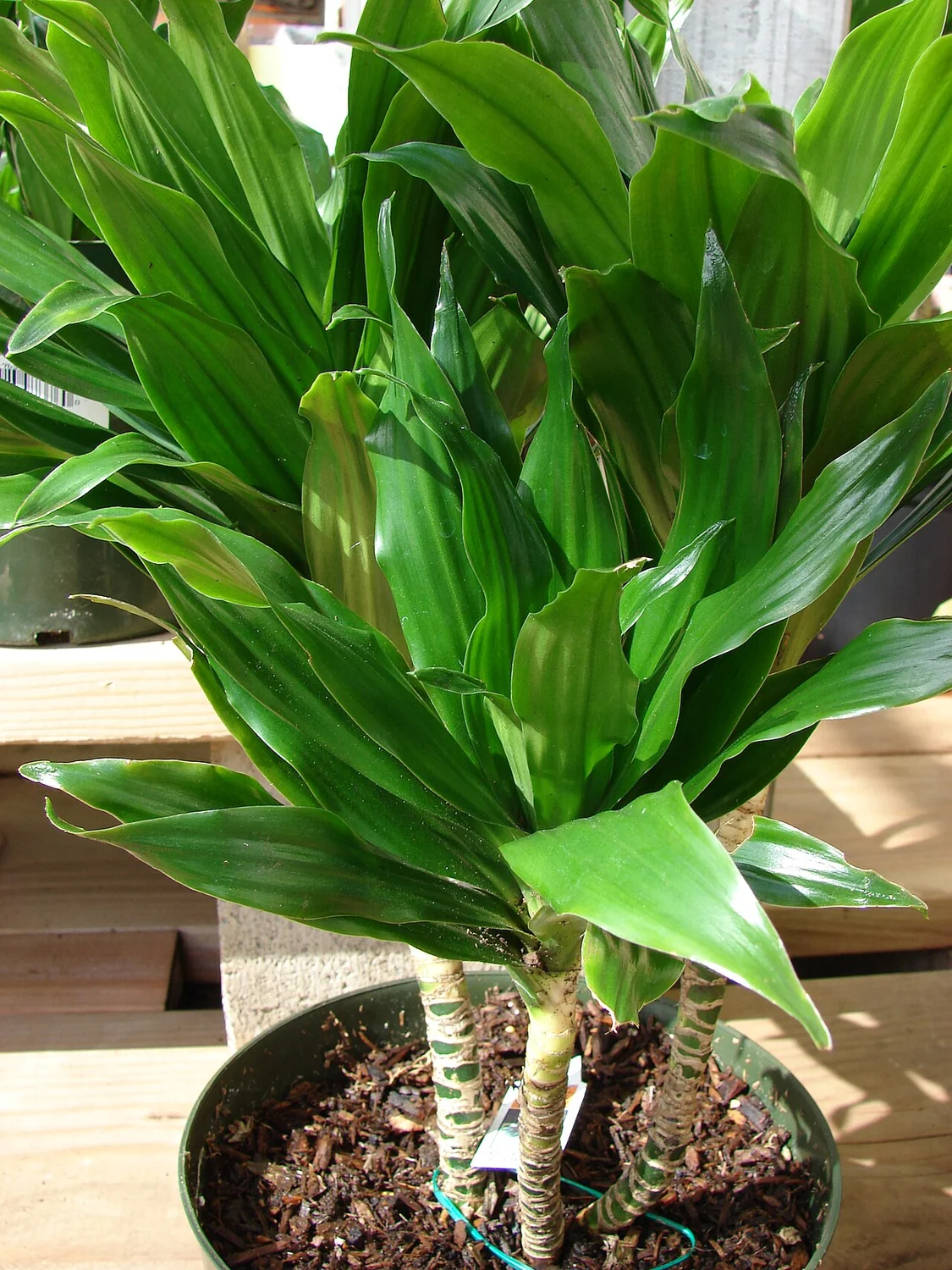
How a Cane-Grown Display Is Assembled
Corn plant is often chosen because its stout canes and broad leaves provide an immediate tree-shaped outline. Dracaena fragrans is an African dracaena, not maize, despite the resemblance that inspired its common name. Nursery specimens frequently combine cut canes of different heights in one pot, with leafy shoots emerging near the top of each cane. This creates an arrangement that looks mature from the start. It is useful to understand that construction before expecting every cane to grow at the same rate or assuming that several heights represent natural branching from one shared trunk.
The species is native to tropical Africa and belongs to the asparagus family. Its epithet refers to fragrant flowers, which occasionally appear on established indoor plants. Flowering is a possible event, not a care target that must be forced with a special supplement. Different cultivated forms have green, striped, or broader leaves, so the actual named form influences the visual effect and sometimes the amount of light needed to maintain conspicuous variegation. Keep the identity from the nursery. A plain green plant and a brightly striped cultivar can both be good choices without being treated as interchangeable decorative colors.
Light and Water for Separate Canes
Bright to moderate filtered daylight is a sensible indoor starting point. Corn plant is a realistic candidate for a well-lit office, but a plant placed far from windows may gradually make narrower or weaker new growth. Strong direct sun on shade-grown leaves can produce pale damaged areas. Examine the future leaf spread before setting a tall cane beside blinds or a ceiling fixture. The leaves may extend farther sideways than the trunk arrangement suggests. Keep the pot clear of heating and cooling outlets, which can dry tips or expose foliage to repeated temperature changes not apparent from the room's average setting.
Let the upper root medium dry somewhat before watering thoroughly, adjusting the interval to the actual conditions. A large cane can remain firm even when the roots below it are struggling, so the appearance of the woody stem is not a reliable moisture meter. Check the nursery root ball, not just fresh loose compost around the edges. After watering, remove surplus from the cover pot. A tall decorative vessel can hide a considerable depth of water below its inner container. In reduced winter light, that hidden reservoir may persist for far longer than an owner expects from a dry-looking surface.
Potting, Pruning, and Leaf Maintenance
An open houseplant medium and a draining container are sufficient; a complicated collection of amendments is not automatically better. Match pot size to the established roots and make only a moderate increase when necessary. Several cut canes may not be equally rooted, so moving a purchased display immediately into an enormous pot can create a difficult mix of wet and dry zones. Keep the stems at their previous level and remove any ties or packing that compress living growth. If a cane becomes loose or soft, inspect the base and roots before simply securing it more tightly in wet compost.
Unlike a solitary palm, a dracaena cane can often produce new shoots after a considered cut. That makes size management possible, but it should be planned rather than improvised during a dim season when the plant has little energy. Choose a suitable point on sound tissue, use clean tools, and provide conditions that support regrowth. The bare interval after pruning can be substantial. Retaining one leafy cane while another is reduced may preserve the overall display. New shoots develop where the plant's viable buds and resources allow, not necessarily in the exact symmetrical arrangement shown in a nursery photograph.
Water Quality, Leaf Surfaces, and Unusual Flowers
The broad leaves are easy to dust if supported from beneath. Wipe gently along their length and avoid coating them with oil. Brown tips can result from several overlapping factors, including inconsistent watering, dry air, salts, and sensitivity to substances in the water supply. A switch to a suitable lower-mineral or nonfluoridated source may help where water quality is implicated, but it will not revive roots sitting in stale water. Compare the next leaves after making one change. Old damaged tips do not become green again, so cutting them repeatedly is mainly a cosmetic operation rather than evidence that the cause has been removed.
Feed lightly during active growth and follow the fertilizer label. Slow indoor canes do not require constant stimulation. Examine leaf undersides and the tight spaces between leaf bases for mites, scale, or mealybugs, especially before adding a nursery purchase to other indoor plants. When a fragrant flower stalk appears, the scent can be surprisingly noticeable in an enclosed room; it is reasonable to remove the stalk if it is inconvenient. Do not interpret flowering as proof of either ideal care or imminent death. Continue evaluating roots, new leaves, and overall growth instead of building a diagnosis around one unusual event.
A Tree-Like Gift with an Honest Care Plan
Corn plant can make a practical office or housewarming gift when the recipient wants a tree-like silhouette without the space demands of a large palm. The sturdy canes may personally suggest stability or a new foundation, but the plant should not be sold as a guarantee of success or clean indoor air. Dracaenas are harmful if chewed by pets, so a home with plant-eating animals needs a different choice or a genuinely inaccessible position. Include the scientific name and explain that the planted canes may be separate pieces. That knowledge is more useful than a generic assurance that the plant thrives on neglect.
For lasting value, keep the container accessible and allow the canopy to evolve beyond its original arrangement. Some canes may grow more strongly than others, and a considered pruning cycle can eventually renew the composition. Learn its drying rhythm before adding timers or watering devices. If the current office cannot provide enough light for sound replacement leaves, solve that limitation directly. Dracaena fragrans is a durable interior subject when its cane-grown structure and modest growth pace are understood. Its apparent simplicity works best with a caretaker who notices roots, placement, and the practical consequences of several stems sharing one pot.