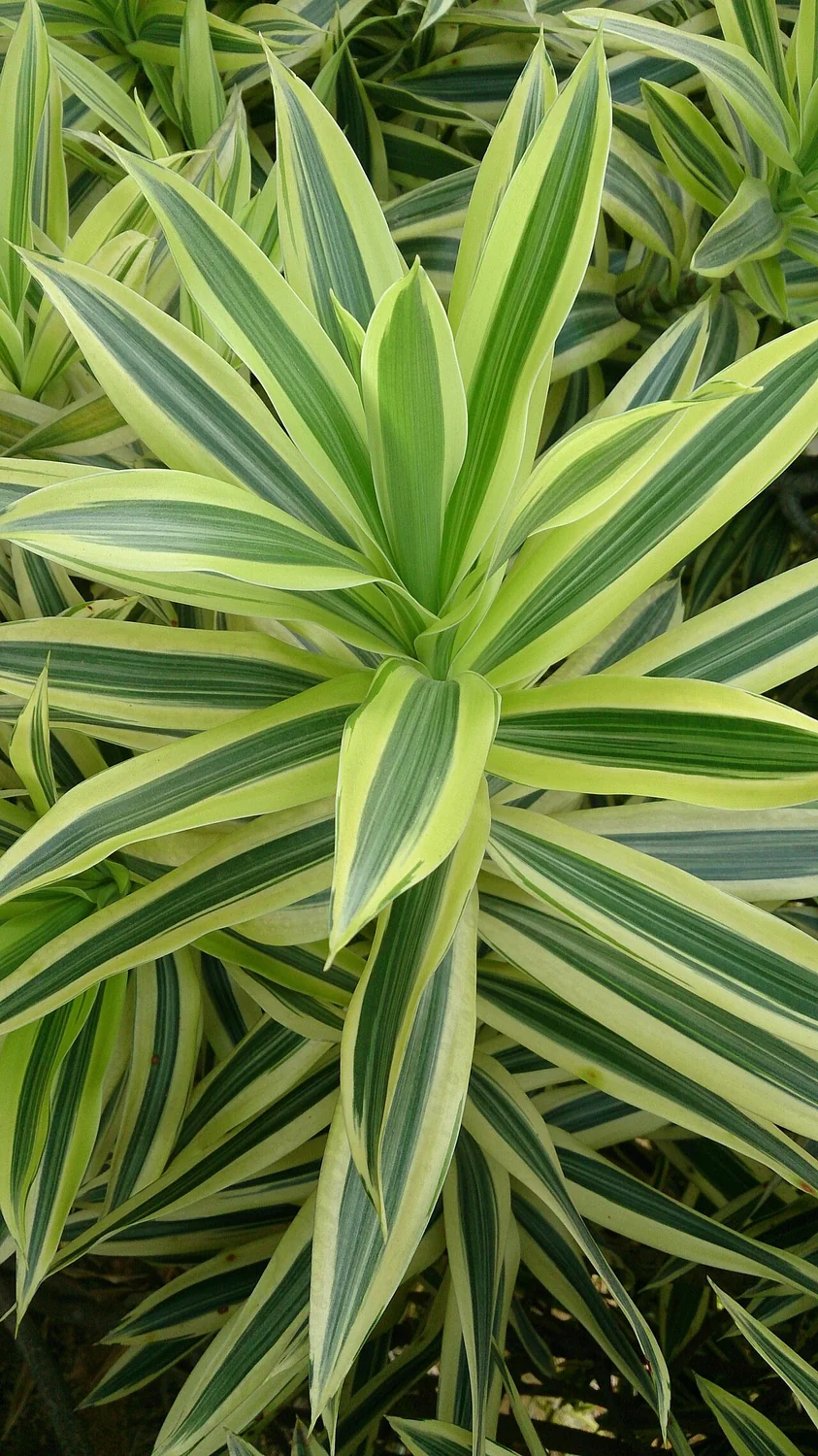
Color and Identity in a Branching Dracaena
Song of India dracaena is valued for clusters of relatively short leaves arranged around branching stems. Dracaena reflexa can be plain green, while cultivated forms may have yellow or cream margins that give the crown a luminous appearance. The common name is most strongly associated with those variegated plants, so it is worth asking which form has actually been supplied. A nursery can shape the plant into a compact bush or a more exposed small-tree outline. Neither presentation is permanent. New shoots and changing leaf retention gradually alter the balance between visible stems and leafy tips.
The species belongs to the western Indian Ocean region, including Madagascar and nearby islands, rather than deriving its entire natural history from the common name Song of India. That distinction is useful when writing a gift note or discussing its origins. The botanical epithet refers to the backward posture of older leaves. Its appearance can suggest a broadleaf shrub, yet it belongs to the dracaena group within the asparagus family. Keeping the scientific identity helps separate it from other striped cane plants whose care and eventual size differ, especially when nursery labels use musical trade names more prominently than botanical information.
A Bright Position for Compact Growth
A bright position is important when maintaining strong variegation and a compact crown. Filtered light near a window is a useful indoor starting point, with gentle sun introduced gradually if the plant can tolerate it. A dark office corner may allow a green specimen to persist but is less likely to maintain the appealing nursery density of a highly variegated form. Check the lower branches as well as the top: furniture and surrounding pots can shade them even when the upper crown receives light. A small tree-shaped plant looks more balanced when its retained foliage has an actual growing opportunity on several sides.
Water after the upper portion of the mix begins to dry, then allow the root ball to take up a thorough application before the surplus drains. Avoid keeping the container continually wet just because the plant carries many small leaves. In winter or a dim setting, water use can be considerably lower than in the nursery. A newly repotted plant needs special observation because the old root mass and the surrounding new medium may dry at different speeds. Check both areas gently. A heavy outer planter must not become a hidden reservoir that is repeatedly topped up whenever the exposed top layer looks dry.
Roots, Renewal, and Patterned Leaves
Choose an open fertile houseplant mix and a pot with working drainage. When the roots require more space, increase size modestly and preserve the previous planting depth. A woody-looking stem is not an invitation to pile compost against its base. Plants with several branches can become top-heavy, but stability can come from a broad-based cover or careful position rather than an oversized wet root volume. Keep access for watering and inspection. If the plant has been tied or trained for a particular nursery form, check that ties are not constricting expanding stems and remove decorative packing that traps persistent moisture.
Branching allows more shaping than a solitary palm, but good pruning still follows the plant's resources. Shorten selected sound shoots during a suitable growing period rather than stripping the entire canopy in a dim winter room. New branches may develop below the cut, gradually changing the outline. Retain enough healthy foliage to support that response. A long bare section may not regain leaves exactly where they were lost, so the goal is a renewed structure rather than perfect reversal of ageing. Plan one change, observe the response, and avoid combining severe pruning with a major root disturbance unless there is a clear reason.
Keeping Patterned Leaves and Checking Clustered Tips
Leaf cleaning is best done with a soft damp cloth, supporting the clustered tips rather than tugging them outward. Brown margins can arise from salts, water quality, roots, or dry moving air. Consider those factors before treating every change as a fertilizer shortage. Dracaenas can be sensitive to fluoride, so an appropriate alternative water source may be worth testing when that issue is plausible. Keep the rest of the routine steady during the comparison. Feed moderately when growth is active, according to the product label. Variegation does not create a need for stronger fertilizer, and extra nutrition cannot substitute for missing light.
Look into the tight leaf clusters and along stems for mealybugs or scale, and examine undersides for mites if foliage becomes stippled. An affected plant should be separated while the cause is identified and treated appropriately. Also distinguish pests from ordinary loss of the oldest lower leaves. A branch gradually showing more stem can be part of development, while several new tips declining together calls for a broader root and environment check. Avoid moving the plant repeatedly between a dark decorative site and a sunny recovery window. Those abrupt changes can add stress while obscuring which conditions actually produced the latest growth.
Gifting Color without Inventing a Tradition
As a gift, a well-grown variegated dracaena can personally suggest brightness, a new chapter, or an appreciation of color. Such a message should remain the giver's interpretation, not a purported traditional promise attached to the trade name. It is most suitable for someone with a bright indoor position who enjoys occasional shaping. Dracaena foliage can be harmful to pets if chewed, so discuss the recipient's household before choosing it. Supply the actual cultivar name when known and explain how its variegation differs from the plain green species. A clear identity makes future advice and replacement photographs much easier to interpret.
The plant's lasting character comes from a balance of branching, visible stem, and compact leaf clusters. Allow its outline to develop while providing the light needed to keep new shoots useful rather than elongated and sparse. Keep drainage checks straightforward and prune with a specific purpose, such as redirecting one oversized branch rather than continually clipping every tip. If the crown begins crowding a room, a planned renewal or another location is preferable to chronic trimming. Dracaena reflexa is an adaptable design plant when its particular growth is respected, and its bright foliage is supported by a genuinely suitable growing position.