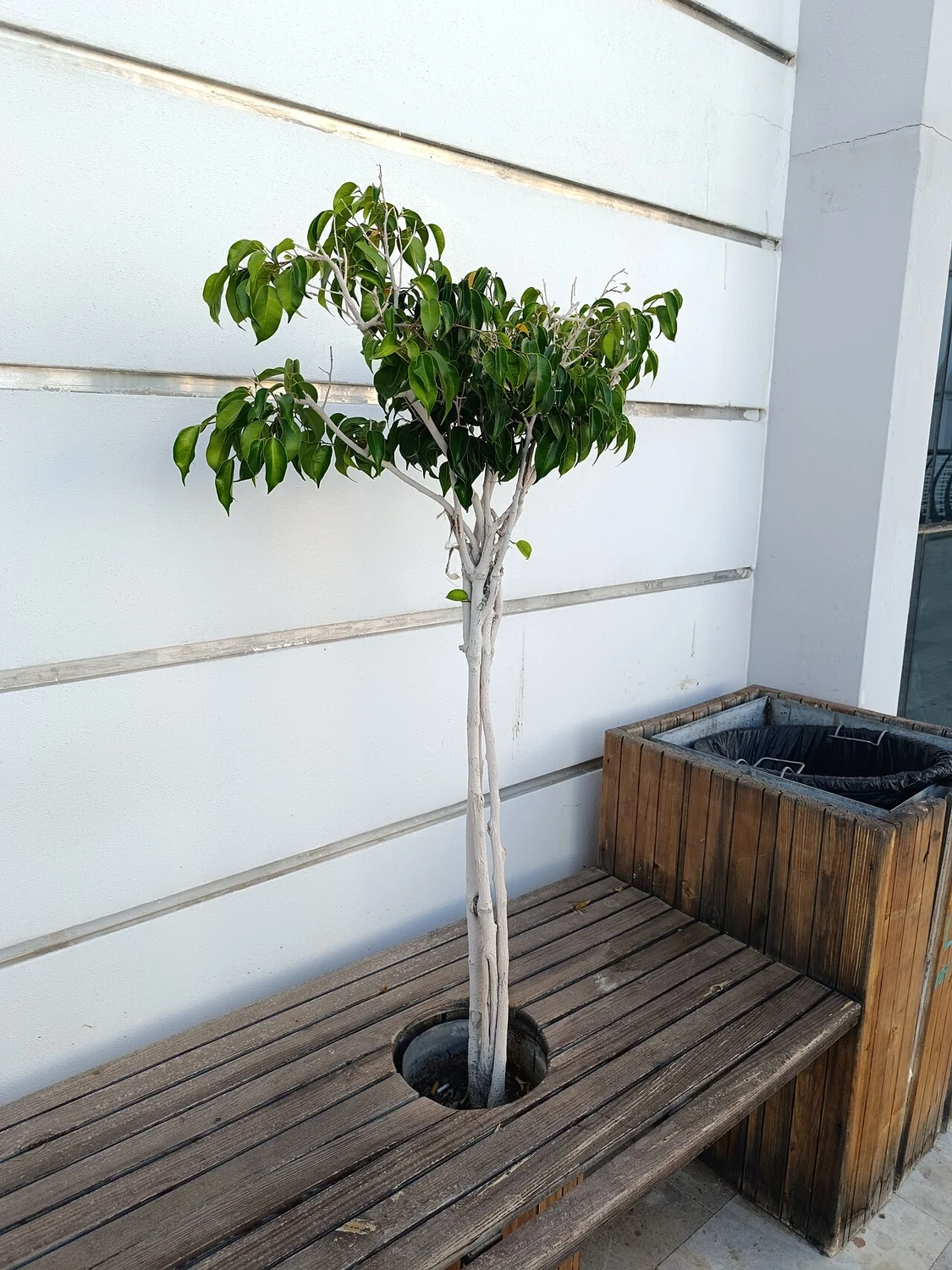
A graceful Asian fig in an indoor pot
The appeal of a weeping fig is movement within a tree shaped outline. Its fine branches carry small pointed leaves that make a room feel greener without forming the solid wall of foliage produced by a rubber tree. Ficus benjamina comes from tropical and subtropical Asia and northern Australia, where an unrestricted tree has a far larger crown than a nursery specimen suggests. Indoor cultivation keeps that growth in a container; it does not turn the species into a naturally miniature tree. Choose a plant with several living branch tips and a trunk proportionate to the available window space, rather than buying the tallest specimen that can be carried through the door.
Light and a workable indoor position
Place the tree where its entire crown receives bright daylight. Beside a large east facing window is often a useful starting arrangement, while a shaded north window may require supplemental light. A south or west exposure can also work after gradual acclimation, provided hot glass and sudden fierce sun do not scorch previously shaded leaves. The outermost leaves should not press against curtains that remain closed throughout the working day. Office ceiling lights are intended for people and may provide too little usable light for a large fig. Long bare inner branches are a reason to reassess illumination before applying more fertilizer.
Stability matters particularly during the first weeks after delivery. Moving from a nursery to a dry room changes light intensity, temperature, airflow, and water use at the same time. A weeping fig can shed leaves in response, yet immediate further relocation makes the cause harder to judge. Give it a suitable position, inspect root moisture, and allow the next flush to show whether the arrangement works. Keep the pot away from the direct blast of a heating register or an exterior door opened repeatedly in winter. A leaf falling after a cold draft does not establish that the plant needs another drink.
Reading the root ball before watering
Water according to what is happening inside the nursery root ball. Let the upper layer dry somewhat, then feel below it or use a plain wooden probe to compare deeper moisture. When irrigation is needed, wet the whole surface slowly and allow water to drain freely. Empty a decorative outer container afterward. The objective is a root zone that alternates between a thorough watering and a measured drying period, without remaining saturated or becoming completely desiccated. A large canopy near a bright window may use considerably more water than the same tree after a dull winter week. Avoid assigning one fixed weekly quantity to both situations.
A sound container arrangement is usually less conspicuous than an attractive outer pot, but it determines how easily the tree can be maintained. Keep drainage holes accessible and choose a cover that allows the nursery pot to be lifted out for inspection. Repot when roots have occupied the available space and watering has become difficult to manage, rather than whenever a new leaf appears. Move up modestly into a structurally open indoor container mix. A dramatic increase in pot volume leaves a large area of damp material around a comparatively small root system. Preserve the previous planting depth and do not bury the flare where the stems meet the roots.
Training and ongoing maintenance
Pruning should have a clear purpose. Shortening a branch just above a suitable leafy junction can limit width or direct growth toward an open area of the crown. Removing every dangling tip at once changes the graceful habit that makes the tree distinctive. Work gradually, retain foliage on the branches that are meant to remain, and avoid taking away a substantial portion of the canopy during an unsettled period. Wear gloves because cut fig tissue releases latex that can irritate skin. Braided trunks are nursery training, not the natural arrangement of this species, and old ties should be checked before they constrict thickening stems.
Feeding is most useful when the tree is making new shoots under adequate light. Check whether recently purchased potting mix already contains fertilizer, then use an indoor plant product at its labelled dilution and interval. Slow winter growth is not a reason to double the dose. Wipe the smaller leaves gently when dust accumulates, or rinse a manageable plant with lukewarm water while protecting the surrounding furnishings. Inspect the leaf undersides and the points where petioles join stems during that work. Sticky residue, small fixed bumps, fine webbing, or cottony patches call for pest identification before a routine change in watering is attempted.
Troubleshooting starts with the pattern of change. A few old leaves lost inside a growing crown differ from widespread yellowing accompanied by persistently wet mix. Crispy leaves on an unusually light pot suggest a different investigation from soft growth above a heavy, airless root ball. Check drainage, current light, recent temperature events, and the condition of the roots if the problem continues. Remove fallen leaves so they do not conceal the surface. A badly weakened tree should not be repeatedly repotted, pruned, fed, and moved during the same weekend. Choose the most plausible correction and judge the response from subsequent growth.
Meaning without unsupported promises
The word fig covers many species with different cultural histories, so the significance of another sacred fig should not automatically be assigned to Ficus benjamina. Its familiar role in homes, offices, and sheltered public interiors is enough to support an honest design interpretation: a branching evergreen can suggest continuity, shelter, or the gradual establishment of a place. Those are meanings a giver may choose for a message, rather than promises made by the tree. Small indoor figs are grown primarily for foliage; visible fruit or elaborate aerial roots should not be presented as an expected reward for ordinary household care.
A gift matched to the recipient
A weeping fig can suit a housewarming, a new studio, or the opening of an office when the recipient already has a bright permanent location. Agree on the eventual floor area before choosing a large specimen. It is less suitable as an unannounced gift for someone who travels frequently, has a dark apartment, or wants furniture and plants rearranged every week. Keep leaves and sap out of the reach of chewing pets and small children. Deliver the plant with its botanical label and a note about the current root moisture, rather than a rigid watering calendar. The most thoughtful part of the gift is a manageable tree that can remain in a suitable place.