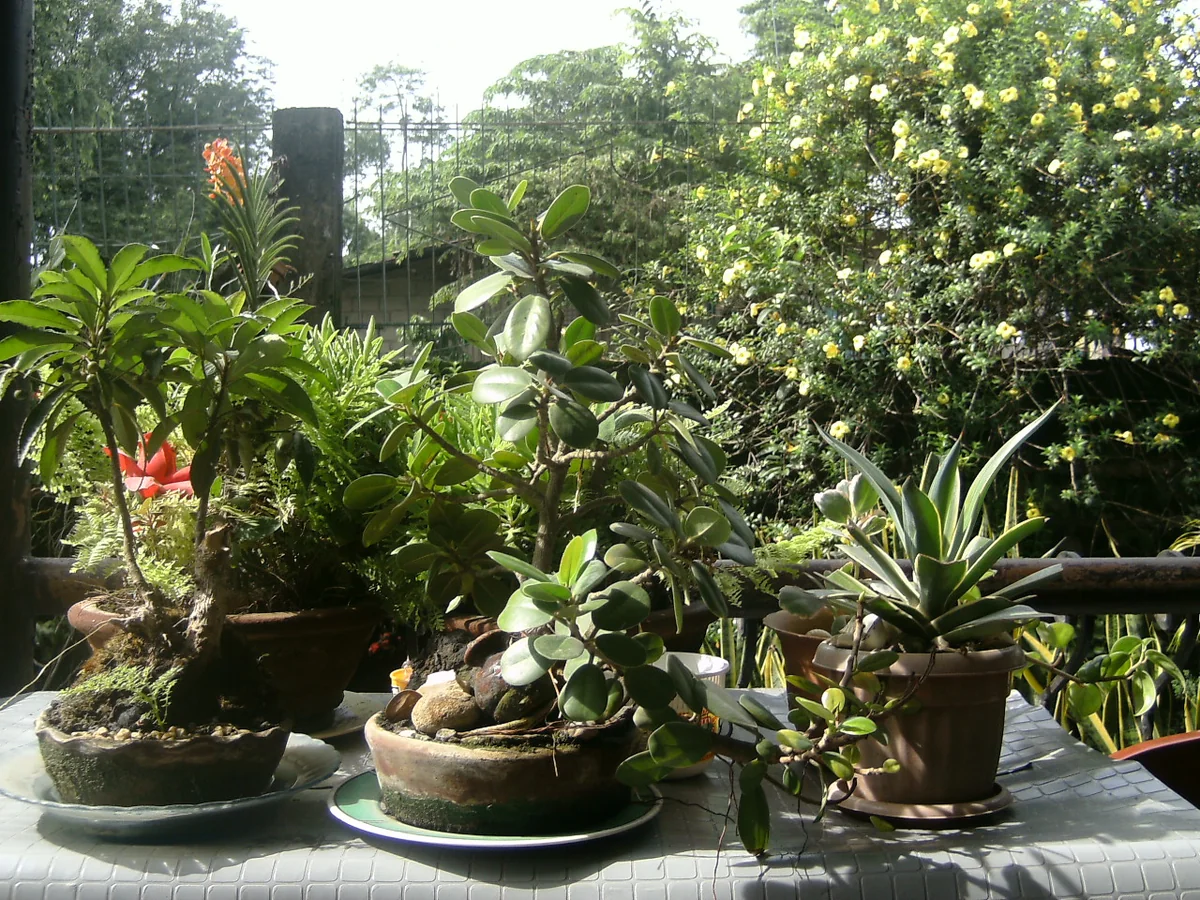
A tree behind the broad rubber leaves
A rubber tree is a tree of broad surfaces and deliberate proportions. Each leathery leaf has enough visual weight that a modest specimen can serve as a focal point beside a chair or across an office entrance. Ficus elastica is native to parts of South and Southeast Asia, including the region from the eastern Himalaya toward western Malesia. In warm outdoor conditions it can become a very large tree, sometimes producing substantial aerial roots. The slender plant sold for an interior is a managed juvenile. Its nursery size should therefore be treated as a starting point for long term training, not as a reliable forecast of its final height.
The common name has a material history: the plant produces a latex that was once used as a source of rubber. That fact does not make it the main modern commercial rubber tree, which belongs to another genus. The coloured sheath around an emerging leaf is another useful point of recognition. It protects the rolled blade before the leaf expands and later falls away. A discarded sheath is ordinary growth debris, not evidence that the new leaf has failed. Dark leaved, green leaved, and variegated selections also differ in appearance, so choose a labelled plant rather than assuming every rubber tree has the same colouring.
Light and a workable indoor position
Give the crown bright light with a manageable amount of direct sun after acclimation. A variegated plant generally needs enough illumination to maintain useful growth in its green portions, and it should not be placed in a dim corner merely because its pale markings look attractive there. Plants raised under shade can burn if transferred abruptly to a hot afternoon window. Introduce that exposure in stages and observe the newest leaves. If a tall stem carries widely spaced leaves and leans strongly toward the glass, the practical answer may be a closer or broader light source, rather than another support pole or stronger fertilizer.
Water, roots, and a draining container
Broad leaves and a sturdy stem do not justify leaving the roots continuously wet. Before watering, check whether the upper portion of the mix has dried and whether the pot has become lighter. Apply enough water to moisten the complete root ball, let surplus drain, and remove it from the saucer. The next watering depends on light, temperature, foliage area, and pot material. During a cool dull period, the interval can lengthen substantially. A little water added every day may keep the stem base damp while failing to reach roots at the outside of an older root ball. Slow complete watering is easier to assess.
Weight becomes important as the plant develops. A tall rubber tree in a lightweight nursery pot may tip when a new branch reaches toward the window, especially if the outer cover is narrow. Use a stable floor arrangement and check that drainage still works inside any decorative container. Repot only when the root system and watering behaviour warrant it, using a pot moderately larger than the existing ball. An open houseplant mix is preferable to compressed garden soil. Keep the trunk at its established level, and leave enough room below the rim to water without flooding the floor. A wheeled base can help with access if it locks securely.
Training and ongoing maintenance
Decide whether the desired plant is a single stem or a branching tree before making a major cut. An unpruned leader usually extends upward, while shortening it can encourage shoots below the cut. The response depends on the living nodes, season, and growing conditions, so cutting an unhealthy bare stem is not a guaranteed way to obtain a perfect canopy. Support a leaning young stem with a loose tie while correcting the light. When pruning is necessary, protect hands and surfaces from dripping latex. Do not allow cut leaves or stems to become toys for pets, and clean the tools before moving to another plant.
Leaf cleaning is unusually worthwhile on this species because dust is conspicuous on its large blades. Rest a leaf on one hand and wipe the upper surface with a soft damp cloth, then inspect the midrib and underside without bending the petiole sharply. Household oils and shine products are unnecessary for a clean appearance. A recently unfurled leaf is softer than an older one and should be left to strengthen before vigorous handling. Occasional turning can keep the crown balanced, but a large rotation immediately before a hot sunny day exposes previously shaded surfaces. Keep adjustments small enough to understand their effects.
Brown marks require context. A single tear in an expanding leaf can be mechanical damage, whereas spreading dark patches over several leaves deserve a review of moisture, air circulation, and plant health. Several leaves dropping after cold exposure differ from the slow loss of the oldest shaded leaf. Look for scale along veins, mealybugs in protected junctions, and mites when the room is dry. Feed conservatively during active growth, allowing for nutrients already present in fresh mix. Fertilizer is not a treatment for a waterlogged pot. Keep a record of substantial moves or pruning so a later symptom can be connected with an actual change.
Meaning without unsupported promises
There is no need to invent an ancient good fortune story to make a rubber tree meaningful. Its enduring leaves and clear architectural outline can be chosen to represent steadiness, making room for growth, or the start of a long project. That is a contemporary personal reading of its form. The historical connection with latex can also interest someone who enjoys materials, botany, or design, provided it is described accurately rather than turned into a claim about prosperity. Indoor flowering and fruiting are uncommon, so the gift should celebrate the foliage that the recipient is actually likely to see.
A gift matched to the recipient
For a housewarming or a new workplace, choose a specimen that can be carried, watered, and eventually repotted by its owner. A compact branching plant may be more useful than an impressive tall trunk with all its leaves near the ceiling. Confirm that the intended room has a bright window and space clear of frequent collisions. Latex and chewed foliage make access by children or pets a relevant consideration. Someone who enjoys gradually training a plant may appreciate a small labelled tree more than a finished oversized display. Include a stable pot arrangement and realistic care information so the recipient receives a living project that fits their home.