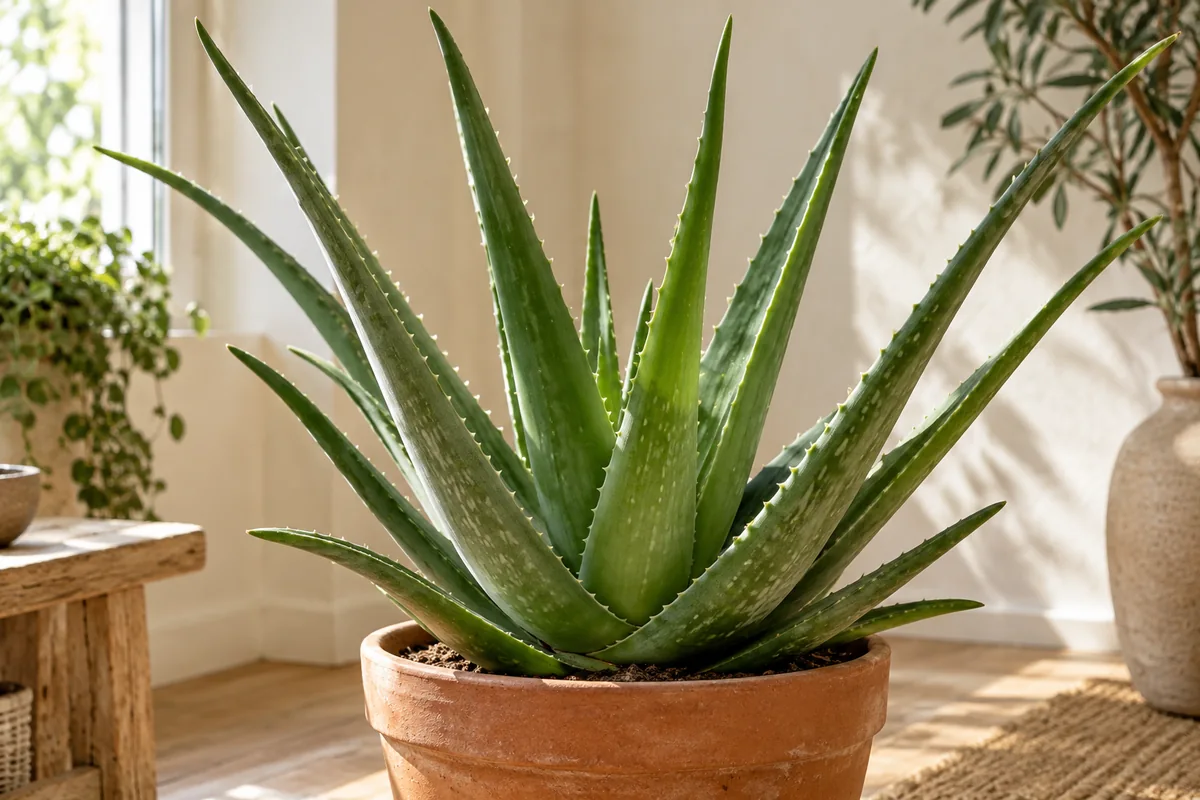
Aloe makes its strongest impression through shape. Thick pointed leaves rise from a central rosette, and a small plant can fill a bright sill without much surrounding decoration. That compact form depends on enough light. An aloe kept in a dim room often stretches, leans, and produces softer leaves that cannot be repaired simply by reducing water. Choose the window first and the decorative pot afterward. With a bright position and a root zone that dries thoroughly, the plant's needs are relatively easy to read. The aim is steady firm growth and a rosette that remains comfortable in the space available.
Provide strong daylight and introduce direct sun gradually. A plant that has spent weeks in a dim shop or shaded room can develop pale dry patches after an abrupt move into intense afternoon exposure. Begin with a gentler position and increase the time or intensity over several weeks. Window direction offers a starting clue, yet nearby trees, porches, and neighboring buildings can change the actual light considerably. Turn the pot occasionally if the rosette leans toward the glass. Keep leaves clear of cold windows at night and allow enough space so pointed ends are not repeatedly bent by curtains or passing movement.
Let the root ball dry substantially before watering again. A dry top layer can conceal a damp center in a deep pot, so use a probe or learn the difference in container weight. When watering is needed, wet the mix around the roots evenly and let excess drain. Avoid pouring water into the tight center of the rosette, where it can remain trapped. Empty the saucer or decorative outer pot afterward. A small amount of water every few days keeps the surface damp without providing a useful drying cycle. Bright warm conditions may shorten the interval, while a cool dim period can lengthen it considerably.
Use a coarse succulent mix and a container with clear drainage holes. A bag labeled for succulents may still contain a large fine organic fraction, so examine its structure before relying on the label alone. A suitable porous mineral ingredient can improve drainage where needed. An unglazed clay pot often helps a small aloe dry between waterings, though the whole room and root system still matter. Repot when roots have filled the available space or offsets make the container crowded. Increase the size modestly and maintain the original planting depth. Burying lower leaf bases in fresh damp mix can create problems at the crown.
Firm leaves can become thinner as stored moisture is used, yet leaf softness alone does not tell the complete story. Check the mix first. Soft tissue accompanied by a heavy wet pot suggests a different issue from a dry light container. Inspect roots and drainage if the base becomes soft or leaves loosen unexpectedly. Existing sun marks and creases remain visible, so evaluate a change in care through new leaves rather than expecting old damage to disappear. Avoid repeatedly moving the plant between very different exposures. A gradual adjustment followed by a stable period gives a clearer view of what the rosette actually needs.
Offsets often appear around the base as an established aloe grows. Leave them to form a clump if the container and light can support the arrangement. For separate plants, wait until an offset has enough size and roots to establish, then remove it carefully with a clean tool. Handle damaged cut surfaces according to a suitable succulent propagation method before planting in a small draining pot. Do not place a tiny offset directly into a deep oversized container of wet mix. Keep the new plant in bright sheltered light while it establishes and increase exposure gradually as it begins making firm fresh growth.
Feed sparingly during active growth according to the fertilizer directions, allowing for nutrients already present in fresh mix. Heavy feeding does not compensate for weak daylight and can contribute to salt accumulation. If deposits appear on the surface or pot rim, review the water supply and feeding rate. Flush a freely draining container when appropriate and let it drain fully. Remove a fully dry old leaf carefully without pulling at the whole rosette. The pointed edges and tips can catch on clothing or furniture, so move the plant by its pot and choose a position where people will not brush against it repeatedly.
An occasional photograph from above makes changes in the rosette easy to compare. Look for firm new leaves, a central growth point that remains clear, and a drying pattern that matches the season and position. If growth becomes pale and elongated, improve the light gradually before making repeated changes to fertilizer. Keep the root zone modest and accessible as the plant matures. Aloe works well as a window plant because its outline is simple and its pace is measured. Strong useful daylight, complete drainage, and patient intervals between waterings allow the leaves to retain their sculptural character without a complicated care routine.