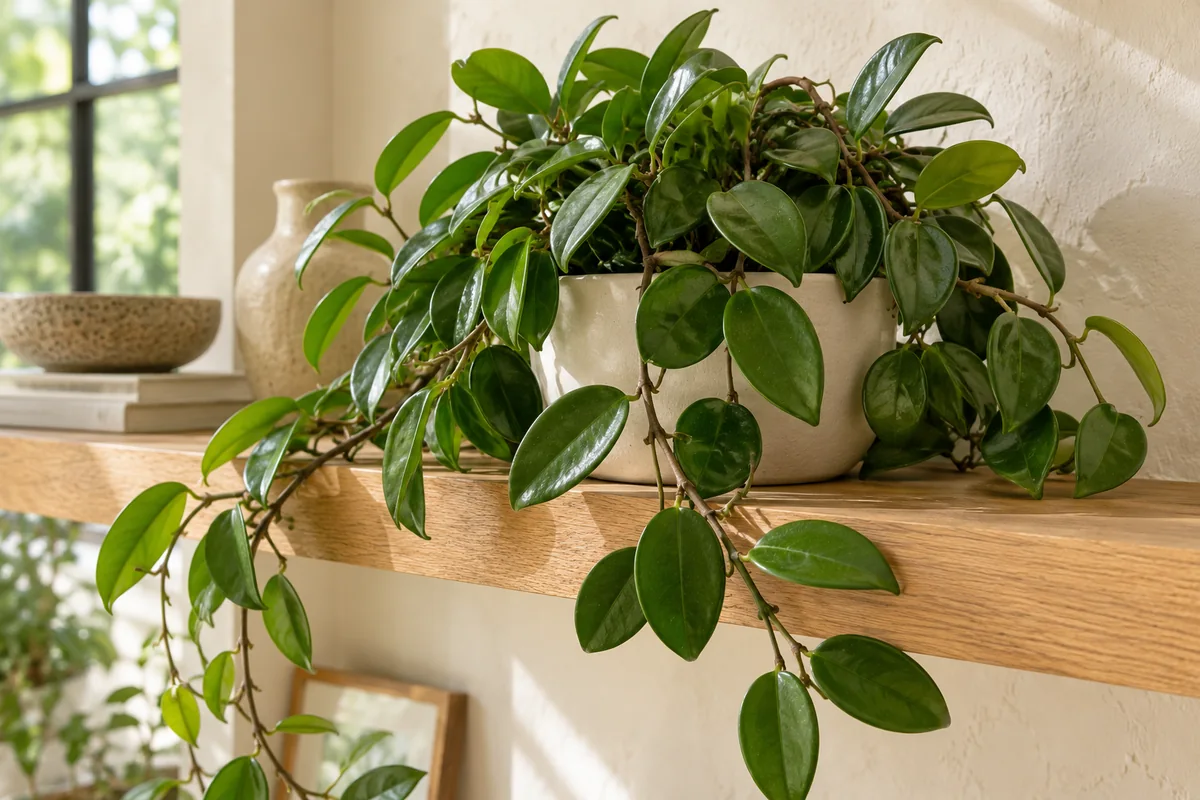
A hoya sometimes sends out a long bare runner before it fills that runner with leaves. The first reaction can be to cut it away because it looks unfinished. On Hoya carnosa, that searching vine is often part of normal growth. Give it somewhere sensible to go and wait to see what develops. Thick leaves and wiry stems make the plant look sturdy, yet the roots still need air and a useful drying interval. A bright position and a small manageable container provide a better foundation than constant rearranging. The plant's pace becomes easier to appreciate once each new runner is not treated as a problem to correct.
Bright indirect daylight suits most indoor Hoya carnosa plants. Some gentle morning or late sun can be useful after gradual acclimation, depending on the window and climate. Intense afternoon exposure may mark foliage that developed in shade. A dim corner can keep the plant static and make flowering less likely. Variegated forms usually benefit from a bright position that still protects the pale areas from abrupt strong sun. Look at the light reaching the whole vine arrangement, including the top of a trellis. A decorative loop placed behind a curtain can leave much of the plant more shaded than the pot's position suggests.
Let a substantial part of the mix dry before watering again. Thick leaves store water, so the root zone does not need to remain continuously wet. Check below the surface and learn the container's weight when dry. When it is ready, water evenly until excess leaves the drainage holes, then empty the saucer or outer planter. A root ball in a cool dim position may take much longer to dry than the same pot near a bright summer window. Limp leaves in wet mix need a root inspection rather than an automatic drink. The firmness of the foliage is useful only when read alongside the moisture in the container.
An airy mix with coarse bark and appropriate porous ingredients can suit the roots well, provided the texture also retains enough moisture for the room. The pot needs drainage and should remain fairly snug. Repot when roots have occupied the space or the mix has deteriorated, increasing the diameter modestly. Avoid repeatedly disturbing an established plant solely because it has long vines. A large canopy can grow from a relatively small root system. Keep stem bases at the previous depth and settle fresh mix gently. An oversized container of fine wet material is much harder to manage than a modest pot that dries predictably.
Guide new vines around a support while they are flexible, leaving room for stems to thicken. Soft ties should hold the vine without pinching it, and leaf stalks need freedom to move. Avoid bending a stiff mature stem sharply around a tiny loop. A trailing arrangement is also suitable if it gives the vines adequate light and keeps them clear of doorways or surfaces where they catch. Inspect the route occasionally so the plant does not wind tightly around neighboring pots. A deliberate support simplifies watering and cleaning because the whole plant can be moved as one arrangement when necessary.
Hoya flowers arise from short persistent structures called peduncles. After a flower cluster finishes, leave a sound peduncle in place because future flowers may develop there again. Remove only material that is clearly dry or damaged. Flowering depends on maturity, light, and growing conditions, so a young plant without buds is not automatically missing a special treatment. Avoid turning every care decision into an attempt to force flowers. Firm leaves and steady vines are useful progress. Once buds appear, keep the setting stable and continue checking moisture rather than making an abrupt move to a much sunnier location.
Feed modestly during active growth according to the chosen product directions, taking account of any nutrients already included in fresh mix. Too much fertilizer can add salts without improving a dim position. Wipe leaves with a soft damp cloth and support each vine while cleaning. The thick blades can still crease or detach if handled roughly. Inspect the joints and leaf undersides where small changes are easily hidden. Remove fallen material from the mix surface and check the pot base occasionally. A clear view of the root zone and drainage makes it easier to notice whether a routine that worked in summer needs adjustment during shorter days.
Watch new growth over several weeks rather than judging a runner the day it appears. Leaves can arrive after the vine has already extended, and their final size takes time to develop. If a long stretch remains bare in weak light, improve the position gradually before pruning repeatedly. Keep notes of watering intervals after any move or repotting session. A hoya does not need constant activity to become an interesting indoor plant. Its firm leaves, searching stems, and occasional flower clusters reward a stable arrangement. Useful daylight, an airy root ball, and patient handling let those details develop without making the care unnecessarily elaborate.