A succulent does not need to live on tiny sips simply because its leaves store water. Many familiar indoor succulents benefit from a thorough drink followed by enough time for the root zone to dry substantially. The difficulty usually lies in the second half of that cycle. A deep pot, dense mix, or dim position can keep the roots damp long after the surface looks dry. Begin with the growing arrangement rather than a special measuring cup. Light, container size, and mix structure determine how readily the plant returns to a dry state, and that state is what should guide the next watering decision.
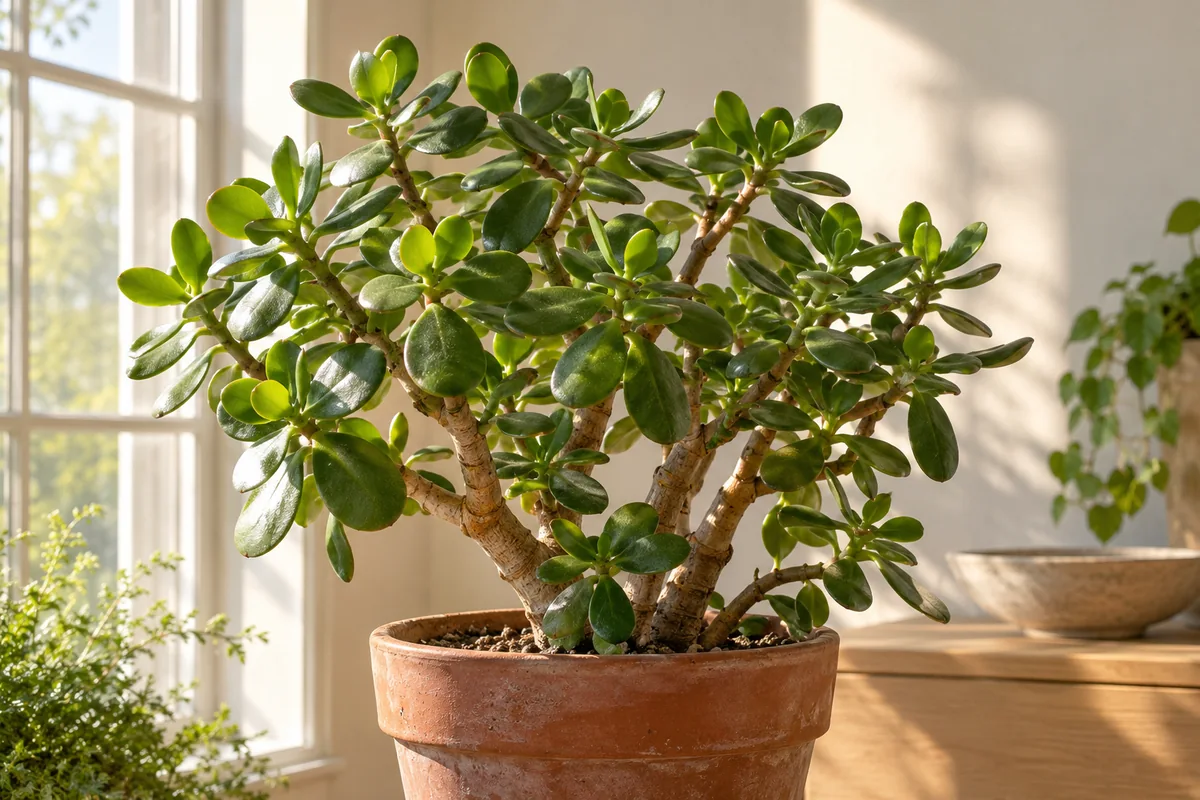
Identify the plant, since succulent is a description of water storing tissue rather than one universal care category. A jade, aloe, and many desert cacti often need a different moisture pattern from an epiphytic cactus. Specialist species may have particular seasonal requirements. Use species guidance where needed instead of forcing every thick leaved plant onto the same routine. For familiar drought tolerant window plants, strong useful light is an important starting point. Weak light slows growth and water use while encouraging stretched foliage. Reducing the amount of each drink cannot fully correct a position that leaves the plant without enough light to maintain its normal form.
Choose a container with drainage holes and size it to the roots. A small plant surrounded by a large volume of wet mix is difficult to manage even when the pot is made of porous clay. Increase the size modestly during repotting and keep the previous planting depth. Decorative outer containers should not conceal a standing reservoir. Remove the inner pot for watering when practical and empty collected water afterward. A closed planter filled with stones at the base does not provide the same root environment as a draining container. Clear drainage makes a thorough drink possible without leaving excess trapped below the roots.
Use an open mix that releases moisture at a useful pace in the room. A commercial succulent mix can be a starting point, yet some contain more fine organic material than the label suggests. Inspect the texture and adjust with an appropriate coarse porous ingredient where needed. Dense garden soil is unsuitable for an ordinary indoor succulent container. The mix should absorb water and then allow air to return as it dries. Very coarse material in a tiny warm pot may dry rapidly, while fine mix in a deep glazed pot can remain damp. Match the structure to the plant and setting rather than seeking one universal recipe.
Check moisture below the surface before watering. A wooden probe and the container's weight can help show whether the lower root zone is still damp. When it has dried enough for the species, apply water slowly and evenly until the root ball is wetted and excess drains. Avoid pouring into tight leaf centers where water may remain trapped. Let the pot finish draining and empty the saucer. Small frequent splashes can keep the surface and stem base damp while leaving deeper roots unevenly supplied. A clear thorough watering followed by a complete enough drying interval is usually easier to observe and repeat.
Read leaf firmness together with root moisture. Thick leaves can become a little thinner as stored water is used, yet soft tissue in a heavy wet pot suggests a different problem from softness in a dry light container. Inspect roots and drainage when stems or bases soften. Do not add water simply because a leaf wrinkles without checking the mix. Existing creases, scars, and sun marks usually remain visible. The newest leaves and stems show whether the current arrangement is improving. If growth is long and pale, review light before making repeated changes to watering or adding stronger fertilizer in the hope of producing compact tissue.
Seasonal changes can alter the interval substantially. A bright warm period of active growth may call for more frequent checks, while cooler dim conditions can extend the drying time. Some species have a distinct rest period, making specific guidance important. Feed sparingly according to active growth and product directions, allowing for nutrients already in fresh mix. Mineral deposits are a reason to review the water supply and feeding rate. A suitable flush can help a freely draining container when needed, followed by full drainage and the normal drying interval. Do not turn corrective flushing into constant saturation or combine it with extra fertilizer meant to remove a perceived deficiency.
Keep a short record of when the pot was watered thoroughly and when the root zone next became ready. That gap is useful information about the whole arrangement. Recheck it after repotting, moving the plant, or changing the room's heating. A successful succulent routine is not defined by an unusually small amount of water or a remarkably long wait. It is defined by a root system that receives moisture evenly and then returns to the conditions the species needs. Bright suitable light, open mix, a proportionate draining pot, and patient observation make that cycle far more dependable than a fixed weekly sip.