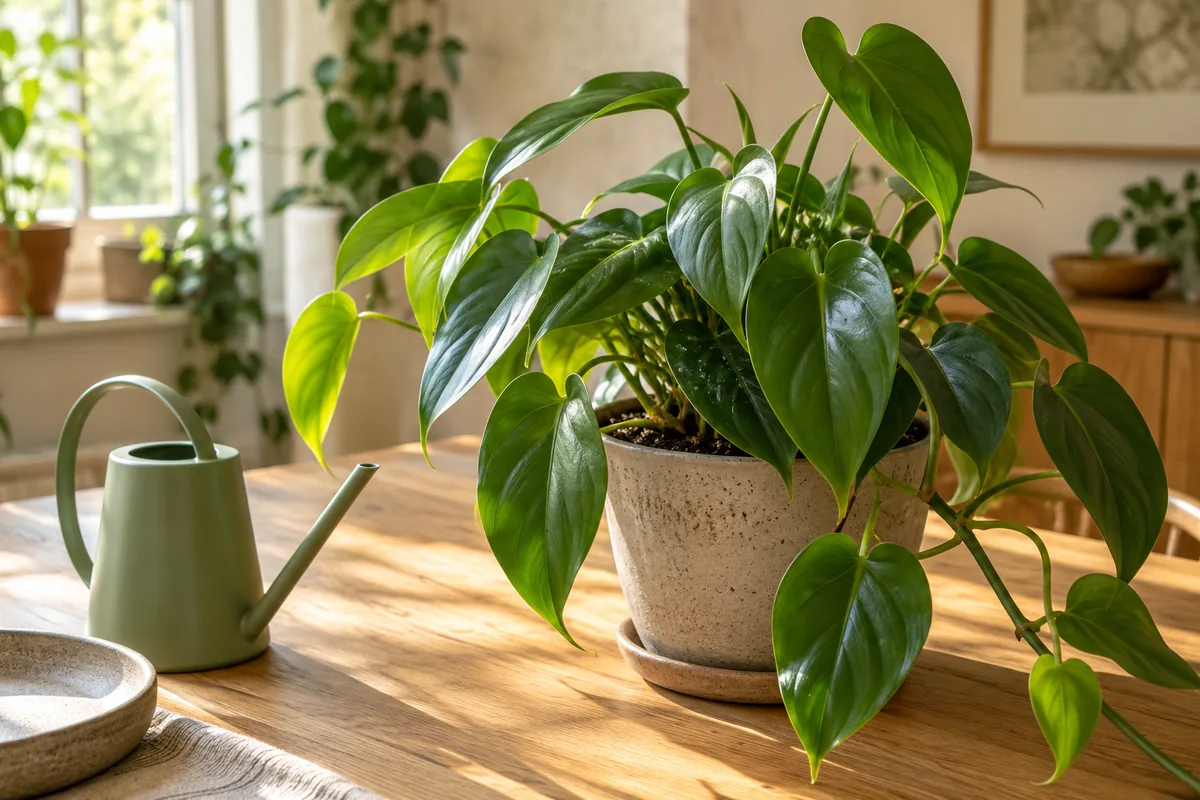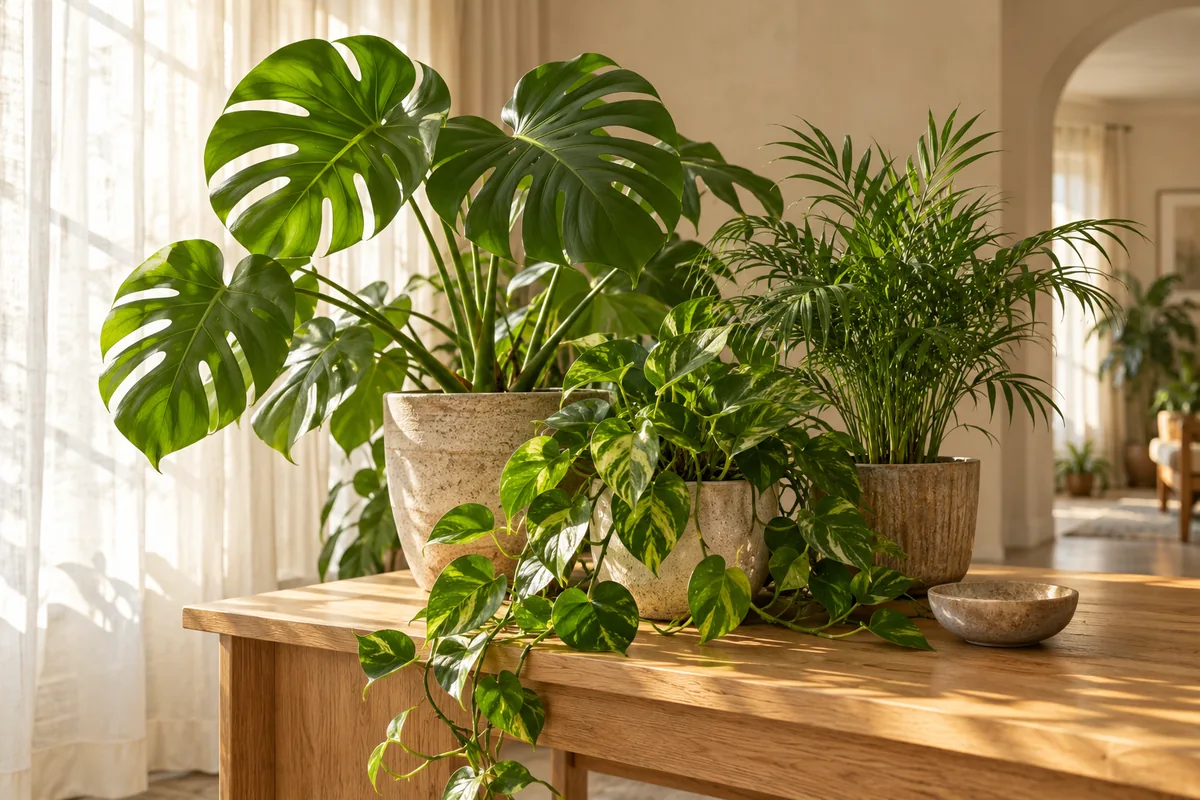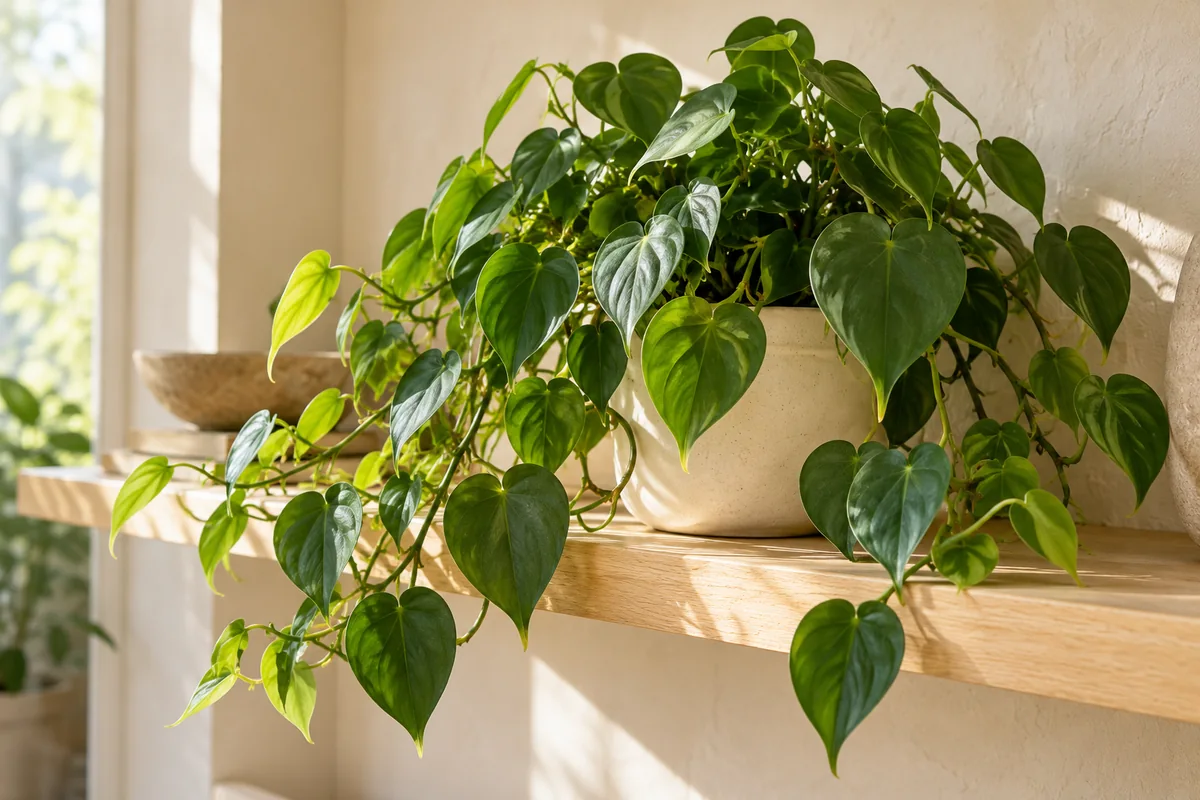
A vine can look busy while producing less useful foliage. The stem keeps lengthening, yet each new leaf sits farther from the last and may be smaller than the ones near the pot. That pattern often develops when indoor light is too weak for the plant's current growth. The space between two leaf attachment points is called an internode, and its length offers a practical clue. Look at several new sections rather than one unusual stretch. Some plants naturally send searching runners, so the pattern must be read alongside the species, the room, and the condition of the leaves before deciding what to change.
Start by comparing new growth with the plant's earlier form. A pothos or heartleaf philodendron that once made closely spaced leaves may become sparse after moving to a deep shelf. A jade can form longer softer stems in a dim room. A hoya may send a bare runner as part of its normal habit before leaves develop, so an isolated runner is not the same evidence. Identify the plant and inspect the whole outline. The direction of the lean, leaf size, and the amount of daylight reaching the crown help distinguish a normal growth habit from a position that needs improvement.
Observe the proposed position through an ordinary day. A room can feel bright to a person while the plant receives little light several feet from the window. Curtains, outdoor trees, porches, and nearby buildings change the exposure. High shelves may place the crown above the window frame in a shaded band. Leaves trailing lower into the room do not automatically receive enough useful daylight. Move closer to the opening in measured steps when appropriate, keeping the plant clear of cold glass and intense heat. The actual light at leaf level matters more than a general description of the room as sunny.
Introduce stronger exposure gradually, especially if the plant has spent a long time in shade. Sudden afternoon sun can mark leaves that developed under softer conditions. Start with bright indirect light or gentle morning sun according to the species, then assess the response. A sheer curtain can soften a strong beam where needed. Avoid moving the plant repeatedly between very different places every few days. New growth takes time to show the effect of a changed position. A stable period of several weeks gives a clearer comparison than a sequence of moves made before a single new leaf has finished opening.
Existing internodes do not shorten after light improves. The useful evidence appears in the next sections of stem and the leaves they carry. Mark the point where the plant was moved with a photograph rather than attaching anything tight around the stem. Compare the later spacing once several leaves have developed. If new growth becomes more compact, selective pruning can remove older bare lengths and refine the outline. Cutting immediately without improving the light may simply produce another sparse vine. Make clean cuts above suitable nodes and preserve enough foliage to support the plant while its new growth establishes.
Water use may change after a move to brighter conditions. Check the mix directly rather than assuming the previous interval still applies. A plant with more usable light may grow and dry its container sooner, while a large pot can still remain wet below the surface. Fertilizer cannot compensate for insufficient light and should not be increased simply because stems are long. Feed according to the product directions during active growth, accounting for nutrients already present in fresh mix. The root zone, light, and feeding routine should make sense together rather than relying on stronger fertilizer to force a compact shape.
Other factors can affect the outline, including natural age, crowding, support, and the plant's growth habit. A climbing species may develop differently when supported than when trailing. Some older lower leaves finish as a stem matures, leaving bare areas even in a suitable position. Look for a consistent change in the newest growth rather than treating every empty section as evidence of one cause. If leaf loss is rapid or stems soften, inspect roots and drainage as well. Long internodes are a useful clue, yet the whole plant deserves attention before an adjustment is chosen or a large amount of foliage is removed.
Keep the response simple: identify the plant, observe its light, make a gradual improvement where needed, and compare the next growth. A short note and a photograph can make that sequence easy to follow. If the room cannot supply enough daylight, a suitable supplemental light or a different plant choice may fit better than repeated pruning. The goal is not identical leaf spacing on every stem. It is growth that suits the species and the indoor setting. Reading the newest sections carefully helps turn a stretched vine from a vague disappointment into useful information about where and how the plant is growing. Leave enough time for several fresh leaves to develop before comparing the result with the older stretched section.