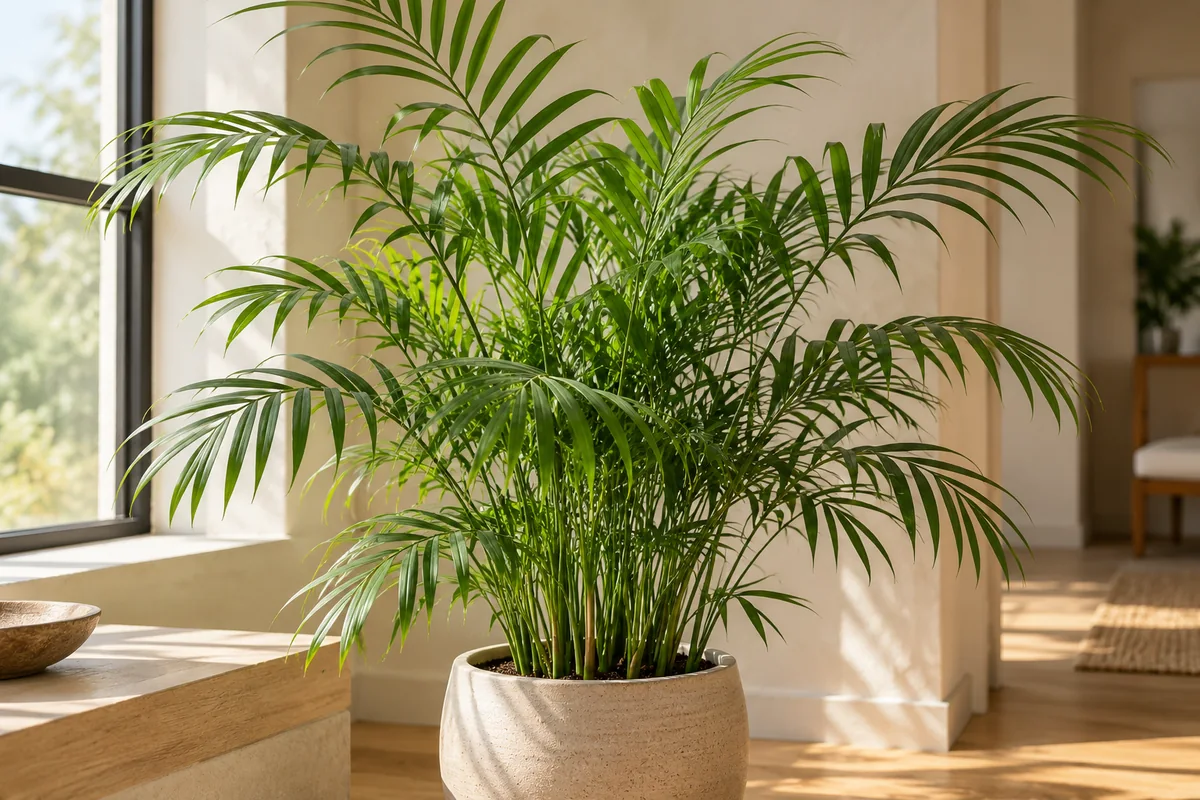
A parlor palm brings a light feathery outline to a room without immediately demanding the space of a large indoor tree. Its modest pace is part of that appeal. New fronds appear gradually from the growing points, and an older plant can remain in the same corner for a long time when the conditions suit it. The fine leaflets also reveal dry air, uneven watering, and rough handling through browned tips or broken edges. Give the pot a place where you can reach the mix and the whole canopy can spread. A little practical space makes this delicate looking plant much easier to maintain.
Chamaedorea elegans prefers filtered daylight and shelter from strong direct sun. It tolerates lower light than many palms, yet a bright room still offers a better basis for steady growth. A position a short distance from a useful window can work, depending on outdoor shading and the size of the opening. Avoid assuming that any dark corner will suit it indefinitely. Intense afternoon sun can mark leaflets that developed in shade. If you move the plant to a brighter position, make the change gradually. Keep it away from cold glass, frequently opened doors, and heated airflow that dries the fine foliage quickly.
Water after the upper mix begins to dry, checking beneath the surface so the deeper roots do not remain constantly saturated. The plant appreciates an evenly moist root zone with enough air around the roots. Apply water slowly across the surface and let excess drain through the holes. Empty the saucer afterward. A pot that feels heavy still contains substantial moisture even if the top looks dry. Conversely, a very light pot and curling dry leaflets suggest that the root ball needs attention. Avoid treating browned tips alone as proof of thirst, since salts and dry air can produce a similar appearance.
Use an open houseplant mix and keep the container only modestly larger than the root system. Parlor palms do not need frequent repotting simply because their fronds become wider. Move up a size when roots have filled the available space and watering becomes difficult to manage. Handle the root ball gently and avoid pulling apart the roots unnecessarily. Keep the stems at their previous depth. Many pots contain several individual seedlings grown together for fullness, so a crowded appearance above the surface does not mean there is a single trunk that can be divided anywhere. Inspect the structure carefully before separating a clump.
A palm grows from its central growing point, and cutting the top from a stem does not make it branch like a familiar woody shrub. Preserve emerging spears and avoid trimming green fronds merely to force a bushier outline. Remove a frond once it has fully finished, cutting near its base without injuring neighboring stems. A partially browned frond still carries useful green tissue. If tidying its tips, leave a narrow dry margin instead of cutting deeply into the living leaflet. Some normal turnover occurs among older lower fronds as new growth develops. Several fronds declining together deserves a closer look at roots and room conditions.
Dry indoor air can contribute to damaged tips, particularly near heating vents. A humidifier used and cleaned according to its instructions can be useful in an appropriate room. Misting changes the air around the leaves only briefly. Keep the plant away from direct airflow and allow gentle circulation around the canopy. Dust can be removed with a careful shower using mild temperature water, followed by thorough drainage. Support the pot and avoid bending the fine stems. Cleaning also creates an opportunity to inspect leaflet undersides and stem joints for small changes that would be difficult to see in a dense untouched canopy.
Feed lightly during active growth according to the product directions, allowing for nutrients already present in fresh mix. Slow growth is normal for this palm and is not a reason to apply stronger doses. Mineral accumulation can affect tips, so review fertilizer use and the water supply if a crust appears around the pot. Flush a freely draining container when appropriate and let excess water leave fully. If new fronds become very pale, inspect the growing conditions and root moisture before assuming a specific nutrient shortage. A stable setting and an intact root system make any later adjustment easier to evaluate.
Watch the newest spear as it lengthens and opens. Its progress gives a useful sense of the plant's pace without requiring weekly visible changes. Take an occasional photograph to compare canopy fullness and notice whether the pot is leaning toward the window. Rotate gently when needed and check the mix more often in bright warm weather. A parlor palm suits a quiet growing routine with accessible drainage and room for its fronds. Preserving the growing points, watering according to the root zone, and keeping the fine foliage away from harsh sun and dry airflow allow its soft upright shape to remain the main feature.