A light placed somewhere above a plant is not automatically reaching the leaves in a useful amount. Distance, direction, the size of the canopy, and the fixture's output all affect what the plant receives. A small lamp several feet away may brighten the room without doing much for a shaded pot. Begin with the growing space and the plant's needs, then place a suitable fixture according to its instructions. The goal is a consistent supply of useful light across the foliage. Decorative glow and impressive product wording are less informative than the actual arrangement and the way new leaves develop over time.
Identify whether the plant needs modest supplemental light or a primary source because natural daylight is very limited. A shade tolerant foliage plant and a sun loving succulent have different requirements. Seedlings and flowering plants may need another arrangement again. Match the equipment and exposure to the species rather than assuming one small lamp suits an entire room. Manufacturer guidance on coverage and distance provides a starting point, particularly when output data are available. Avoid relying on electrical wattage alone as a description of what reaches the leaves. Energy use and plant usable light are related through the fixture's design, not through a universal conversion.
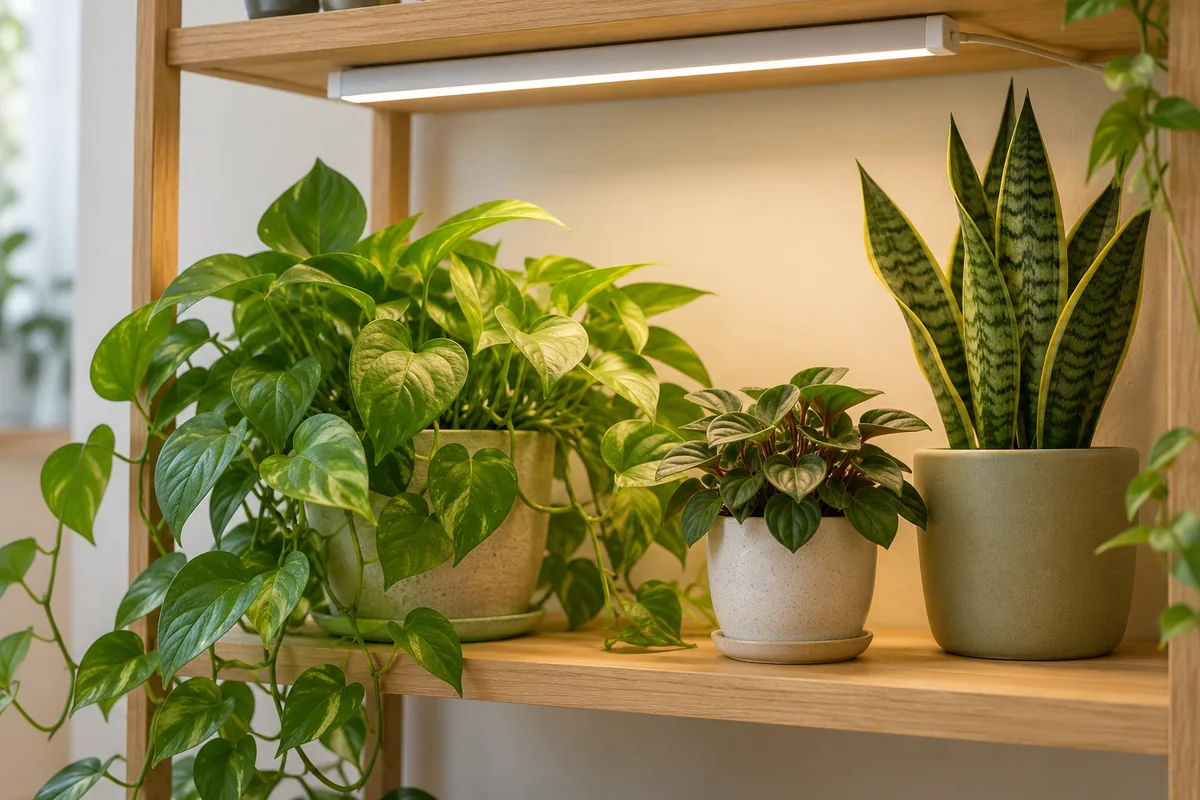
Place the light so it covers the actual canopy rather than the empty space beside it. Overhead placement often supports a more upright outline, while a lamp aimed strongly from one side may encourage directional growth. Wide plants need a useful spread, and several pots can shade one another if crowded together. Check the leaves at the edges as well as the top center. Keep the fixture securely mounted and follow its clearance and electrical instructions. Watering should not splash connections or make the setup awkward to move. A simple accessible arrangement is easier to maintain than a crowded shelf full of cables and hard to reach saucers.
Distance needs to follow the fixture and plant rather than a single rule repeated for every lamp. A strong source too close can mark foliage or overheat the immediate area, while a weak source too far away may provide little benefit. Begin with the manufacturer's recommended range and watch the plant as it grows toward the light. Adjust height or position when the canopy changes. Check temperature near leaves and keep them from touching the fixture. New foliage is often tender and should not be suddenly placed much closer than the mature leaves below it without considering the change in exposure.
Use a timer or another consistent routine to provide a daily light period with an appropriate dark interval. Leaving a grow light on continuously is not a general solution for every houseplant. The suitable duration depends on the plant, the amount of natural daylight, and the intensity of the supplemental source. A dim light running for longer does not always replace a source strong enough for the species. Keep the schedule practical and stable, and review specialist requirements where flowering responds to day length. A timer also reduces the chance of accidental all night exposure or repeated days when the light is forgotten entirely.
Introduce supplemental light gradually when it creates a substantial increase over the previous position. Leaves formed in deep shade may not tolerate an abrupt strong exposure. Begin conservatively within the equipment's guidance and compare new growth over several weeks. Watch for pale dry patches, excessive warmth, or continued long thin stems. The first two may indicate too much exposure or heat, while the last can suggest that useful light is still insufficient. Read those signs alongside root moisture and species habits. A hoya's natural searching runner is not identical evidence to a succulent repeatedly producing pale stretched leaves beneath a distant lamp.
Water use can change once the plant has more useful light. Check the mix directly instead of assuming the old interval still applies. Increased growth may shorten the time between drinks, yet a large dense pot can remain wet below a dry surface. Feed according to the plant's active growth and the fertilizer instructions, accounting for nutrients in fresh mix. Extra light does not justify stronger fertilizer automatically. Keep the fixture and nearby surfaces clean according to their instructions, since dust can reduce performance and make inspection harder. Revisit the setup after moving pots or adding a support that changes where the foliage sits.
Evaluate the arrangement through the newest leaves and stem sections rather than expecting an immediate transformation in old growth. Useful signs include reasonable leaf size, firmer stems, and spacing appropriate to the species. Photograph the plant from the same angle to make gradual changes easier to compare. If the setup remains ineffective, review coverage, distance, duration, and the plant's requirements before adding more equipment at random. Supplemental lighting works best as a clear practical system. A suitable source placed where the leaves can use it, operated consistently and kept clear of water, can make an otherwise limited indoor growing space much more workable.