The soft light beside a north facing window can make leaves look especially clear and richly colored. In many Northern Hemisphere homes, this exposure receives less direct sun than the other sides of the building. That does not make every north window a dim corner. A large unobstructed window can provide a generous stretch of diffuse daylight, while a small window beneath a balcony may offer very little. Start by looking at the actual view outside and the position of the plant inside. The distance between a leaf and the glass often matters more than the direction printed on a compass application.
Observe the window at several times on a reasonably clear day. Note the nearby walls, trees, porches, and roof edges that interrupt the sky. A plant receives light from the visible sky as well as from any direct sunbeam. If most of that sky is hidden, the usable brightness may be limited throughout the day. In the Southern Hemisphere, a north facing window has a different sun pattern and can receive strong direct light. Even in the Northern Hemisphere, long summer days may bring some early or late direct sun to certain north exposures. Watch the site rather than relying on the direction as a complete description.
Put suitable foliage plants close enough to the window to use the available light. A narrow table or sturdy shelf can bring leaves into a brighter zone without pressing them against the glass. Leave space for air movement and for opening curtains. Avoid placing a plant behind a dense screen of larger leaves, since the front row can shade the plants behind it considerably. Shelves above or beside the opening may appear attractive while receiving much less light than the center of the window. Check each level independently. A plant that grows well on the sill does not prove that a deep shelf across the room offers equivalent conditions.
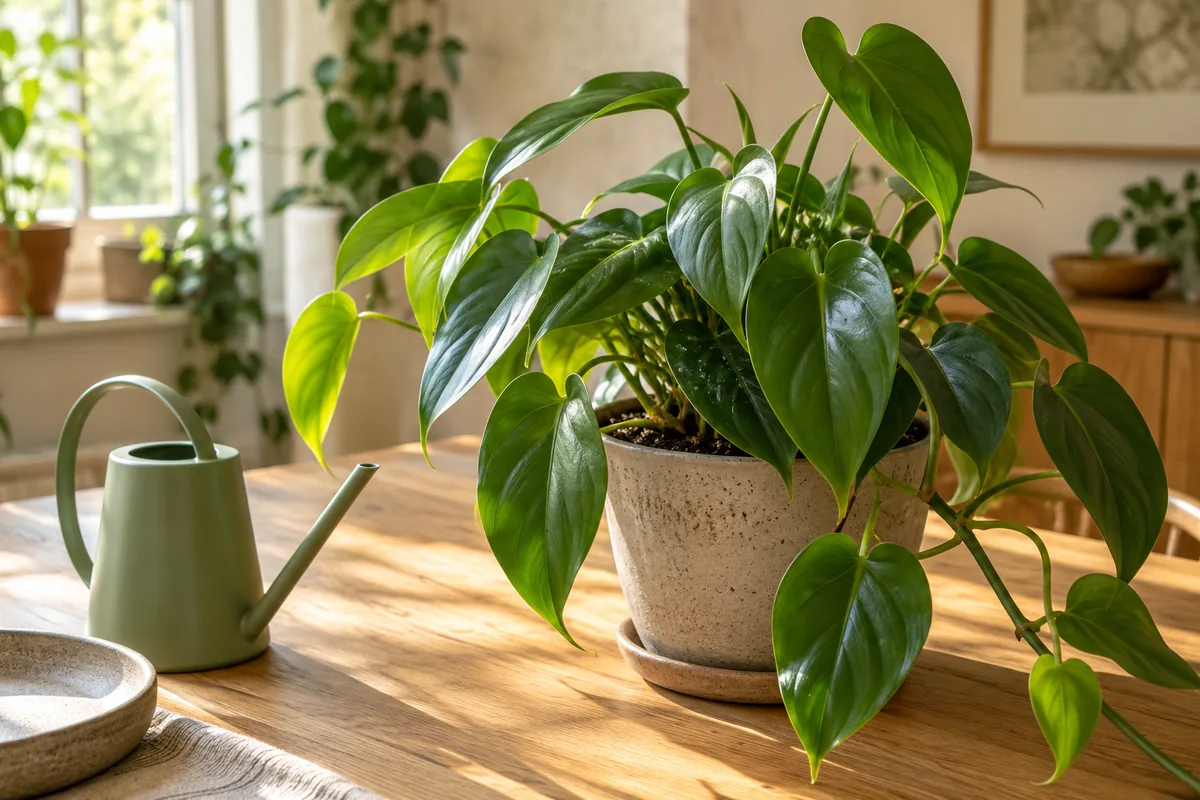
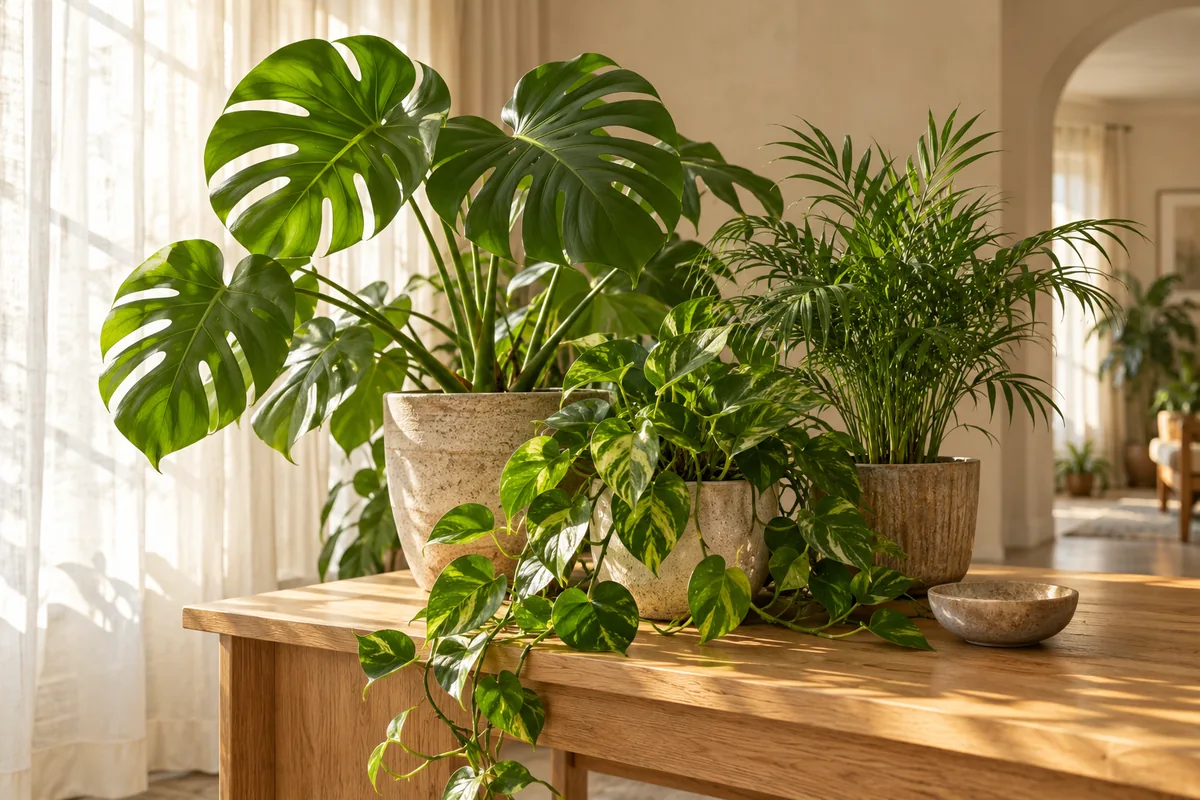
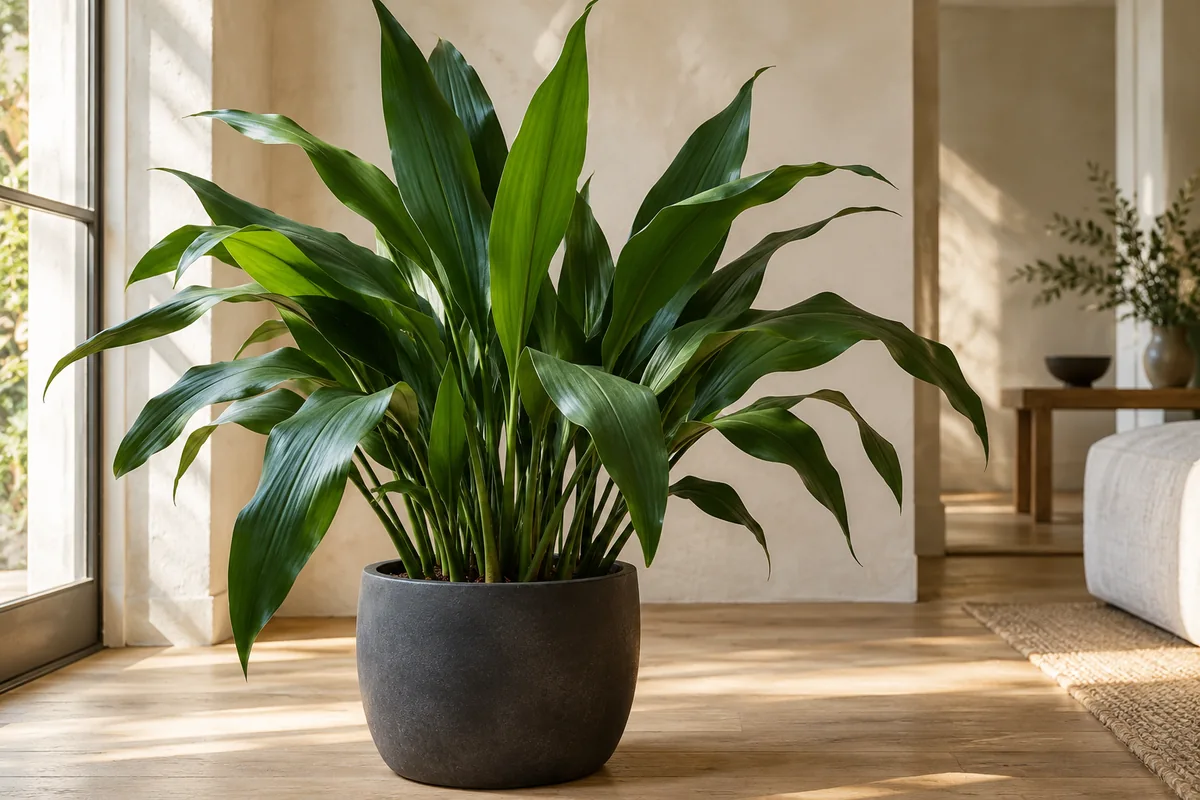
Select plants for the conditions you actually have and expect gradual growth when light is modest. Pothos, heartleaf philodendron, cast iron plant, and some ferns can be reasonable candidates for a bright north window, depending on temperature and moisture care. A plant described as tolerant of lower light still needs daylight or an appropriate artificial source to grow. Tolerance does not mean that a dark hallway will support it indefinitely. Brightly variegated plants may be slower or less strongly patterned when light is limited. Sun loving succulents generally need a brighter exposure than a typical shaded north window can provide without supplementary lighting.
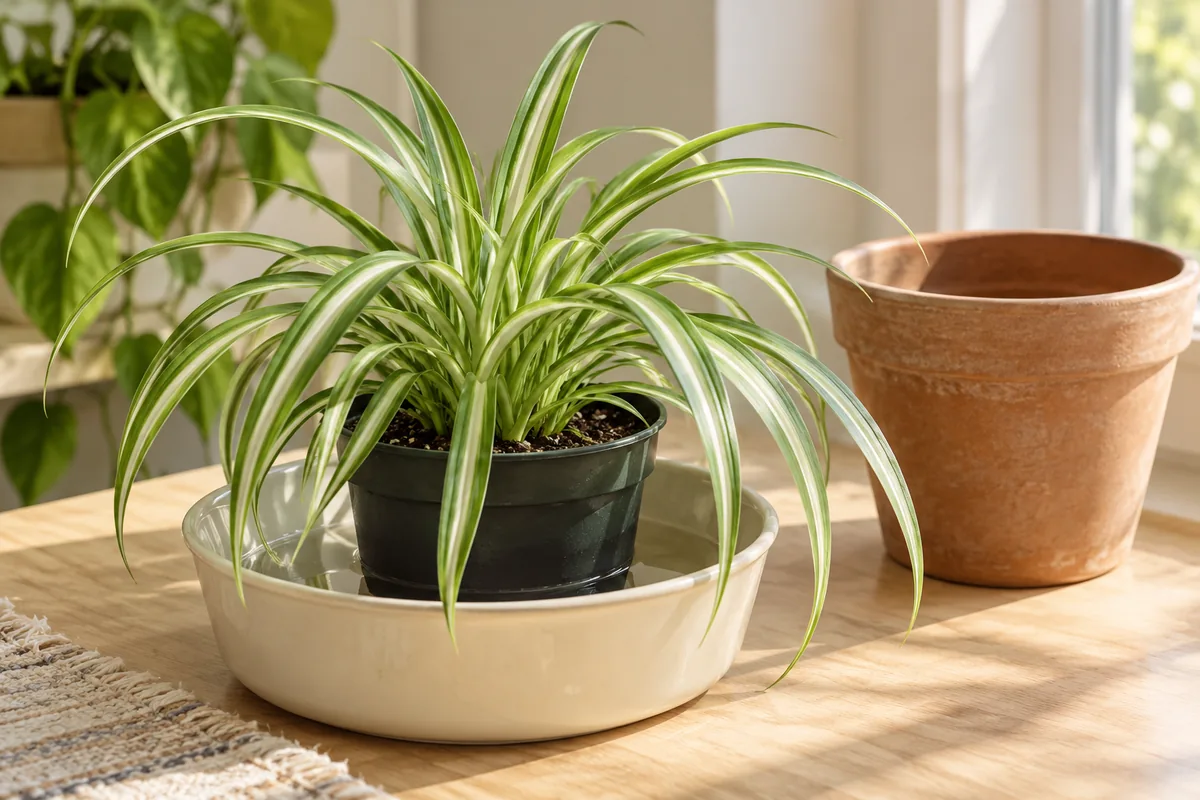
Watering should follow the root zone rather than the room's gentle appearance. Plants using less light often use moisture more slowly, so a weekly routine copied from a sunnier window can leave the mix wet for too long. Feel the mix at an appropriate depth and learn the container's weight as it dries. A fern may need moisture retained through the root ball, while a snake plant should have a more substantial drying interval. Empty decorative covers after watering. Cooler glass and lower evaporation can make hidden water especially persistent. The useful adjustment is a longer observation period where needed, not a tiny daily splash applied to every container.
Watch new growth over several weeks. Longer spaces between leaves, smaller new leaves, a strong lean, and a plant that continually sheds lower foliage can suggest that the position is too dim for its needs. These signs should be considered together with root conditions and recent changes. Turn a suitable plant slightly during ordinary care so growth is not concentrated on one side, while keeping its light exposure consistent. Turning cannot replace missing light. If growth remains sparse, move the plant closer to the window or provide a suitable grow light for a predictable daily period. Keep the light's installation instructions and the plant's response in view.
The conditions at a north window change with the season. Outdoor trees can shade the opening more strongly after leafing out, and shorter winter days reduce the total light received even when the window seems equally bright at midday. Glass can also become cold enough to affect foliage touching it. Move leaves away from chilly panes and avoid trapping a plant between a closed curtain and the window overnight. Check for warm air from a nearby radiator, which can dry one side of the pot quickly. A stable position with useful daylight is preferable to repeatedly moving plants between extreme temperatures in an attempt to improve the exposure.
A north window works best when you treat it as a particular growing site rather than a limitation. Keep a few simple notes about which plants produce firm new growth and how their pots dry across the year. Arrange the collection so each plant receives a clear view of the window, with room for leaves to expand and watering to remain manageable. If a species consistently stretches, choose a brighter place for it and give that space to a plant better suited to diffuse light. Care becomes easier when the plants and the window are matched through observation instead of relying on a general label alone.