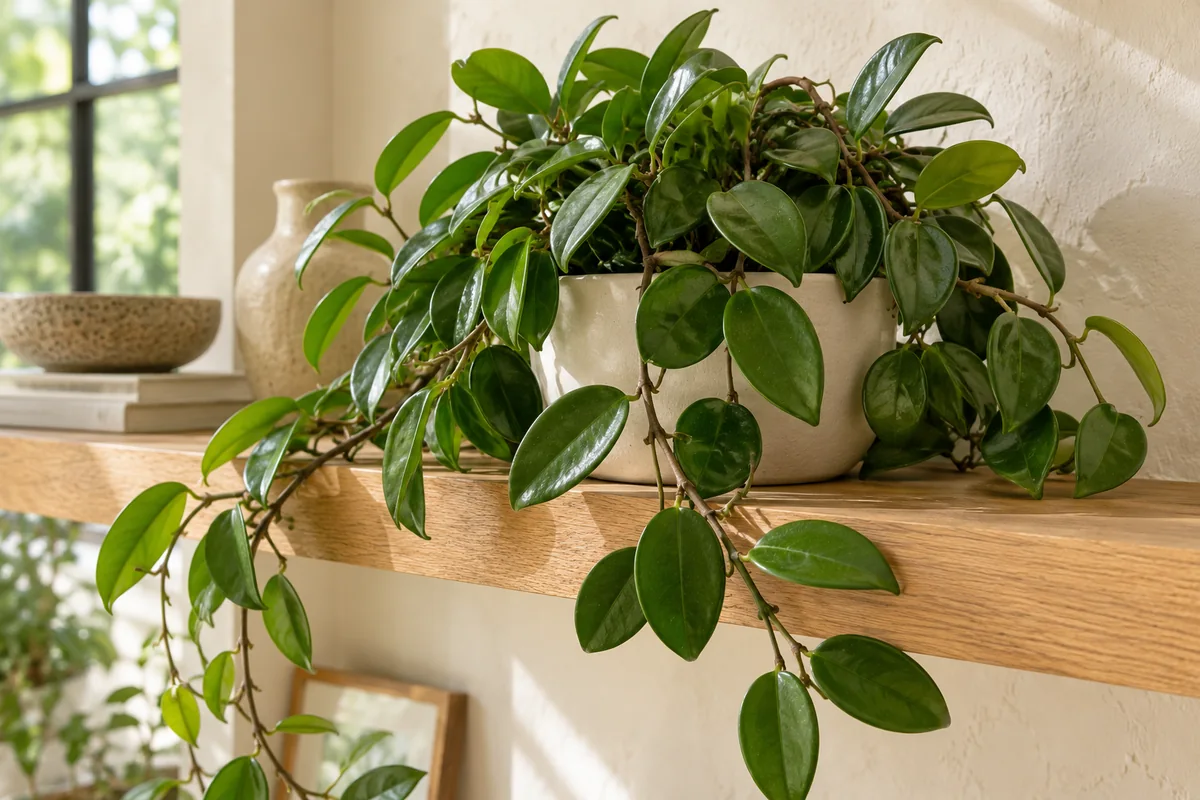
A hoya can send a long searching vine across a shelf while its roots remain comfortable in a small pot. That mismatch makes the visible length of the plant a poor reason to repot. Look instead at the root ball, the condition of the growing mix, and how the container dries. A plant that has filled its pot and becomes difficult to water evenly may benefit from fresh space. One with sparse roots in damp material may need a more proportionate container. The work is easiest when you decide whether you are solving crowding, worn mix, or an awkward support arrangement before disturbing the roots.
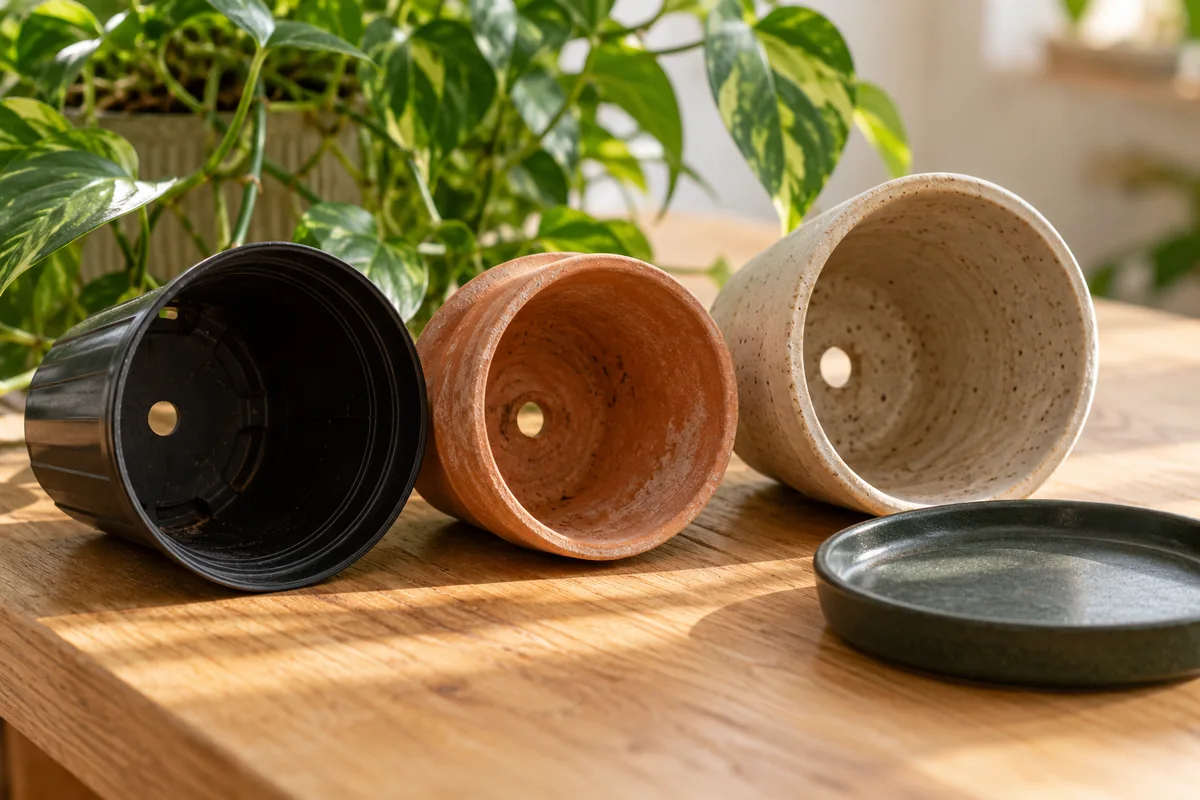
Choose a time when the plant is growing and prepare the whole setup first. Gather a clean pot with drainage, suitable medium, and ties or a support if the vines already use one. Hoya species differ, so keep the requirements of the plant you actually have in view rather than treating every thick leaf as evidence of identical care. For a common Hoya carnosa, an airy medium with useful moisture retention is a practical starting point. The new container should be only modestly larger if the root ball is crowded. A small plant does not need a wide ring of fresh damp mix simply because its vines are long.
Untangle only what is necessary to handle the plant comfortably. Flexible vines can be supported across the work surface, while older stiff sections should not be bent sharply. If the plant is attached firmly to a trellis, preserve that arrangement where practical. Removing every tie can create more work and increase the chance of snapping a stem. Avoid cutting off the short old flowering spurs merely to tidy the plant during repotting, since many hoyas can flower again from these structures. Keep the task focused on the roots and container. Major pruning and a complete retraining can be considered separately when there is a clear reason for them.
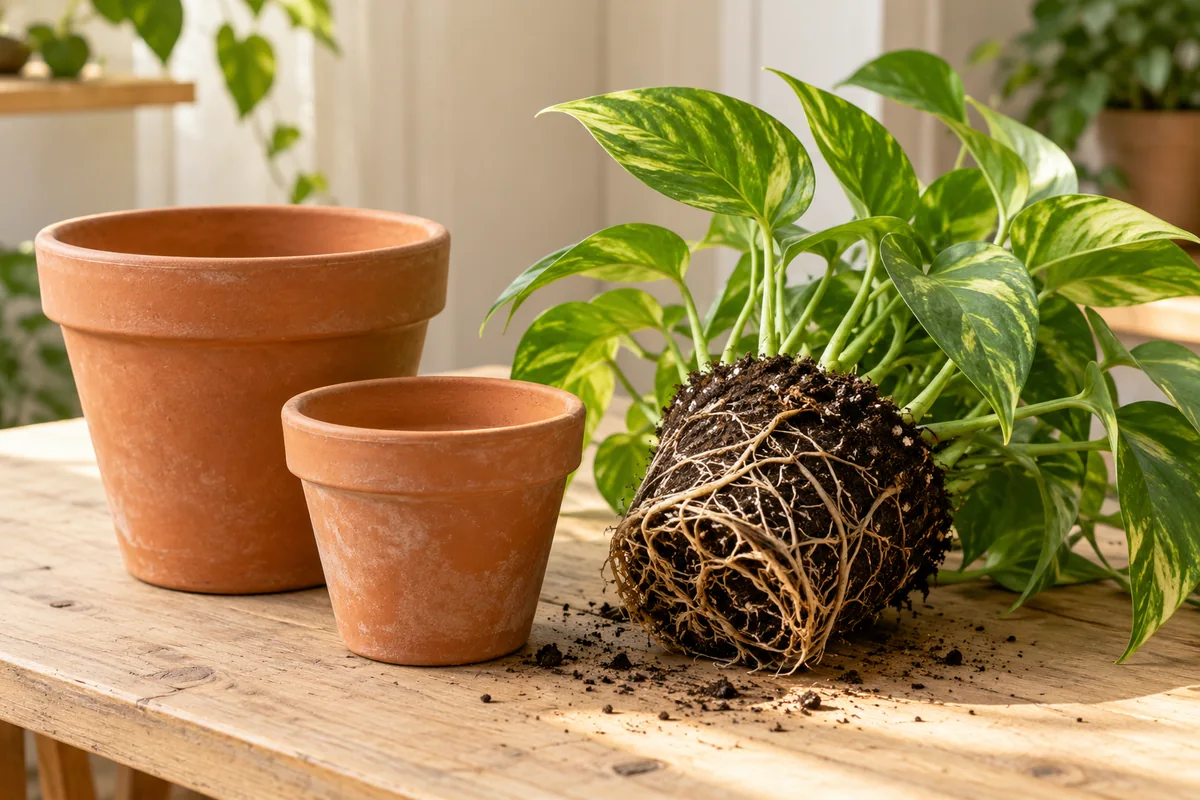
Ease the root ball from the pot and inspect the outside. Fine roots can be more delicate than the sturdy leaves suggest. Remove loose old mix and gently release accessible circling roots without stripping the whole system. Firm roots should be preserved, while clearly soft deteriorated material can be removed with clean tools. If substantial roots are lost, reassess the pot size before planting. A smaller remaining root system may need the same size or a smaller container rather than the larger one you prepared. The amount of functioning root material is a more useful guide than the length of the foliage above it.
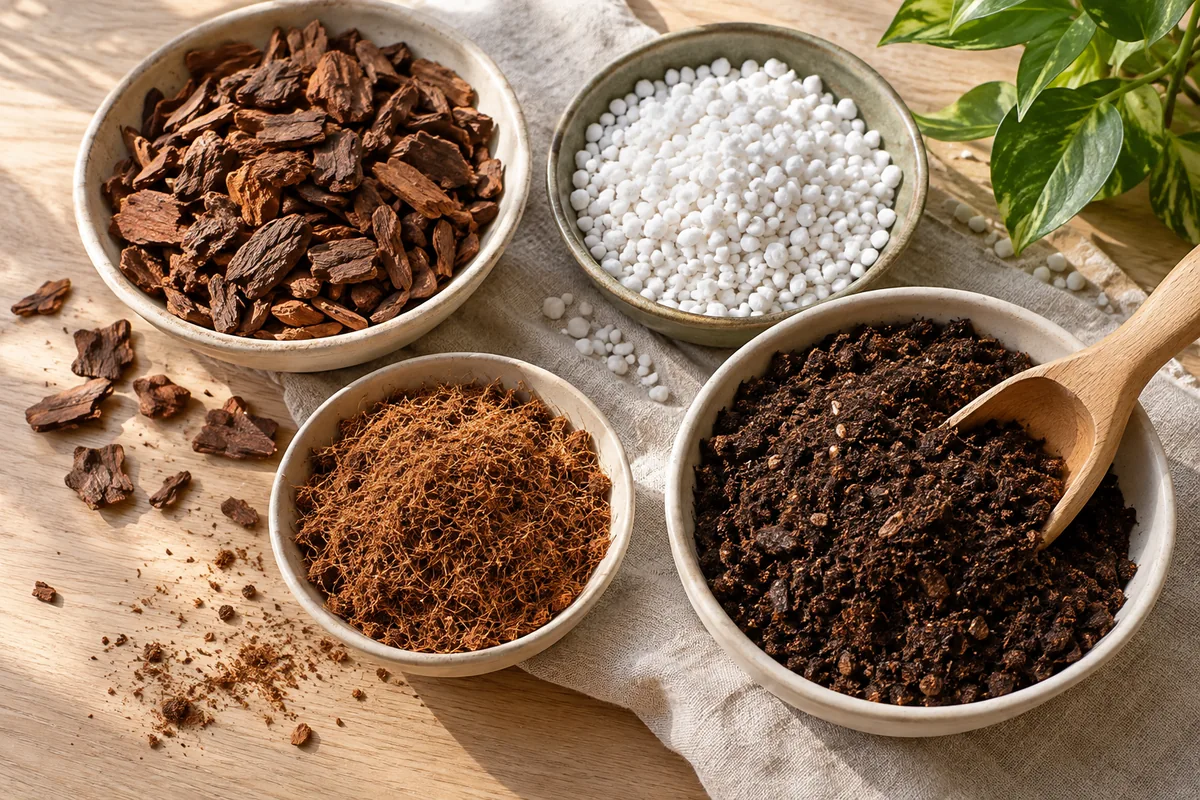
Blend or select a medium with structure appropriate to your watering habits and room. Bark and mineral components can create spaces among finer material, but an extremely coarse mix may dry too quickly around a small root ball. A fine dense mix can retain moisture longer than the plant uses in a cool location. Lightly moisten suitable dry ingredients before use where appropriate, then set the hoya at its previous depth. Fill the sides evenly and settle the mix gently. Keep the stem bases from being buried more deeply. Do not pack the medium firmly to compensate for a loose trellis; position and secure the support independently.
Water according to the roots' condition and the starting moisture of the mix. For a mostly intact plant in an appropriate medium, a careful watering can settle the new material. Allow excess to drain and empty any decorative cover. If the repot involved substantial cuts, adjust immediate moisture accordingly rather than treating it as an ordinary watering day. During the next interval, check both the old root ball and fresh surrounding medium where possible. They can dry at different rates. A barky surface may look dry before the center is ready for more water. Establish a new comparison for container weight after drainage instead of relying on the old pot's feel.
Return the hoya to suitable light and a stable temperature, avoiding sudden strong sun and direct drafts. Keep the vines supported with soft ties that do not pinch the stems. Check ties again as growth resumes, and allow new searching growth room to extend before guiding it gently. Feeding can wait until the plant has settled into a predictable watering pattern, especially if the fresh mix already contains nutrients. Do not increase concentration to force a quick response. Existing leaves may remain unchanged for a time while roots establish contact with the new medium. The spacing and firmness of later growth will give a clearer indication of how the arrangement is working.
Over the following months, judge the repot by manageable moisture and steady growth rather than by how quickly roots reach the new pot edge. A hoya can remain in a suitable container without frequent enlargement. If the mix stays wet, inspect drainage, light, and volume before changing the routine again. If it dries abruptly, look at the blend and the root ball's ability to absorb water. Keep notes on the ingredients and size that worked. A careful repot preserves the plant's existing structure, gives roots a modest amount of fresh space, and leaves the vines in a position where ordinary watering and observation remain simple.