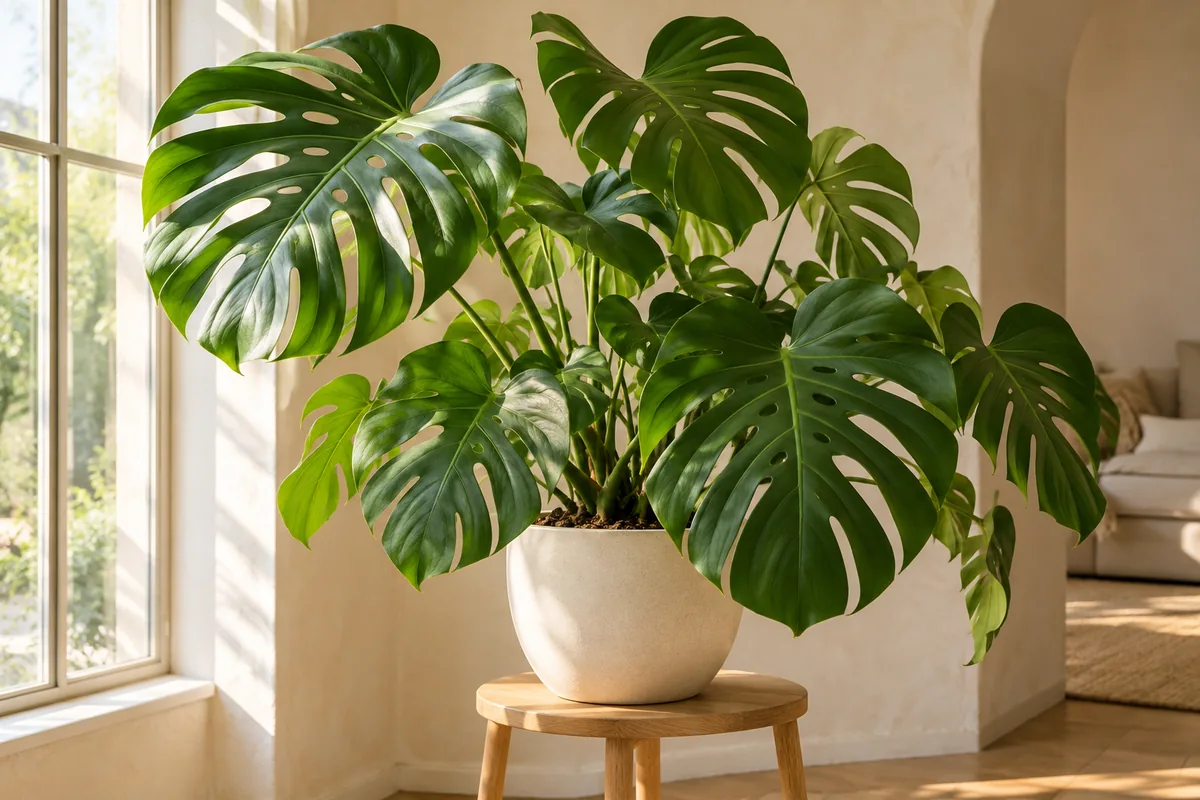
A monstera can look enormous above the rim while still occupying a surprisingly compact root ball. Its broad leaves and reaching stems make it tempting to choose a very large replacement pot, yet the roots should guide the size. Begin by deciding what needs to change. The plant may need fresh growing medium, a modest increase in root space, a better support, or simply a more stable outer container. Those are separate needs even when they can be addressed during one repotting session. Planning the support before the roots are exposed makes the work calmer and helps preserve the shape of the climbing plant.
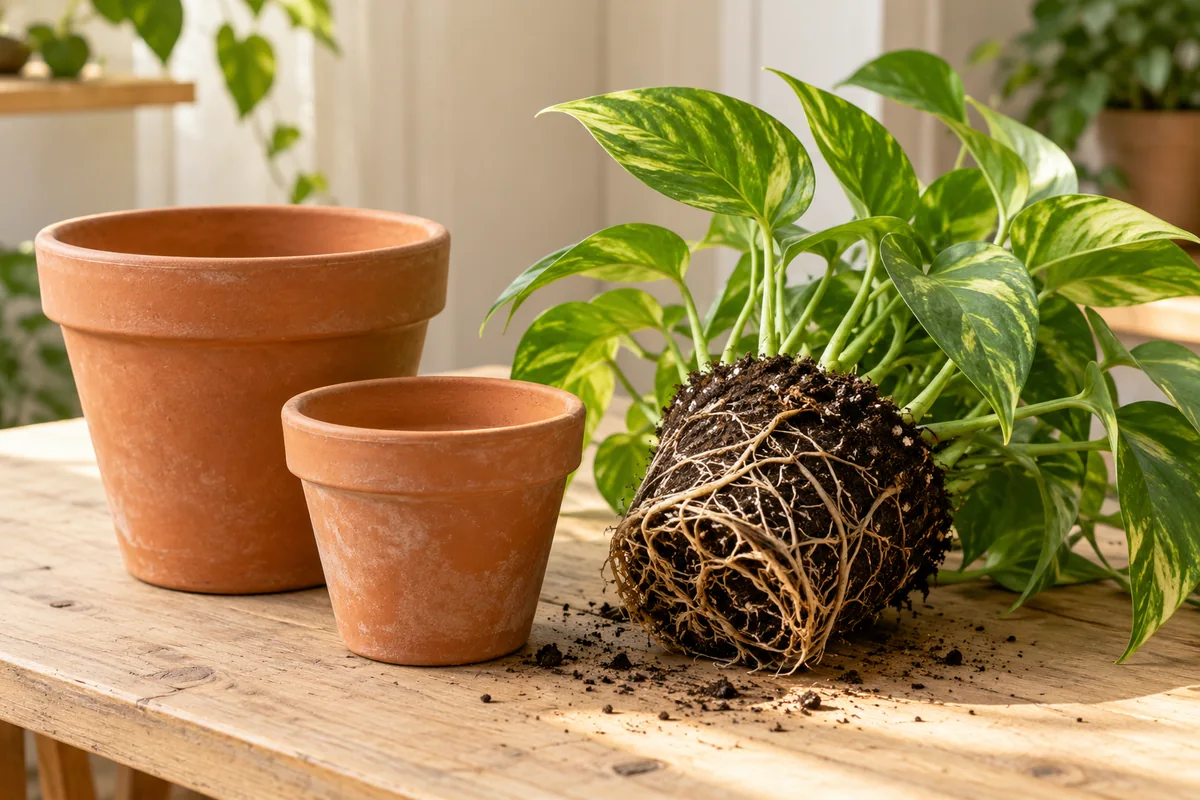
Repot when the root system shows genuine crowding or the mix has deteriorated, preferably during a period of active growth. A few aerial roots outside the pot do not prove that the underground container is full. Those roots are part of the plant's climbing habit and can extend even when the growing mix still offers room. Slide the root ball out with its weight supported and inspect the outside. Dense circling roots, little remaining loose medium, and an unusually rapid drying pattern together suggest that more root space may help. If roots are sparse, keep the container size conservative and investigate light and watering before enlarging it.
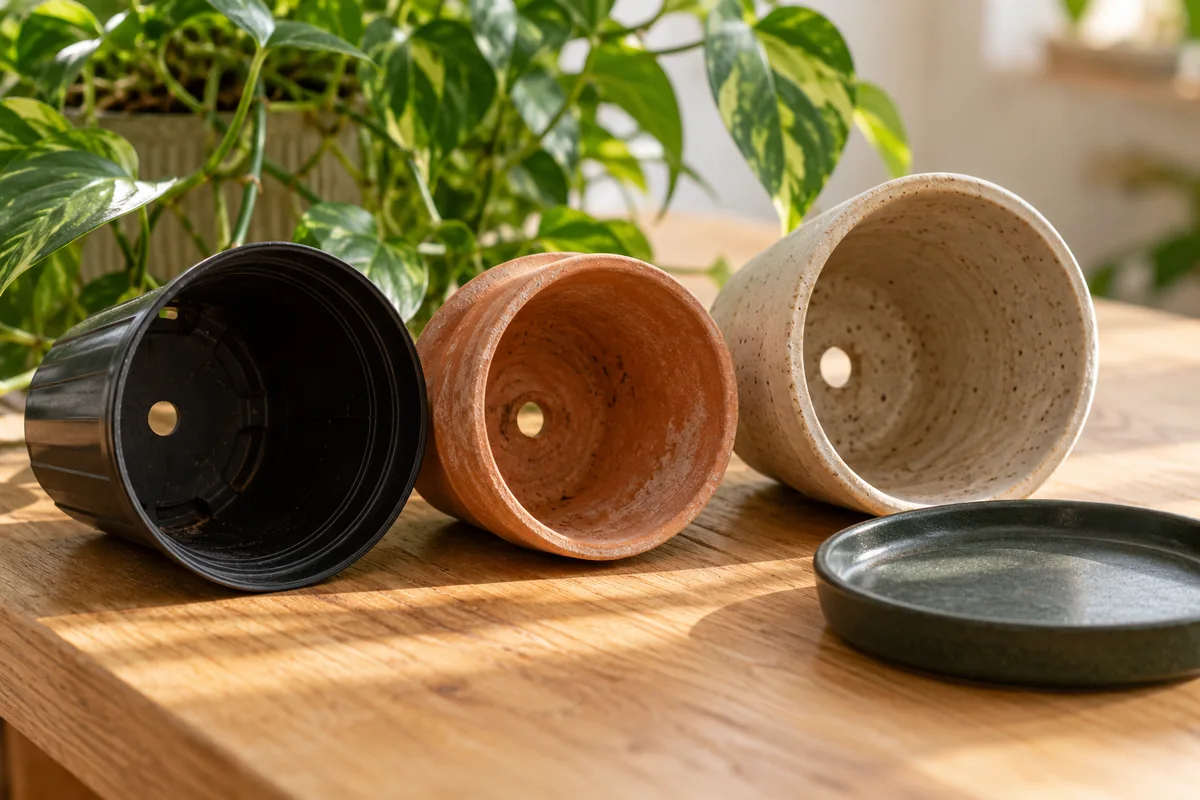
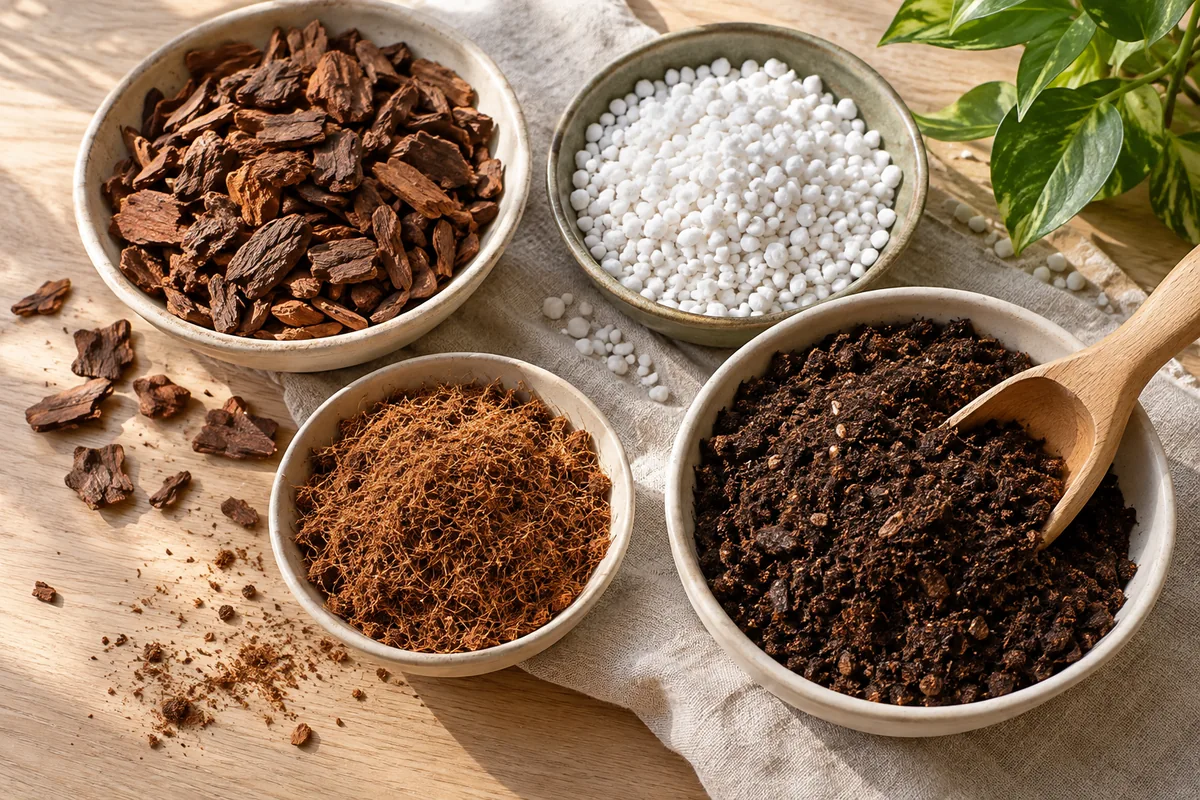
Prepare an appropriate airy houseplant mix with enough moisture holding material to contact the roots. Visible bark and mineral particles can be useful components, but the exact blend should suit your conditions rather than follow appearance alone. A very coarse mix in a warm bright room can need frequent attention. Fine material in an oversized pot can remain wet too long. Lightly moisten the prepared mix where appropriate, choose a container with clear drainage, and gather clean ties and a stable support. The new pot should give a modest ring of space around the existing root ball. It also needs to accommodate the support without forcing it through the densest roots.
Lay out the plant so you can distinguish the climbing stem from the leaf stalks. The stem carries the nodes, aerial roots, and successive leaves; the long stalks carrying individual leaves should remain free to orient toward light. Position the support near the back of the climbing stem and secure that stem with soft ties that allow room for expansion. Do not cinch leaf stalks tightly against the pole. If an existing support is already integrated with roots, avoid pulling it out forcefully. It may be better to preserve or extend it than to tear the root system simply to replace the visible material with a different style.
Remove only loose depleted mix and untangle accessible outer roots gently. There is no need to strip every particle away from a firm functioning root ball. Cut clearly deteriorated roots with clean tools if present, preserving firm material wherever possible. Place the plant at its previous depth, adding prepared mix underneath to bring the old surface below the rim. Fill around the sides in stages and settle the medium gently. Keep the main stem from being buried more deeply than before. Aerial roots can be guided toward an appropriate support or into the mix where practical, without sharply bending or forcing stiff roots into a position they resist.
Water according to the condition of the roots and the mix. For an established plant with mostly undisturbed roots, a thorough watering often helps settle the fresh medium. Apply water evenly, let it drain fully, and empty the outer cover. If significant root trimming was necessary, adjust the immediate care to the amount of disturbance and avoid leaving the container saturated. Return the plant to suitable bright filtered light rather than strong new sun. A stable temperature and familiar exposure make the next watering decision easier. The larger volume and fresh mix may dry more slowly than the previous pot, so do not copy the old interval automatically.
Over the following weeks, check both the original root ball and the fresh outer mix where accessible. The outer ring may feel dry while the center remains damp, or water may pass through the new mix before fully moistening an old dense core. Learn the new container weight after drainage and note how it changes. Keep ties loose enough for stem growth and inspect the support after watering to ensure the plant remains stable. Avoid repeatedly taking the plant out to see whether roots have moved. New leaves and a gradually predictable drying pattern give more useful evidence without disturbing the work you have just completed.
As the monstera resumes growth, revise the support and light arrangement rather than waiting for the next pot change. A climbing stem can be trained gradually while new growth is flexible, and leaves need space to expand without pressing against glass or furniture. A sturdy cover or stand can improve stability without increasing the wet volume around the roots. Keep the useful relationship clear: the inner pot serves the roots, the support serves the stem, and the room position serves the leaves. Repotting is most successful when those needs are considered together, with a measured increase in space and enough time for the plant to settle into its new container.