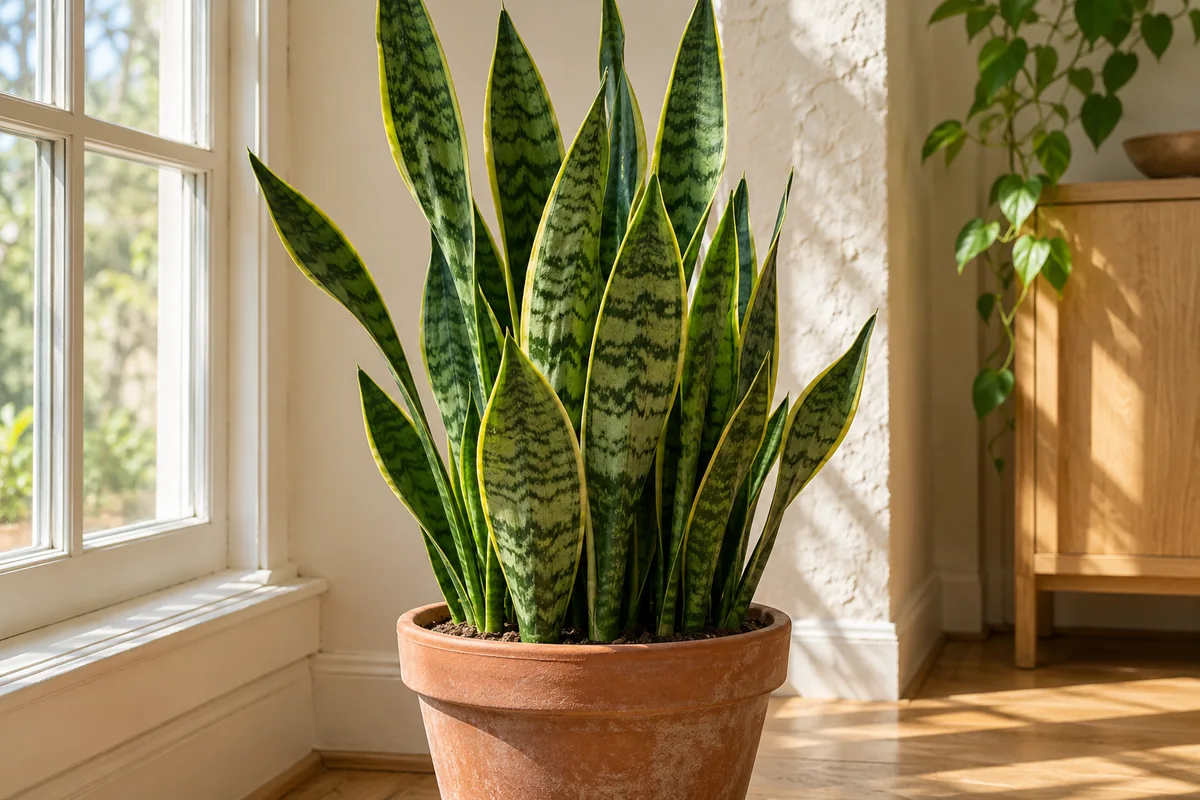
A snake plant sometimes announces its need for attention by pushing hard against the sides of a plastic nursery pot. The upright leaves may look tidy while the rhizomes beneath them have filled the available space. Before choosing a larger container, inspect how the plant is growing and how its mix behaves. A firm crowded clump can benefit from a modest increase in room, while a plant sitting in persistently damp mix may need a smaller and more suitable root environment instead. The leaves store moisture, and the underground structures do as well. Extra pot volume should be offered thoughtfully rather than in anticipation of rapid growth.
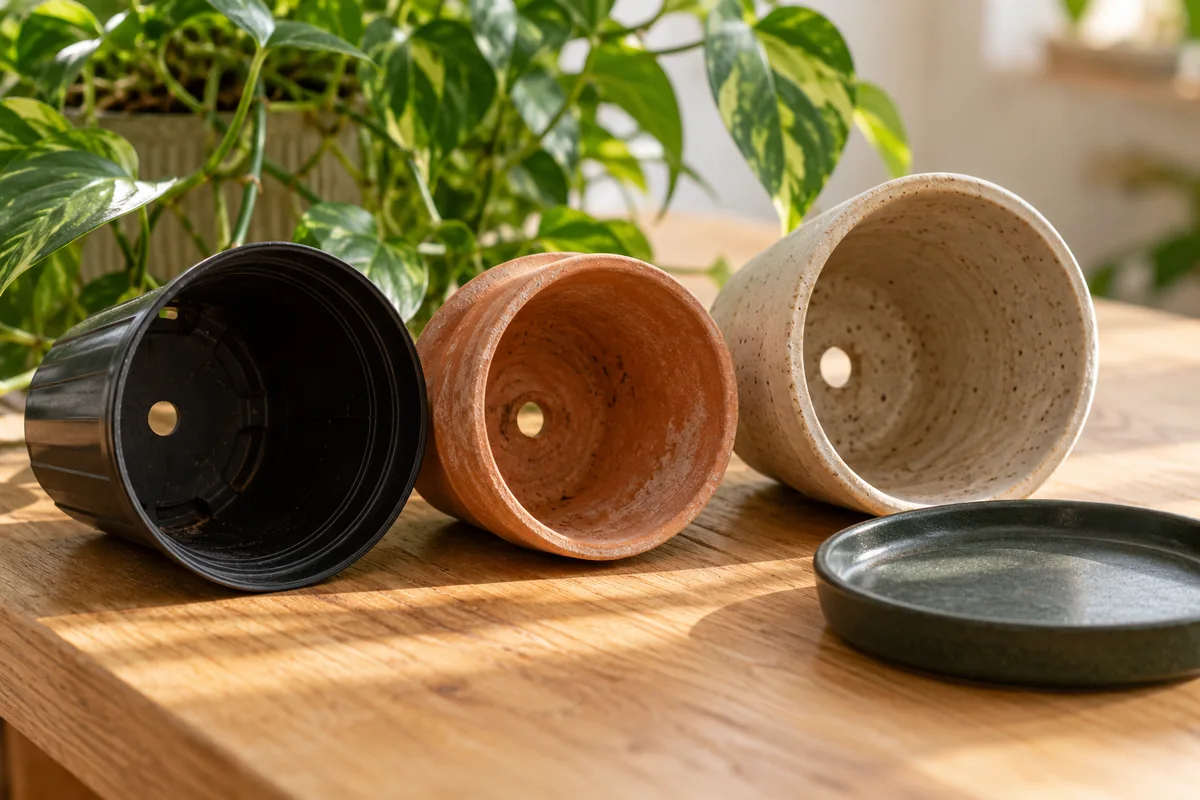
Choose a period when the plant is actively growing if the work is optional. Prepare a clean pot with open drainage holes and compare its internal dimensions with the current root ball. A modest step up usually makes watering easier to manage than a broad planter filled with unused mix. A heavy outer cover can provide stability for tall leaves without making the inner growing pot oversized. Snake plants vary in height and form, so consider balance as well as width. The container should stand securely when the leaves lean slightly toward the light, and you should be able to remove the inner pot for inspection without pulling on the foliage.
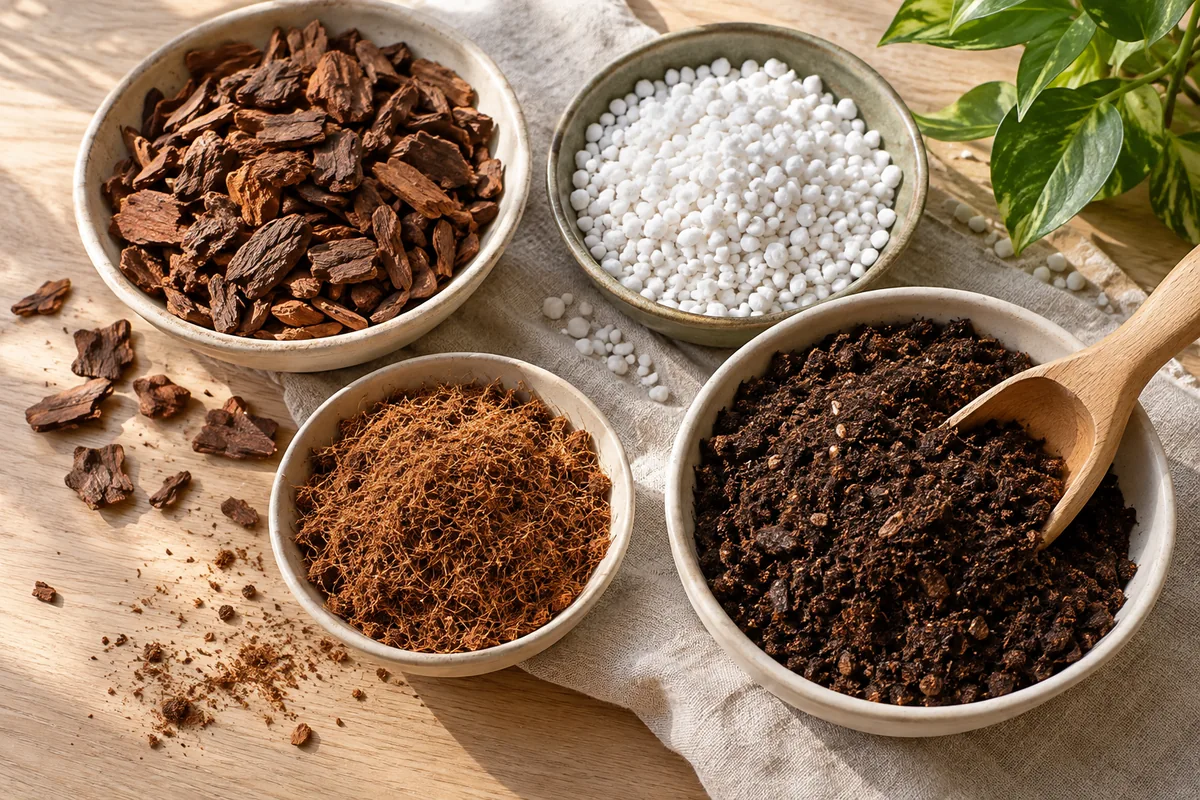
Use a free draining medium suitable for a succulent type houseplant. That does not require a pot full of loose stones. The roots still need contact with moisture after watering, along with enough air and an appropriate drying interval. A formulated mix can provide a useful starting point, with its texture assessed against your room and watering habits. Fine moisture retentive ingredients in a large sealed pot create a different environment from an open mix in a drained nursery container. Avoid putting a gravel layer beneath ordinary potting mix in an attempt to correct an unsuitable container. Choose the pot and medium together so the root zone remains understandable.
Remove the plant gently, supporting the base of the clump rather than bending the leaves. If the old plastic pot is distorted around thick rhizomes, easing or cutting the container away may be kinder to the plant than pulling forcefully. Inspect the roots and the horizontal connections between leaf clusters. Firm material can be pale, tan, or colored by the growing mix; texture matters more than a single shade. Remove clearly soft deteriorated sections with clean tools if needed. A firm clump does not require all its roots to be stripped bare. Preserve as much functioning material as practical and loosen only the outer parts that need room to expand.
Set the plant at the same depth as before. Keep the bases of the leaf clusters from being buried beneath a thick new layer. Add prepared medium under and around the root ball, settling it gently with your fingers or a light tap on the pot. Do not press hard against the rhizomes to make the leaves stand straight. If the plant is temporarily top heavy, use a discreet support outside the most crowded roots while the mix settles. Division can be considered when there are clear separate clusters with their own roots, but it is an additional operation. A simple repot does not need to become a complete dismantling of the plant.
Immediate watering depends on the amount of root disturbance. If the roots remain largely intact and the medium is appropriate, follow a conservative approach suited to the species and the starting moisture. Fresh cuts and damaged fleshy sections deserve time in an airy environment rather than a saturated container. Avoid choosing a fixed waiting period without considering the room and condition of the plant. Whatever the first watering timing, allow excess water to leave and empty the saucer. A snake plant should not remain with its base submerged in a decorative cover. The dry looking surface is only one clue; the lower part of the pot may remain damp considerably longer.
Return the plant to useful light without exposing it suddenly to stronger sun than it previously received. A snake plant may tolerate modest light, yet brighter suitable conditions generally support more active growth than a dim corner. Check the new mix before watering again. Fresh material and a larger container can extend the interval, especially during short cool days. Learn the new weight after drainage and compare it as moisture is used. Do not feed immediately simply because repotting feels like the start of a new routine. Let the roots settle, check whether the mix already contains nutrients, and resume appropriate feeding only when the growing conditions justify it.
Watch for firm new shoots at the base and a stable drying pattern over time. Existing leaves may remain much the same while roots occupy fresh space, so the absence of immediate visible change is not a reason to disturb the plant again. Keep the container proportionate, protect the leaf bases from buried damp material, and inspect hidden runoff after watering. If the pot remains wet unusually long, examine light, temperature, and volume before adding more water. A carefully chosen container gives the snake plant room to extend its rhizomes without surrounding them with an excessive moisture reserve. That measured move is usually easier to manage than a dramatic increase in pot size.