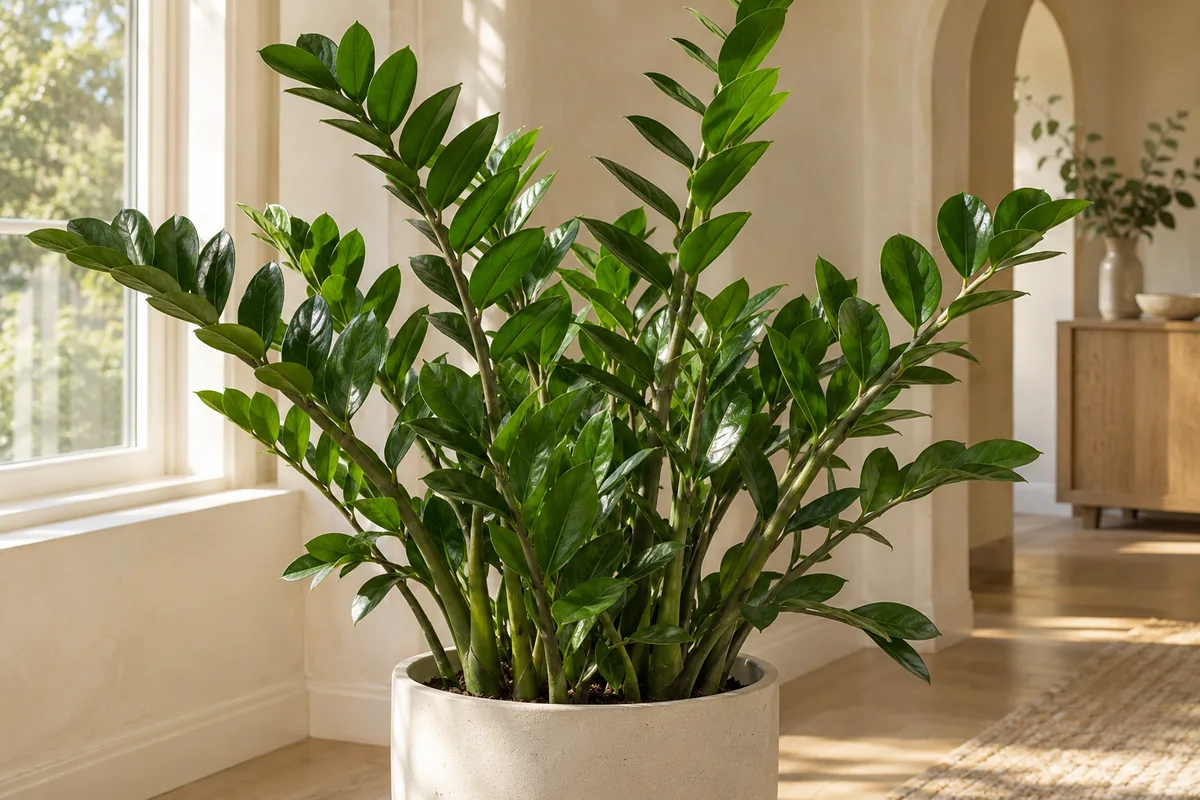
The glossy upright growth of a Zanzibar gem often changes slowly enough that its container is easy to forget. Beneath the surface, thick rhizomes can eventually press against the pot and leave little room for fresh roots. A repotting decision should begin there rather than with the height of the leaves. This plant stores moisture and can remain in a suitable container for a considerable time. Moving it too often or surrounding a small root system with a large volume of damp mix adds unnecessary uncertainty. Look for real crowding, a distorted pot, or deteriorated growing medium before deciding that a larger container will improve its conditions.
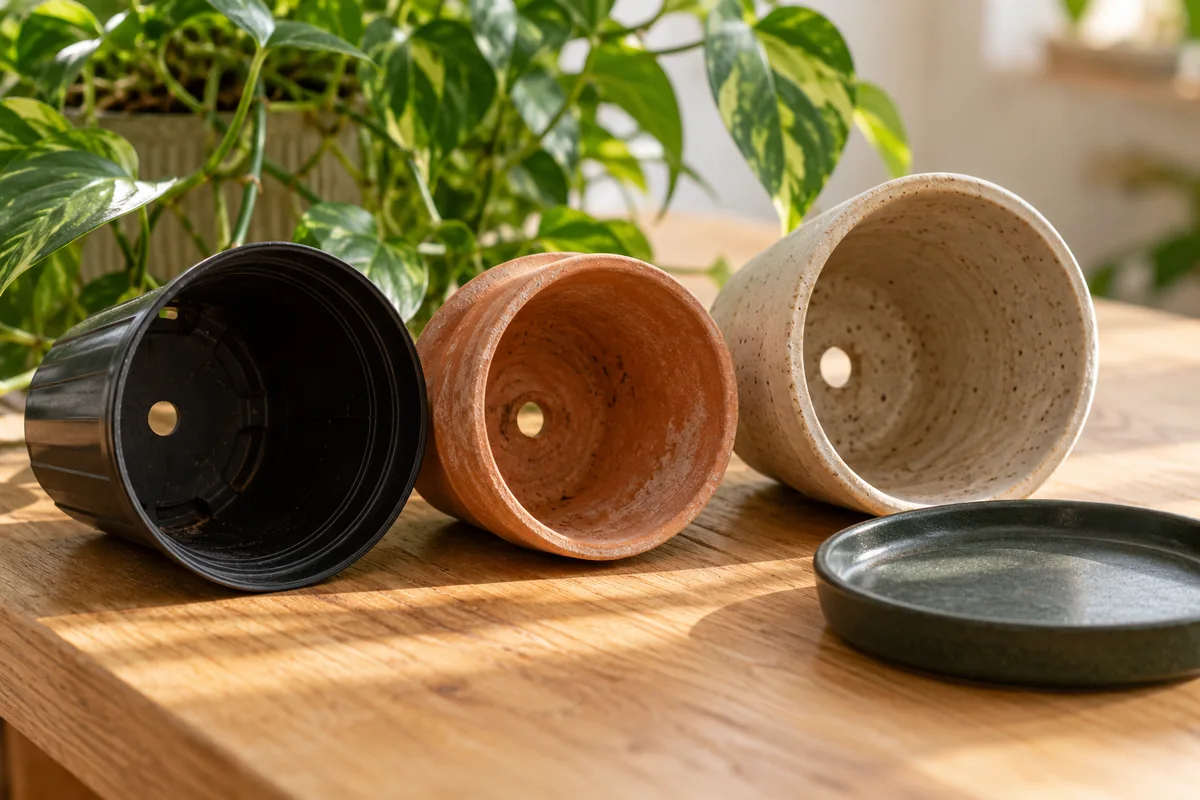
Gather a proportionate replacement pot with open drainage holes and a suitable free draining medium. Compare the inside dimensions with the existing root ball. A modest increase gives room for expansion without creating a broad ring of unused material. The pot should also be stable beneath the upright leaves. If more weight is needed, a decorative outer container can provide it while the inner pot remains appropriately sized. Keep enough clearance to lift the nursery pot out after watering. A cover that grips the sides tightly can conceal runoff and make inspection awkward, particularly when the rhizomes later begin pressing outward again.
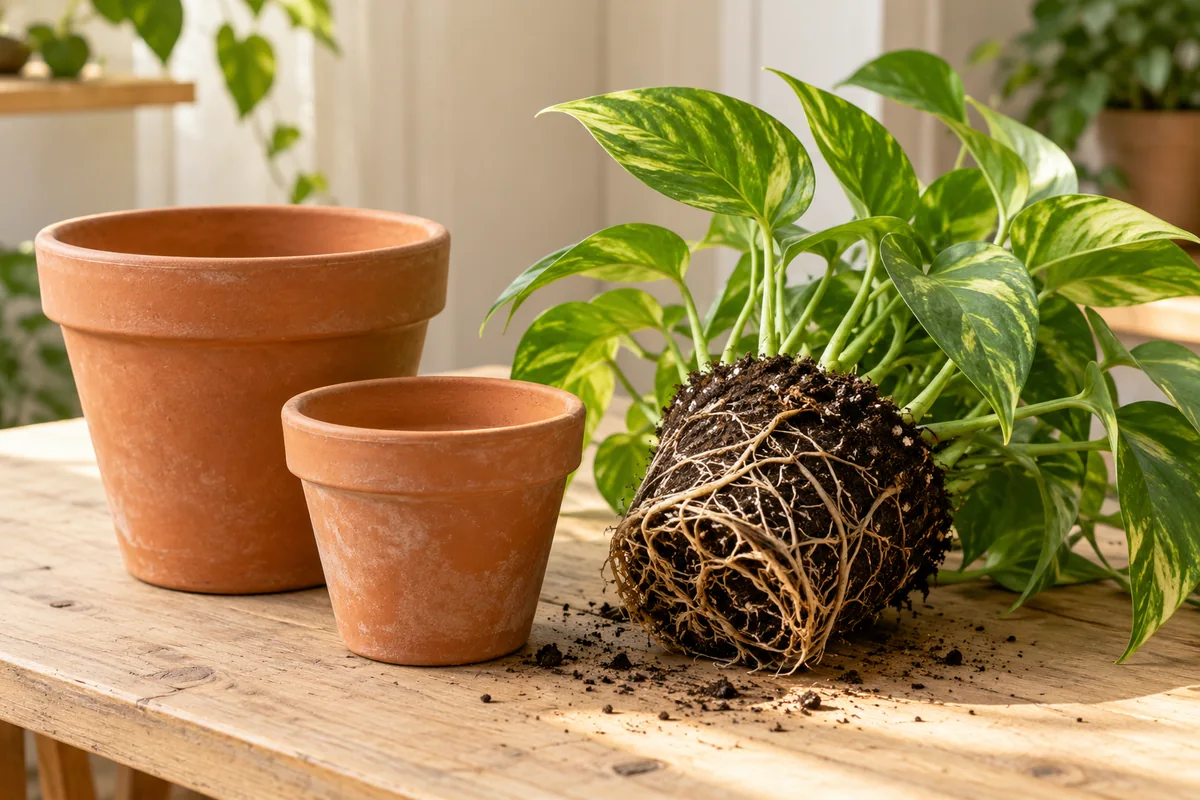
Ease the plant from its old container with the root ball supported. Avoid pulling on individual leaves, which emerge from the underground structures and are not handles. If a plastic pot is firmly distorted, it may be easier to loosen or carefully cut the container than to force the clump through its opening. Work with gloves and keep plant material away from food preparation areas. Examine the rhizomes and roots for firmness. Their color can vary with age and the mix around them, so judge texture as well as appearance. Firm storage structures should be preserved rather than scrubbed clean merely to make the plant look tidy during the work.
Remove loose old mix from the outside without stripping the whole root ball unnecessarily. A few circling roots can be eased outward gently where they move readily. Thick tangled sections do not need to be torn apart to fit a preconceived shape. If there are clearly soft or collapsing areas, remove those with clean tools and reassess whether the plant needs the larger pot you first selected. A reduced root system may require a smaller container. Division is possible when distinct sections have suitable roots and shoots, yet it creates additional cut surfaces. A simple repot can remain a simple repot when there is no reason to divide the clump.
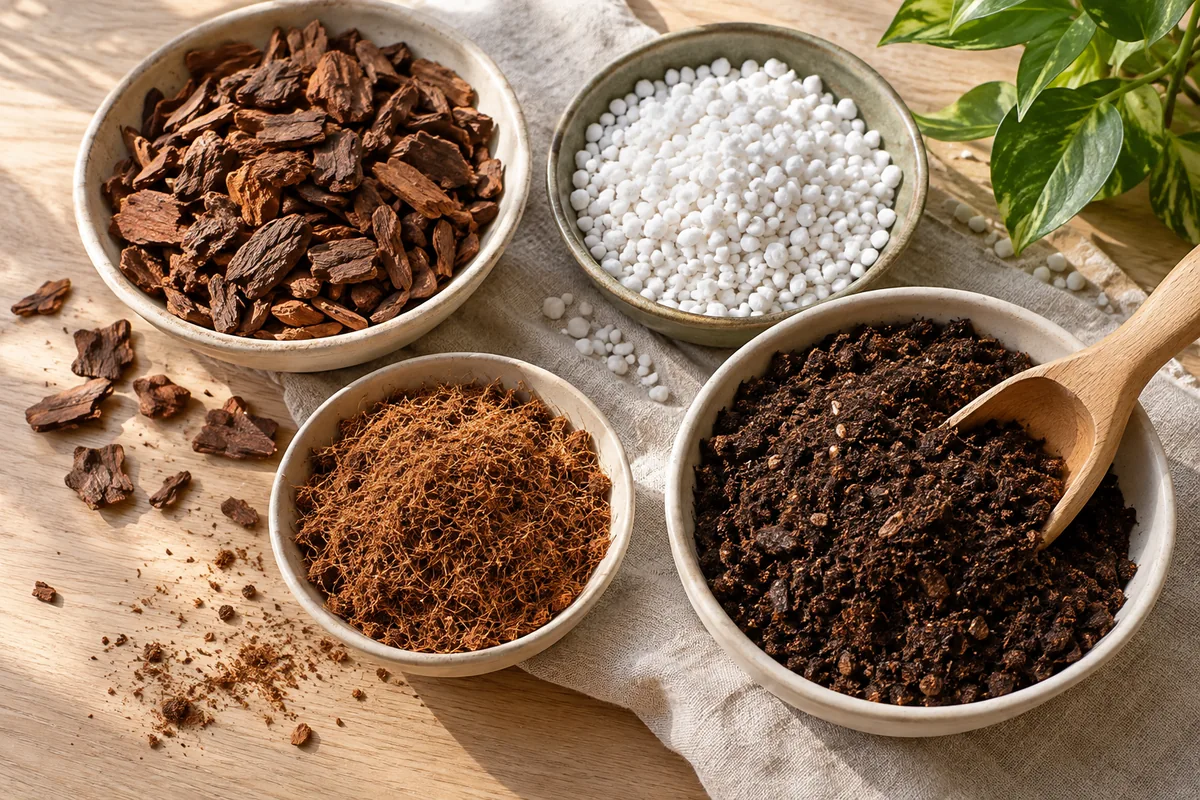
Place prepared medium beneath the plant so the rhizomes and leaf bases sit at their previous depth. Do not bury the bases beneath a thick new surface layer. Fill around the sides evenly and settle the mix gently, keeping useful air spaces rather than compressing everything firmly. The medium should support the plant without leaving large empty pockets. A few light taps on the container can help material settle between the outer roots. Leave room below the rim for controlled watering. Avoid a gravel layer at the bottom, which cannot compensate for poor drainage and reduces the amount of useful growing space within the selected container.
The first watering depends on the state of the roots and the moisture already present. A plant with largely intact firm roots differs from one with freshly cut fleshy sections. Keep any immediate watering conservative and appropriate to the species, and allow surplus water to leave completely. Never leave the inner pot submerged in runoff inside a cover. Fresh medium can retain moisture differently from the old mix, so the next watering may come later than expected. Check below the surface where practical and learn the new container weight. A dry upper layer does not necessarily mean that the lower material surrounding the rhizomes is ready for another soaking.
Return the plant to suitable bright filtered light and a steady room temperature. It can tolerate lower light, but a dim corner slows growth and moisture use, which makes a newly enlarged container harder to manage. Avoid sudden strong direct sun on leaves accustomed to a softer exposure. During the following weeks, observe rather than repeatedly disturbing the root ball. Existing leaves may remain unchanged while roots settle. A new shoot can take time to appear and then extend noticeably once growth begins. Feeding should follow the growing conditions and the nutrient content of the new mix, not the urge to encourage immediate visible results after repotting.
Keep a simple record of the date, pot size, and mix used. If the container dries predictably and the foliage remains firm, leave the plant to occupy its new space gradually. A Zanzibar gem does not need frequent enlargement to demonstrate progress. Inspect the base and hidden cover during ordinary watering, and wait for genuine crowding before considering another move. If the mix stays wet unusually long, review light, temperature, drainage, and the volume around the roots. The best repot gives the existing plant a manageable amount of fresh growing space while preserving the firm structures that allow it to cope with normal intervals between waterings.