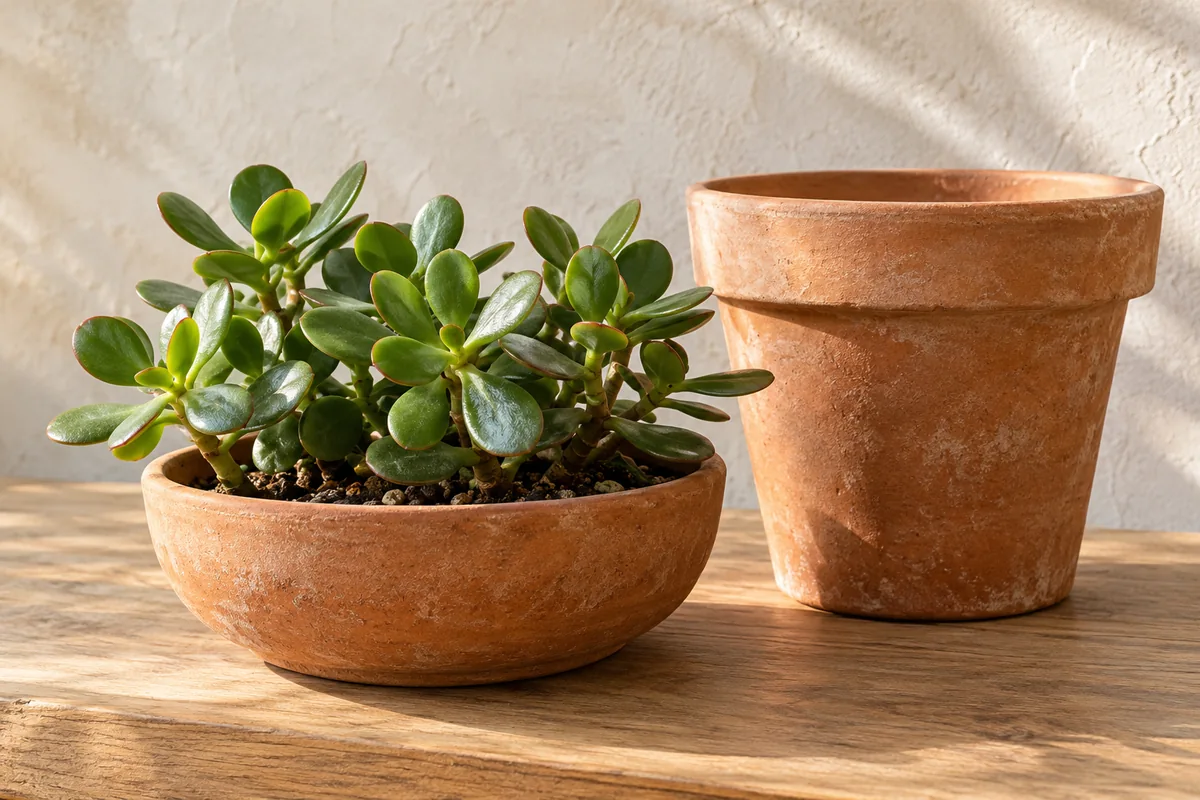
A wide bowl and a tall cylinder can hold a similar volume of growing mix while creating very different spaces for roots. The shape affects how the root ball fits, how easily you can inspect the medium, and how much unused material sits beneath the plant. Choosing by width alone misses that difference. Before repotting, look at the actual depth of the root system and the way it fills its present container. A shallow clump does not automatically need a deep planter because its leaves are tall. A long established root ball should not be forced into a shallow bowl simply because the foliage looks compact.
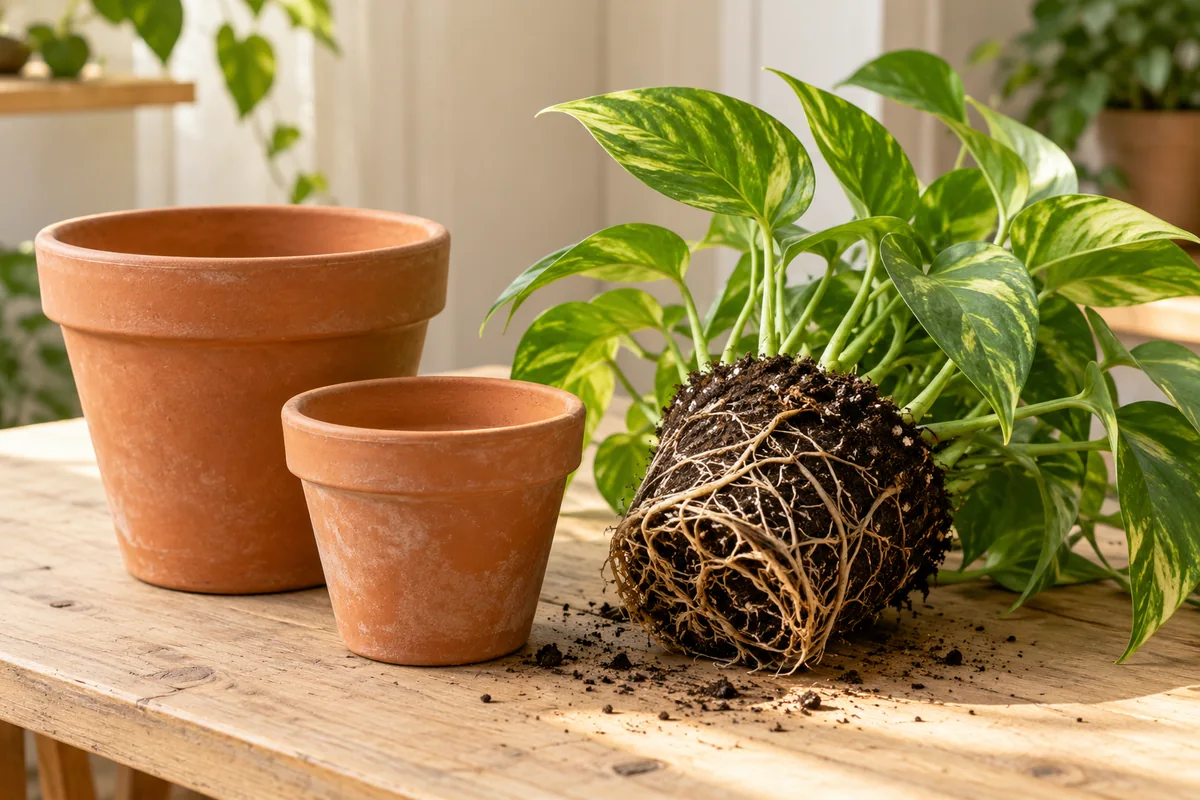
Begin with the plant's existing roots and growth habit. Some species form spreading rhizomes near the surface, while others develop a deeper or more substantial root mass in a container. Nursery pots also influence the shape you see, so the current root ball is a practical guide rather than a perfect portrait of the species in nature. Slip it out carefully when repotting is justified and note its width, depth, and firmness. Choose a new container that accommodates it without sharp folding or a large empty zone. A modest amount of fresh medium around the roots is usually easier to manage than an oversized volume beneath them.
Container depth influences the distribution of moisture within a given growing medium. The lower portion can retain water differently from the surface, and the same mix does not behave identically in every shape. A shallow pot may expose more surface area relative to its volume, while a tall pot places some material well below the depth you can easily check with a finger. Avoid reducing the decision to shallow always dries quickly or deep always stays wet. Wall material, drainage, ingredient texture, root occupancy, and the room all contribute. The useful question is whether the selected shape lets you maintain the conditions the particular plant needs.
Consider stability separately from root volume. A tall plant in a narrow deep container can still tip if the base is small or the canopy leans strongly. A low broad pot may provide balance, yet it must also give the roots enough appropriate space. A heavy outer cover can add weight around a proportionate inner nursery pot, keeping the growing volume manageable. Staking can support a climbing or recently moved plant without burying the stem. Do not solve every balance problem by adding a deep layer of wet mix beneath the roots. That approach changes the root environment while leaving the light or support issue that caused the lean unresolved.
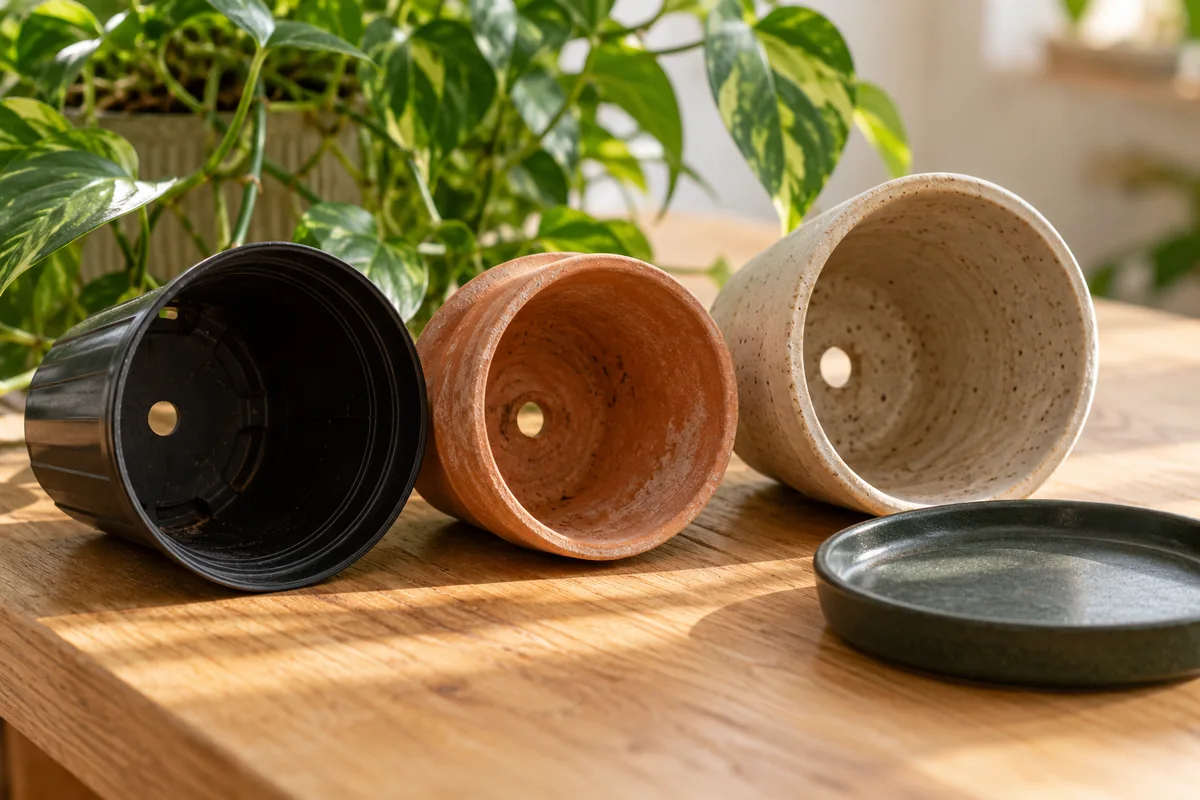
Check drainage and access before planting. A deep decorative vessel without an outlet is a sealed water reservoir regardless of its elegant shape. Use a removable inner pot if the outer container is intended as a cover. A narrow neck can make later removal difficult, especially once roots have expanded and the mix becomes firm. Straight sides are often easier to manage for long term container growing. Make sure you can water evenly across the surface and inspect the base afterward. A pot that looks appropriate from above may still be awkward if its shape traps the inner container or hides the runoff where it cannot be removed conveniently.
When filling the chosen pot, keep the plant at its previous depth. Add enough prepared medium beneath the root ball to position it correctly, then fill the sides gently. Do not bury the crown to make a shallow root system occupy a deep container. Avoid forcing long roots into tight repeated folds to make them fit a bowl. If the shape requires that much compromise, choose another container or consider appropriate root work only when the species and condition justify it. A stone layer at the base does not turn an oversized deep pot into the equivalent of a smaller suitable container. Use the right root space from the beginning.
Observe the first watering cycles with the new shape in mind. In a tall container, the surface may dry while the lower mix retains considerable moisture. Check deeper where practical and learn the pot's changing weight after complete drainage. In a shallow container, the edges may dry sooner, especially in warm moving air. Apply water evenly rather than repeatedly pouring at one point. A growing root system will gradually change how the pot uses its moisture, so the initial interval is not permanent. Keep a note of the container dimensions and the mix so later observations can be compared with something more precise than its appearance.
A good shape supports the roots without making watering unnecessarily obscure. Match depth and width to the actual plant, provide drainage, and keep stability and decoration from dictating an excessive growing volume. If a chosen planter does not suit the roots, an appropriate inner container can often preserve the visual result. As the plant develops, reassess when there is evidence of crowding rather than replacing pots by habit. The most useful container is not necessarily the deepest or broadest available. It is the one whose space the roots can occupy steadily and whose moisture you can understand through ordinary care in the room where it will stand.