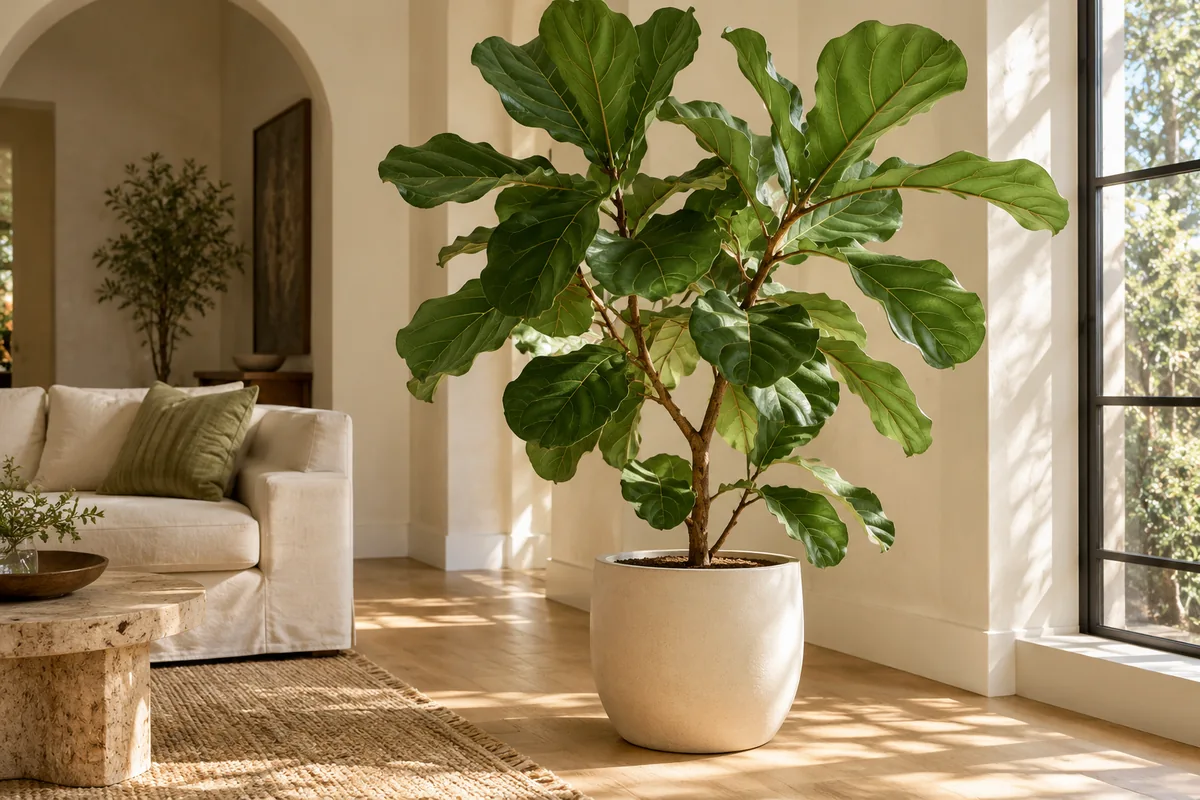
A fiddle leaf fig can look like it belongs in a room before the room actually suits it. Its broad leaves make a strong shape beside a sofa, yet a decorative position several feet from the window may offer less daylight than the plant needs. Begin by finding the light, then arrange the furniture around the pot if possible. A stable bright setting makes watering and new growth easier to understand. Repeatedly moving the plant whenever a leaf develops a mark usually makes the picture less clear. Choose a promising position, learn how the root ball dries there, and give the plant time to respond.
Strong indirect daylight is a useful starting point for Ficus lyrata. Some gentle direct sun can suit an established plant, introduced slowly so leaves have time to adjust. A large unobstructed window provides a very different growing environment from a small window shaded by trees and neighboring buildings. Consider what the foliage can actually see rather than judging the room from the doorway. Avoid cold drafts and hot air from vents. Leaves should not press against the glass. If one side of the canopy stretches toward the light, turn the pot gradually and check that the new orientation still leaves every branch adequately illuminated.
Check the mix several inches below its surface before watering a large container. Allow the upper portion to dry, then water slowly across the root ball until excess drains. Empty the saucer or outer pot afterward. A large fig may use substantial water during bright active growth and much less during a dim period. That difference makes fixed weekly quantities unreliable. A dry surface above wet lower mix does not need another full soak. A root ball that has become extremely dry may need several slow passes to absorb water evenly. Learn its weight after drainage and again when it is ready for another watering.
The pot needs drainage and enough stability for a broad canopy. Use an open houseplant mix that retains some moisture without compacting into a heavy mass. Repot when roots have occupied the existing container or when water management becomes difficult despite careful technique. Increase the pot size modestly and keep the root flare at its previous level. Do not bury the lower trunk to make the plant stand straighter. A suitable stake and improved light address stability more effectively. After repotting, watch the drying pattern closely because fresh material and a larger root zone can change the time between waterings considerably.
Brown patches deserve a careful look at their pattern and the recent conditions. Dry tan areas on the window side may follow strong sun exposure. Dark patches combined with persistently wet mix suggest a root zone problem worth investigating. An older damaged leaf cannot turn back into a perfect green surface, so judge any adjustment by the next leaves and by whether new marks stop appearing. Avoid diagnosing from color alone. Check moisture, drainage, temperature, and recent moves together. Removing every marked leaf at once can reduce the remaining foliage unnecessarily when the plant would benefit more from a stable period of care.
Dust gathers along the broad veins and can be removed with a soft damp cloth while the leaf is supported underneath. Wipe gently rather than scrubbing at a stubborn blemish. New leaves begin folded and delicate, then expand and firm gradually. Leave them alone while they open. Feed during active growth according to the chosen product directions, allowing for nutrients already present in fresh potting mix. Fertilizer does not replace daylight. If the plant is not growing during short dim days, reduce intervention and reassess conditions when light improves rather than trying stronger doses in search of an immediate response.
Shape the plant only after deciding how much room it can occupy. A single trunk can remain architectural, while pruning the tip may encourage branches below the cut. Responses vary, so choose a deliberate cut during active growth and keep expectations modest. Protect the floor and wear suitable gloves because cut ficus tissue releases milky sap. Use a clean sharp tool and remove the cut material promptly. Do not repeatedly notch or cut the trunk simply because branching does not begin straight away. A plant with adequate light and established roots is better placed to respond than one already adjusting to a recent move.
A simple record helps make this plant less mysterious. Note the watering date, the moisture condition beforehand, and any change in position or temperature. Photograph the newest leaves once they have expanded. Over time, those details show whether the plant is settling into its space and whether the canopy is becoming evenly supported. Some leaf turnover is normal as an indoor tree develops. Rapid changes across several leaves need investigation, starting with the roots and the immediate environment. A bright stable position and a consistent way of checking moisture provide a clearer path than a collection of competing care routines.