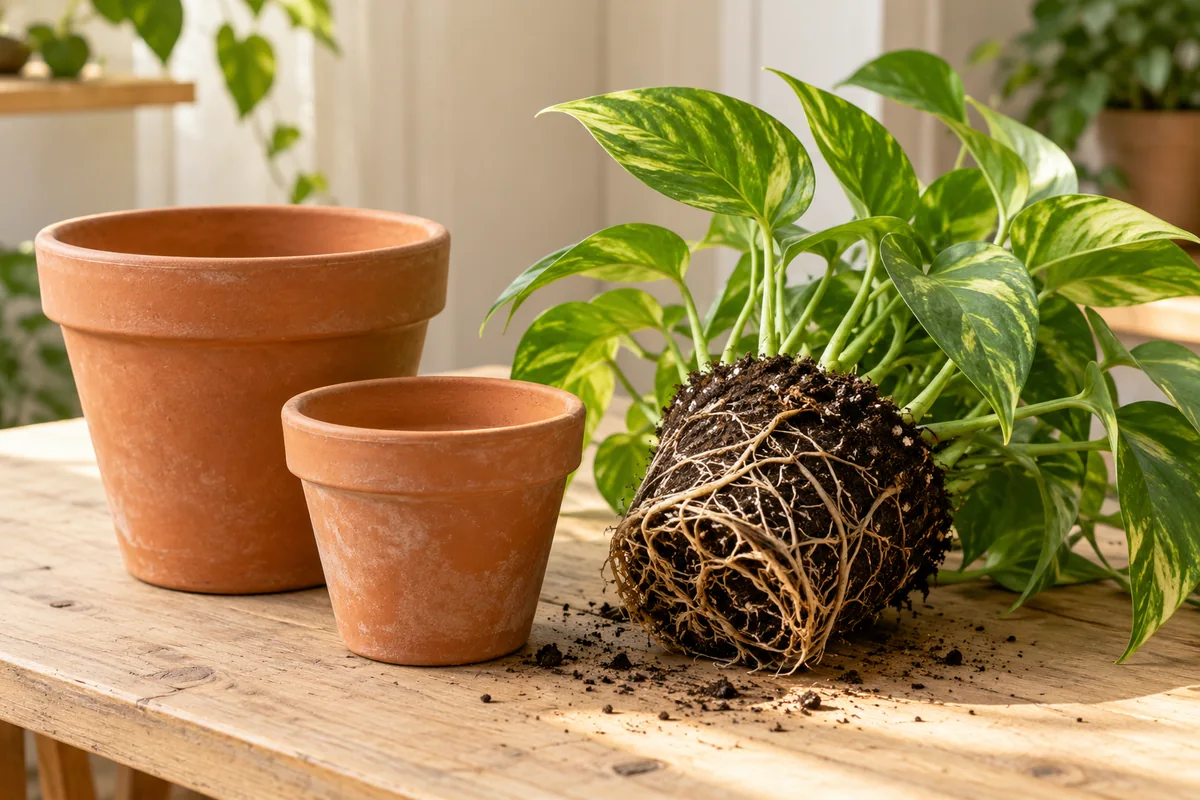
A tall plant can feel suddenly loose after repotting even when its roots and leaves looked perfectly balanced beforehand. Fresh growing mix has not yet settled around the old root ball, and a heavy canopy can pull against the new space. The first response should be to check the fit and depth, not to pack the pot as hard as possible. Roots need contact with the medium, yet they also need its air spaces. A temporary support can hold the plant while those roots establish. The useful arrangement keeps the stem steady without turning the entire container into a compressed block or burying the base more deeply than before.
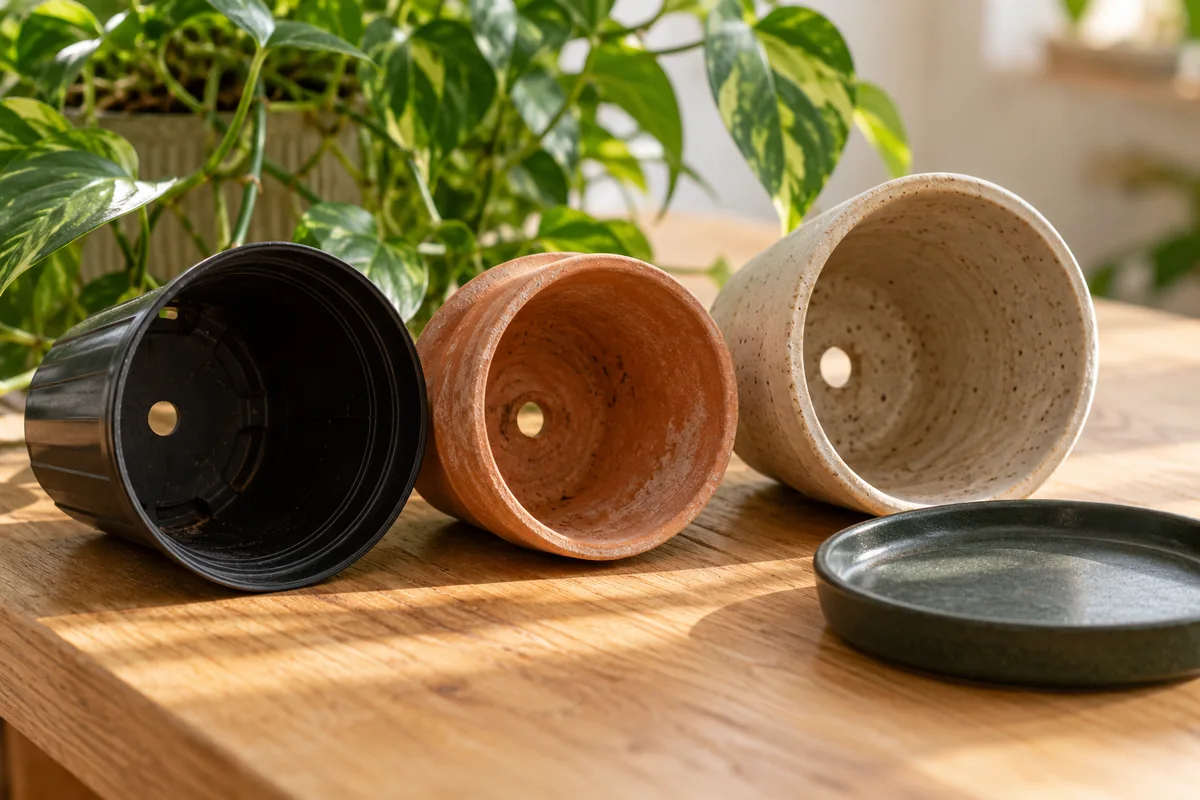
Inspect the container first. A narrow lightweight pot beneath a broad canopy may be unstable regardless of how firmly the plant is tied. Choose a base that stands securely and an inner growing volume that suits the roots. A heavy outer cover can supply balance around a proportionate nursery pot, provided collected water is removed. A pot with an excessively large wet volume creates a different problem even if its weight prevents tipping. The root zone and the supporting shell can serve separate purposes. Check the surface beneath the plant as well; a rocking stand or uneven floor can make a suitable pot seem unstable after any movement.
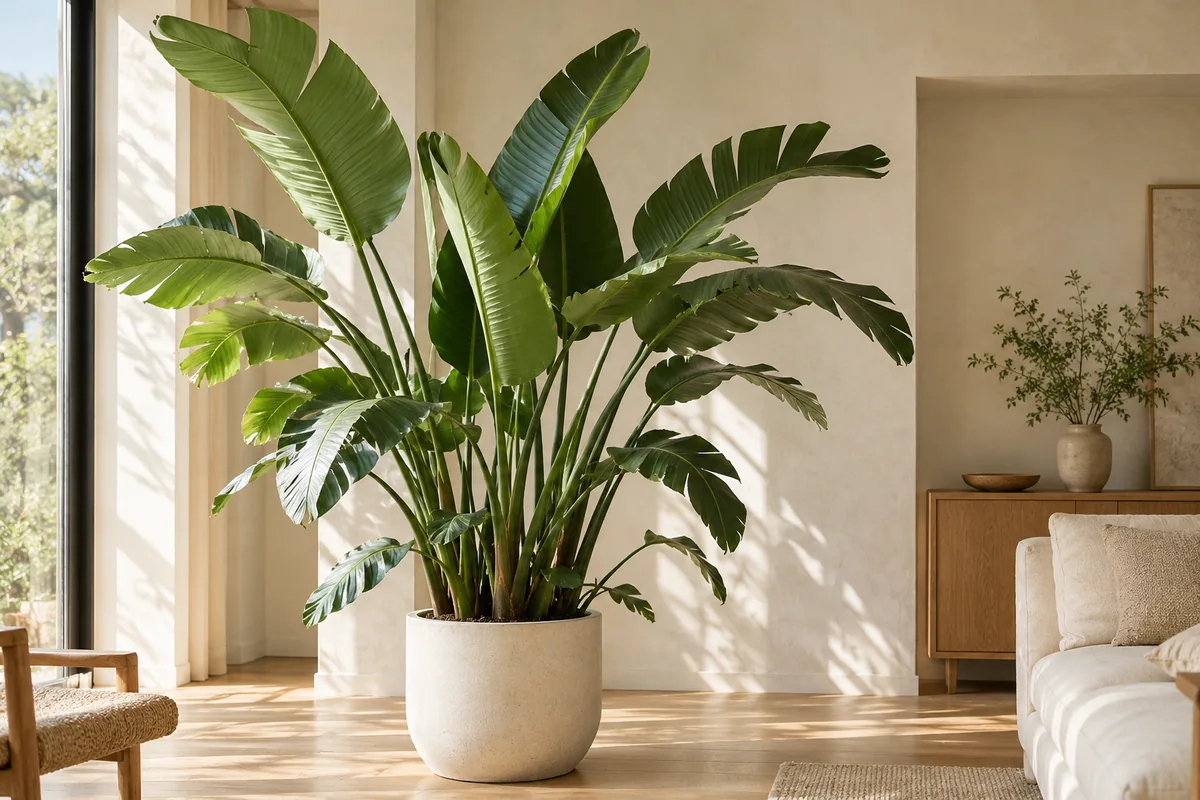
Understand the plant's natural form before fastening it. A climbing monstera needs support along its main stem, with individual leaf stalks free to turn toward light. A tree type plant may need a temporary stake beside its trunk, while a clumping bird of paradise should not have every leaf stalk bundled tightly together. Existing leaves need room to expand and move normally. If you cannot identify which structure should be supported, pause and examine the growth more closely. Tying the wrong parts can damage or restrict them while leaving the actual stem unsupported. A support should follow the plant's structure rather than force it into an unrelated shape.
Plan stake placement before the pot is completely filled when practical. That gives you a clearer view of the root ball and avoids driving a thick support blindly through the center. Position it where it can stand firmly without severing major roots. For an already potted plant, insert cautiously near an appropriate edge and stop if substantial resistance is felt. Do not hammer a stake through a dense root mass. The support needs enough depth to remain useful after watering, and its height should match the section that requires stability. An overly tall thin stake can sway and transfer movement back to the stem instead of reducing it.
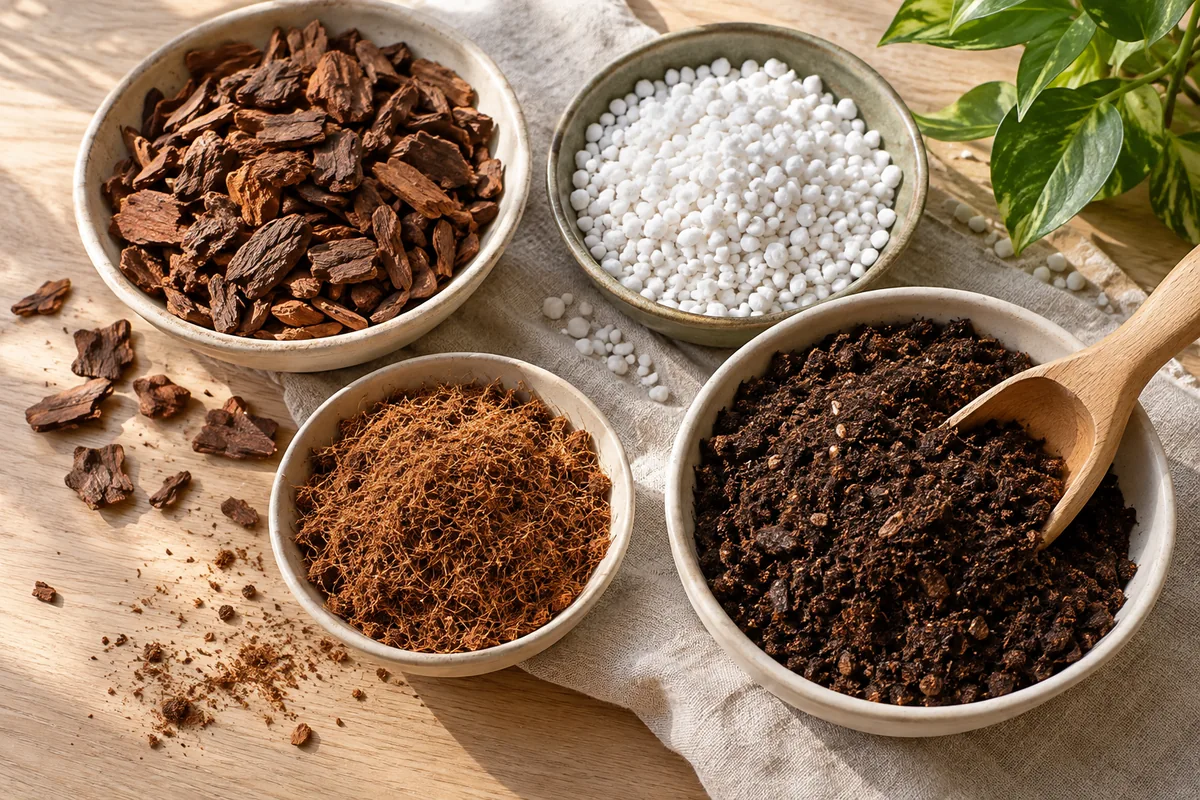
Use soft flexible ties and leave room for growth. A loose figure shaped connection can separate a trunk from the stake and reduce rubbing, while appropriate plant clips or soft strips may suit climbing stems. Avoid thin wire pressed directly against living tissue. Check the point of contact after the plant has been watered and the medium has settled. Ties that looked loose on the table can become tight when the plant shifts slightly. Keep the base at its previous planting depth and add mix only where settling has left a genuine gap. Do not mound damp medium high around the stem to make the support look hidden.
Return the plant to suitable stable light. A persistent lean toward a distant window will not be solved permanently by a stake. Improve the position within the species' light requirements and turn appropriate plants gradually during normal care. Avoid sudden strong sun after root disturbance. Wind, direct fan airflow, and busy walkways can also move a newly repotted canopy repeatedly, so choose a protected place while it settles. That does not require darkness or a sealed enclosure. Useful light and ordinary gentle ventilation support normal growth, while the temporary structure reduces the mechanical movement that could repeatedly loosen contact between roots and fresh mix.
Check watering from the medium rather than from the plant's supported posture. A stake can hold a plant upright even when the root ball is too wet or too dry, so appearance alone becomes less informative. Inspect below the surface where practical and learn the new pot weight after drainage. Empty the cover and check the support after each early watering because fresh material can settle. Feeding is not a way to make the stem attach to the medium more quickly. Let the roots establish a predictable watering pattern and resume an appropriate routine during active growth, considering any nutrients already supplied by the fresh mix.
Review the support over the following months. Loosen ties before they restrict expansion and remove temporary stakes when the plant stands securely without them. Permanent climbing supports should be extended or adjusted as the stem develops. If the plant remains unstable, examine the root ball, light direction, and container balance rather than adding more tight ties. The successful setup is one that eventually needs less intervention because roots occupy the fresh space and the canopy receives suitable light. A good support is a practical aid during that process, holding the correct structure gently while allowing the plant to develop its own stable relationship with the container beneath it.