A neat layer of pebbles or bark can make an indoor planter look finished, especially when the growing mix appears uneven after watering. Before covering the surface, consider what you will no longer be able to see or feel easily. The upper mix is a useful place to inspect moisture, fallen leaves, insects, and the base of the plant. A decorative layer changes that access and may influence how the surface dries. It can be used thoughtfully, yet it should serve a clear purpose rather than hide a root environment that already needs attention. Start with a plant that is growing well in a suitable drained container.
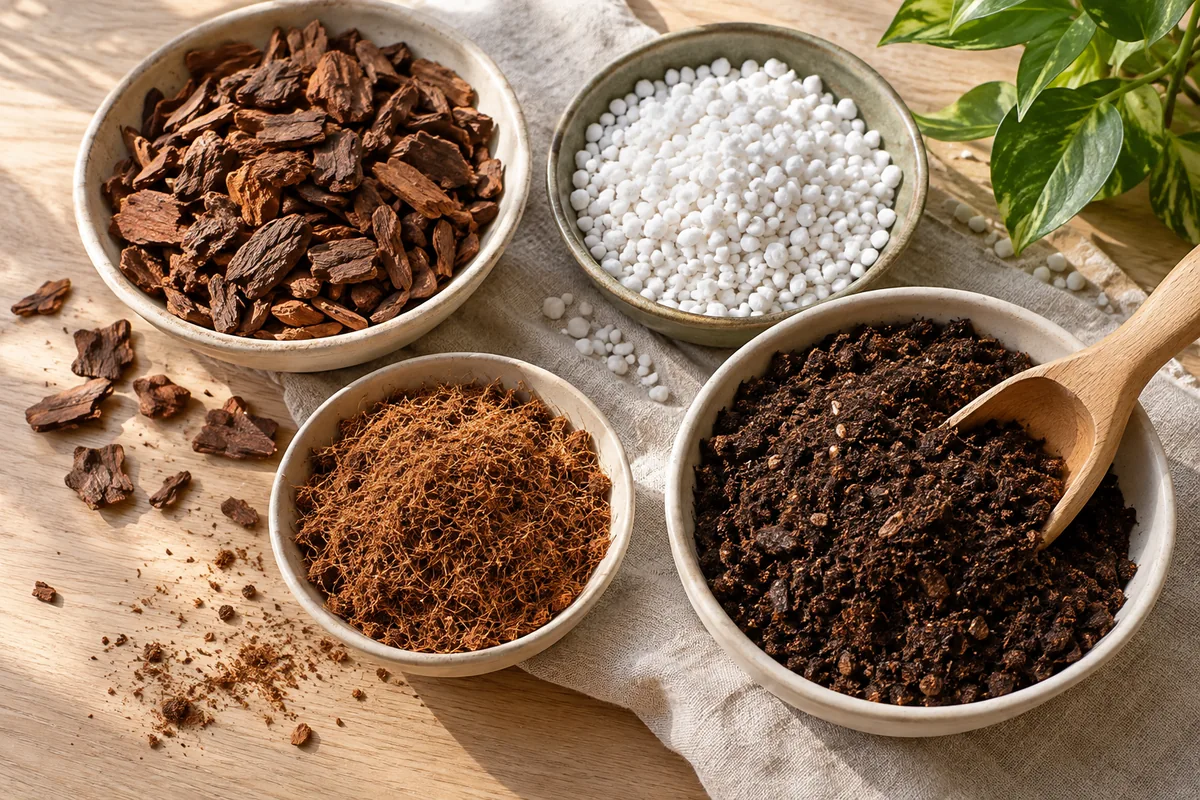
Choose the material with its weight and texture in mind. A thin layer of coarse bark behaves differently from a dense blanket of fine gravel. Heavy stones can press on soft crowns or newly planted cuttings, and small particles may work into the growing medium over time. Avoid unknown material collected from places where its composition or contamination is uncertain. A decorative product should be appropriate for use around container plants. If you want the appearance of stones, keep the layer modest enough to move aside for inspection. The goal is a manageable surface, not a sealed cap that makes every watering decision dependent on guesswork.
Keep the plant's base clear. Stems, trunks, and crowns should remain at their previous planting depth, with no new mound of damp material pressed against them. A thick cover can effectively bury the base even when no extra potting mix has been added. This is especially relevant for clumping plants whose new growth emerges close to the surface. Leave space around those growing points and watch them as the plant expands. Fallen leaves can collect beneath decorative pieces, so inspect and remove debris. A clean looking upper layer does not guarantee that the hidden surface below it remains clear or appropriately dry between waterings.
Understand how the layer affects observation. If you normally check moisture with a finger, leave an accessible area or move the cover aside each time. A dry pebble surface says little about the mix beneath it. Conversely, damp bark at the top may reflect recent watering while the root ball is drying at its normal pace. Container weight becomes a useful companion check, but the added material changes the baseline. Learn the pot's new weight after watering and complete drainage, then compare it near the plant's appropriate next watering point. Do not use the weight remembered from before the decorative layer was added.
Water evenly and watch how it reaches the mix. A dense surface layer can divert water toward one edge or hide puddling. Apply slowly enough that the underlying medium absorbs it rather than sending most of the flow down a gap beside the root ball. Drainage holes must remain functional and runoff should be removed from the saucer or cover. A surface treatment cannot compensate for a sealed container. It also cannot rebuild compacted medium deeper in the pot. If watering has become difficult because the old mix repels water or roots fill the container, address that underlying condition instead of covering it with a visually tidier layer.
Expect some change in drying behavior, with the extent depending on the material, thickness, room, and plant. A cover may reduce evaporation from the upper mix, while a warm sunny position can influence the surface temperature. Avoid assuming that the effect will be identical in every container. Check the lower root zone where practical and observe several normal watering cycles. Plants that need a more substantial drying interval should not be kept on the old schedule without inspection after the surface is covered. Small containers can be especially sensitive to changes because their available moisture reserve is limited and the decorative material occupies a relatively larger share of the arrangement.
During maintenance, remove the layer occasionally enough to inspect the actual surface and the plant's base. Clean reusable decorative pieces appropriately outside the planted pot rather than applying household cleaning products directly around roots. Bark can soften and break down over time, so reassess its condition rather than continually adding more on top. Repeated additions can raise the effective surface level against stems. If insects or unexplained deterioration appear, uncover the mix to make observation easier. A decorative layer should remain optional. Taking it away is a reasonable practical adjustment when it interferes with moisture checks or hides the information needed for ordinary care.
Judge the result by how easy the plant remains to manage after several weeks, not only by the appearance on the day the layer is applied. Keep a clear area for inspection, preserve the original crown depth, and update your understanding of container weight and drying. If the arrangement creates uncertainty, reduce the thickness or leave the medium exposed. An indoor plant does not require a decorative mulch to grow well. The most useful surface is one that allows water to enter evenly and lets you notice changes around the roots and stems. Appearance works best when it supports that access rather than making the growing environment harder to read.