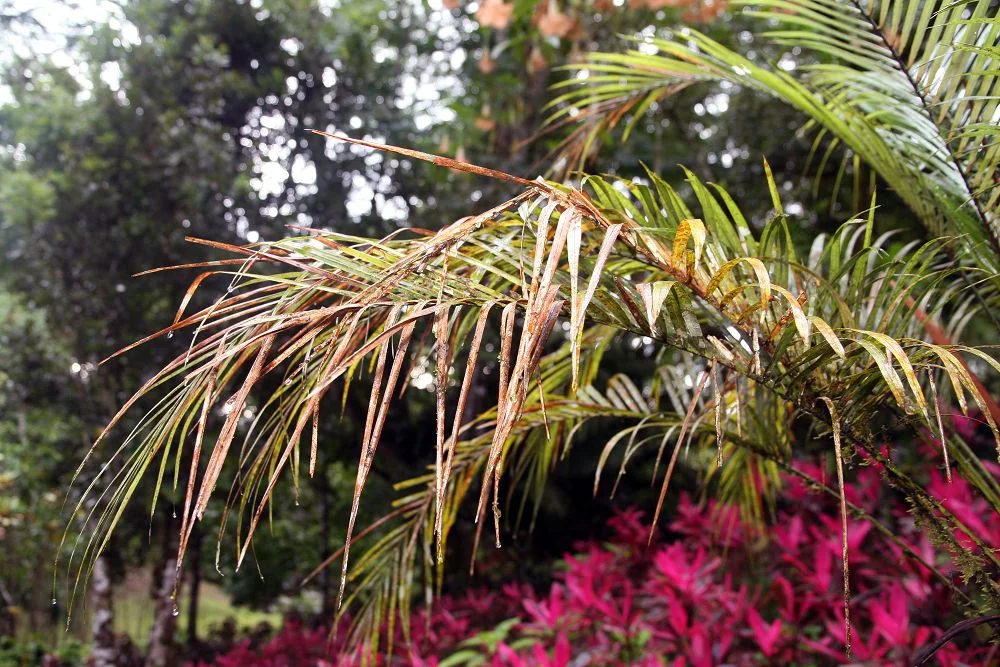
A Brazilian Palm, Not a Small Coconut
The miniature coconut palm has one of the most misleading common names in the indoor trade. Syagrus weddelliana is a small, elegant Brazilian palm, not a juvenile coconut tree waiting to produce a familiar large nut. It has also been known as Lytocaryum weddellianum, so both names are useful when comparing plant labels and older care references. Fine arching fronds give a modest specimen a delicate outline. That scale can suit a sheltered interior collection, but its tropical appearance should not encourage careless exposure or a generic routine borrowed from a much tougher palm with a superficially similar silhouette.
Its native home lies in southeastern Brazil, including the Rio de Janeiro region. It belongs to the Atlantic forest flora rather than to the same natural setting as a beach-grown coconut. The distinction matters because geography and habitat help explain how to choose an indoor microclimate. A small solitary trunk supports a crown of finely divided leaves, and the plant's refinement is best seen with some open space around it. It is not naturally a dense clump assembled to fill a large corner immediately. Nursery arrangements containing more than one seedling should be recognized as arrangements rather than a different branching habit.
A Sheltered Bright Position
Choose bright, filtered light with protection from the strongest unfamiliar midday sun. A warm, sheltered sunroom or a well-lit plant room is a more realistic home than a dry, dim office recess. The foliage can be displayed at a useful viewing height while the root ball remains accessible. Avoid setting it directly above a radiator or in the path of air-conditioning. A canopy of fine leaflets can lose its attractive outline quickly when one side is repeatedly dried by moving air. If the plant is moved outdoors in suitable weather, acclimate it and preserve shelter rather than assuming that every palm wants immediate full exposure.
Water moderately during active growth, wetting the root ball and allowing surplus to escape. The surface can begin to dry, but a small fine-rooted palm should not be subjected to repeated prolonged drought simply to make maintenance convenient. In cooler conditions with less growth, reduce the frequency accordingly. Learn the actual container weight rather than judging solely from the top layer. A small inner pot concealed in a deep ornamental vessel can retain an unseen pool below it. Lift or inspect it after watering. Keeping access simple is especially valuable for a slow plant whose first warning signs may take time to become obvious.
Fine Roots and Delicate Fronds
An open, moisture-retaining container medium is preferable to dense garden soil. A loam-based mix designed for houseplants or palms can be adapted to the available conditions without eliminating all organic retention. Choose a modestly sized draining pot and move up only when the root system needs room. Preserve the root ball during repotting rather than exposing and rearranging every fine root. Set the stem at the original level. If a heavier display container is desired, supply that weight outside the occupied root volume. Extra compost is not the only way to make a light young palm stable on a stand.
The finest parts of the foliage need careful maintenance. Wipe or rinse dust gently while supporting the frond, and avoid pulling cloth along several leaflets at once. Keep it clear of curtain movement and shelving edges. A broken leaflet cannot be restored by trimming the remainder into an artificial uniform shape. Remove a completely dead frond carefully, leaving the stem and crown intact. This palm cannot be shortened by cutting its central growing point. Planning for eventual height and a graceful arch is therefore part of its care, even when the specimen begins as a manageable small pot in a nursery tray.
Modest Feeding and the Next Fine Frond
Feed only in proportion to active growth, following a suitable product's directions. The plant's modest size does not mean it needs a strong dose to catch up with larger palms. If new fronds become pale or weak, assess light, root condition, and moisture before assuming a single nutritional answer. Accumulated salts can also affect fine leaf tips. An occasional thorough watering with real drainage is different from endlessly topping up a closed cover pot. Keep a record of major changes, especially after repotting or a move. Slow-growing plants are easier to interpret when the caretaker does not change every condition simultaneously.
Monitor for mites and scale, concentrating on leaf undersides and protected petiole bases. A new palm should be inspected before joining an established collection, even when its overall outline looks attractive. Dusty stippling or small stationary bumps deserve a closer look rather than an immediate coating of leaf polish. Isolate an affected plant and choose an appropriate response after identification. Environmental damage must also be considered. A cold journey, sudden direct sun, or a dry root ball can leave lasting marks on existing foliage. The quality of the next frond helps show whether the original event has passed or the underlying problem remains.
Giving a Clearly Identified Collection Plant
This palm makes a thoughtful gift for a collector who enjoys fine detail and has a sheltered bright position. Its miniature scale could personally suggest a carefully considered beginning or an appreciation of subtle things. There is no need to attach a supposed coconut tradition to a plant that is not a coconut. Include both scientific names and explain the common-name distinction in the gift note. A recipient who regularly travels without plant care may prefer a more drought-tolerant species. Where pets investigate foliage, verify the exact plant against an authoritative safety reference rather than assuming a common name supplies all necessary information.
Allow the display to stay simple enough that individual fronds remain visible. Track the opening of each new leaf and compare its condition with the older canopy over several months. Move the plant when a genuinely better growing position is available, rather than constantly rearranging it for decoration. A sound root system, appropriate light, and a consistent moisture rhythm are more valuable than an oversized pot or a complicated collection of supplements. Syagrus weddelliana is most rewarding when cultivated as its own Brazilian forest palm, with a clear identity and realistic needs, rather than as a novelty miniature of a completely different tropical tree.