The Seedlings Behind a Familiar Name
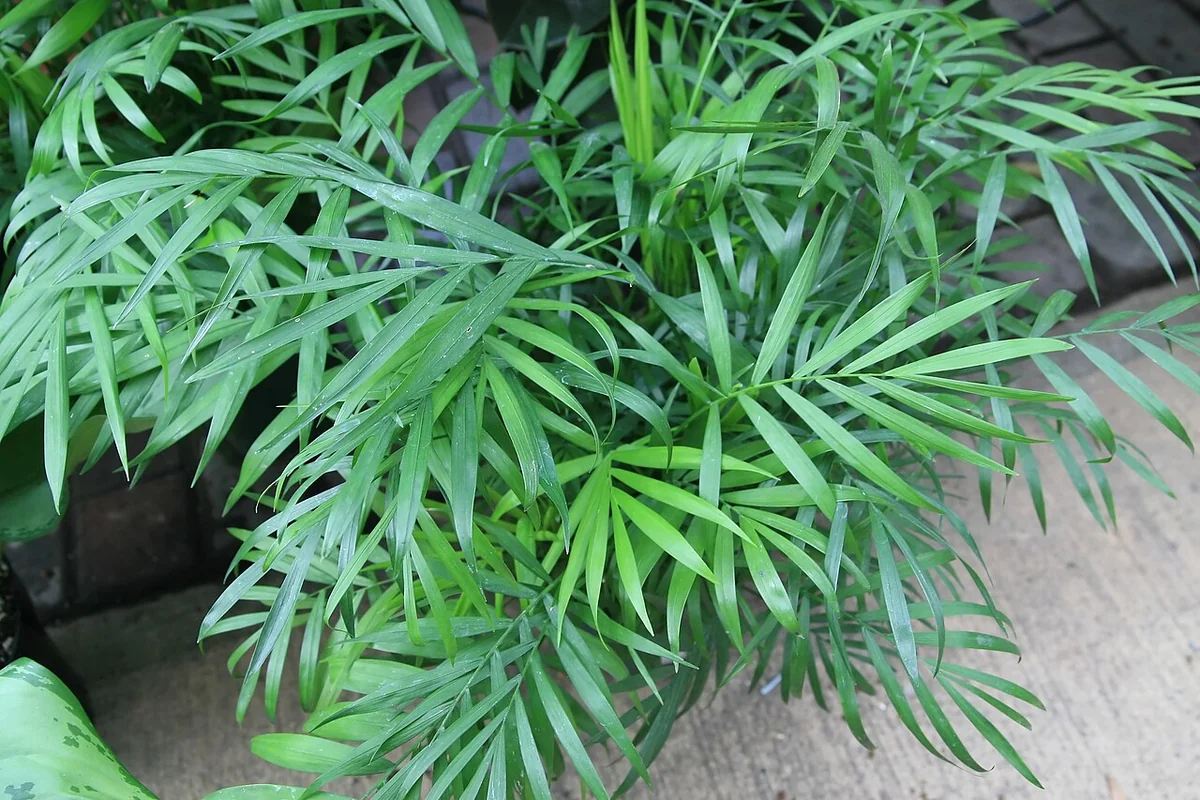
The familiar parlor palm is often sold as a little tuft that seems almost interchangeable with a bunch of greenery. Chamaedorea elegans is more interesting than that presentation suggests. Each individual is a slender, single-stemmed palm, and a full nursery pot commonly contains numerous seedlings. Over time, the healthiest seedlings extend above the others and the arrangement becomes less uniform. That natural change is not necessarily poor care. Understanding the separate plants within the pot helps explain why cutting all the stems to one level cannot produce an endlessly renewed miniature hedge for a desktop or office reception counter.
In its native southern Mexican and northern Central American forests, this palm lives below taller vegetation. Its small stature and ability to manage filtered light are therefore connected to a recognizable habitat. The botanical epithet elegans aptly describes the fine division of its leaves. Its history as an interior ornamental has made it familiar in homes far from those forests, yet familiarity should not erase the distinction between shade tolerance and absence of light. The common name refers to a setting in human houses, while the living plant still needs enough daylight to support new foliage and roots.
Choosing an Actual Growing Desk
For an ordinary office, choose a desk beside a window, a low stand in a bright room, or a position receiving substantial filtered light through the working day. A parlor palm can accept less illumination than a banana or sun-loving yucca, but an interior meeting room used only a few hours a week is not automatically suitable. If there is no daylight, provide and evaluate an appropriate plant light. Keep leaves away from window glass that becomes very cold overnight. Turn the container gently on occasion if the seedlings lean strongly, while avoiding constant rearrangement before their response can be understood.
The small nursery container can dry quickly, but its dense seedling root ball can also hold more moisture than the surface suggests. Check before watering. Allow a slight drying of the upper mix, water sufficiently to reach the roots throughout the pot, and let excess escape. Brief dryness is usually less complicated than repeated saturation, though deliberate prolonged drought will make the fine foliage unattractive. Avoid delivering daily spoonfuls of water as a gesture of attention. Such splashes can leave one section wet and another dry. A manageable pot should be lifted occasionally so its changing weight becomes a useful practical guide.
A Small Root Ball and an Intact Crown
Use a humus-rich, freely draining houseplant medium. When roots have occupied the pot and moisture management becomes difficult, move the intact root ball into a modestly larger container. Splitting a dense commercial seedling clump is possible only at the cost of disturbing many interwoven roots, and is unnecessary for a routine refresh. Leave the stems at their original soil level. If an ornamental cover has no drainage, retain a separate inner pot and make it easy to remove. The tiny palm should remain accessible to its caretaker rather than disappearing permanently into a deep decorative vessel.
Feeding should suit its slow indoor growth. A mild application of a suitable houseplant fertilizer during the active season is more sensible than feeding every time a leaf tip turns brown. Fresh medium may already contain nutrients. In winter, a palm in reduced light uses less water and fertilizer, even if the office thermostat keeps people comfortable. The newest frond is a useful record of conditions while it was forming. If its leaflets emerge poorly, inspect the root environment and the crown before deciding the plant simply needs a stronger feed. Several seedlings share the resources of the same small container.
Fine Foliage, Small Flowers, and Routine Inspection
Trim dead lower fronds selectively and leave the growing point of each stem untouched. A damaged tip on one leaflet can be tidied, but removing an entire mostly green frond for a small cosmetic fault sacrifices working leaf area. The fine foliage catches dust and may host mites in dry indoor air. A gentle rinse or careful wiping is useful if the medium is protected from accidental flooding. Do not hold the pot by its leaves when moving it. Short stems and delicate petioles can break even though the foliage looks flexible and resilient when viewed from across a room.
Clusters of small yellow flowers sometimes appear on established plants. They are a sign of maturity rather than a reason to change the palm's entire routine. Male and female flowers occur on separate individuals, so fruiting is not guaranteed on a single plant. There is no need to buy a special bloom stimulant for an ordinary foliage display. If flower stalks become untidy they can be removed carefully after they finish. Meanwhile, look beneath the leaflets for pests and remove dead material from the soil surface. Crowded seedling pots should not become damp collections of fallen leaves and office litter.
A Modest Gift with Real Daylight
A small parlor palm can make a modest graduation, new-desk, or first-apartment gift because its initial size is manageable. Its delicate form may personally suggest an encouraging beginning rather than an extravagant milestone. That is a chosen message, not a documented guarantee of luck or productivity. The practical question is whether the recipient has daylight and wants responsibility for a living plant. Include a note explaining that several seedlings may share the pot and that the central growing tips should not be cut. For homes with chewing animals, verify the exact species against a current authoritative pet-safety source rather than generalizing from the word palm.
After the gift arrives, give it a defined place and a defined caretaker. A calendar reminder can prompt a moisture check without demanding water on every reminder date. As the plant grows, it may graduate from a desk to a low stand, where its narrow trunks and arching leaves are easier to appreciate. Keep realistic expectations about pace: a healthy parlor palm is not obliged to fill an empty corner within a season. Its strength is the ability to bring a small portion of forest structure into a suitable indoor space without the footprint demanded by larger tropical foliage plants.