An unglazed terracotta pot often feels cool after watering, and its color can darken as moisture enters the clay. Those visible changes are part of what makes it an informative container to use. Water can move through the porous wall as well as leave through the drainage hole, so a plant may dry differently than it did in plastic or glazed ceramic. That does not make terracotta the best choice for every species or room. It is a material with particular behavior. Understanding that behavior helps you decide whether it suits a succulent on a bright sill, a moisture loving fern, or a container you can check only occasionally.
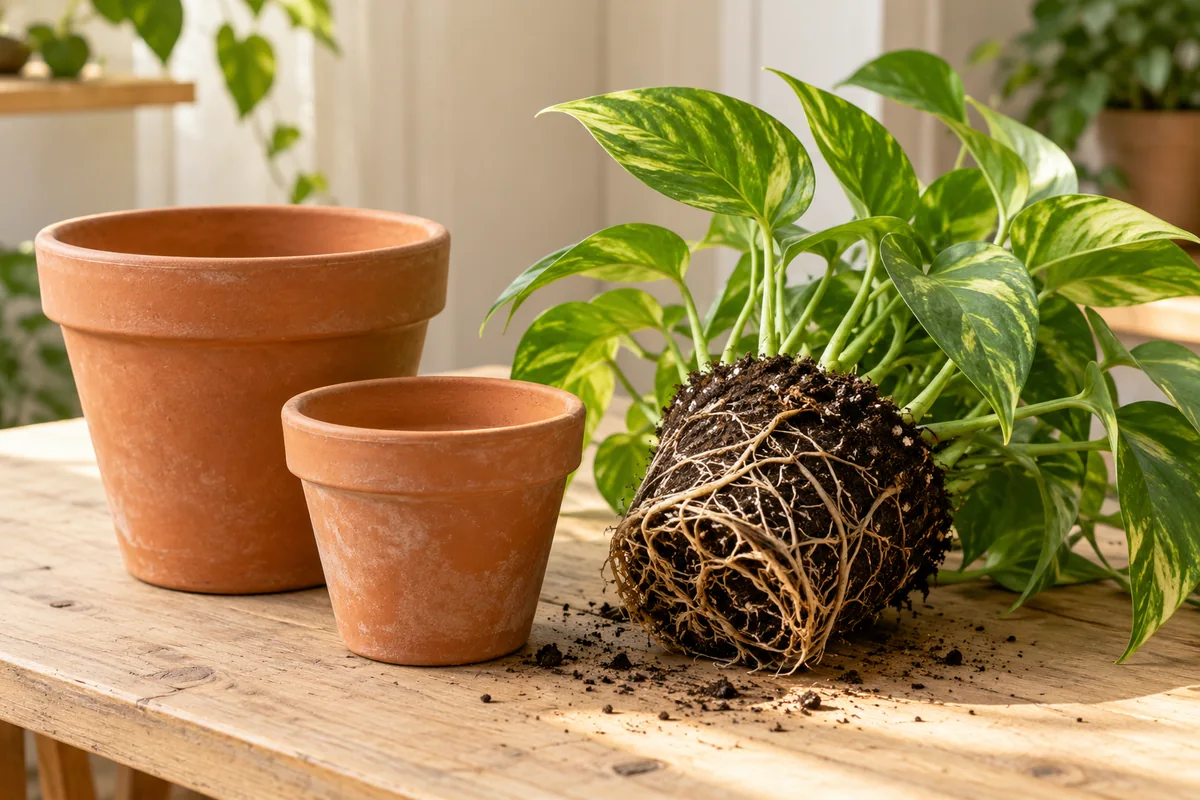
Compare the actual pot size with the root ball before considering the material's reputation. A large terracotta pot can still hold too much damp mix around a small plant. The porous wall does not cancel an excessive volume of unused medium, especially in a cool room with modest light. Choose a container with a suitable internal width and depth, a functional drainage opening, and a stable base. Wall thickness also varies between pots, affecting weight and the amount of clay around the mix. An attractive thick planter and a thin nursery style clay pot may not behave identically even when their outside dimensions appear similar.
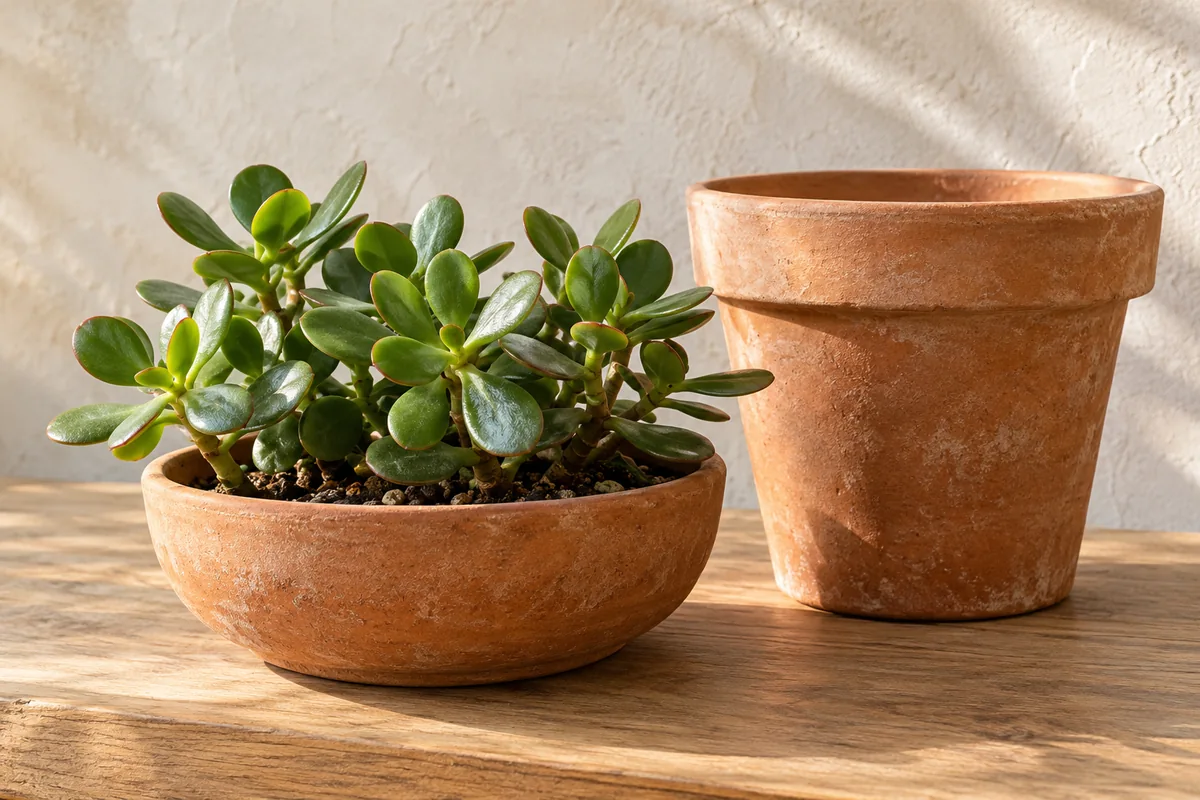
Consider which plants fit the drying pattern you can provide. A jade plant or another succulent may suit unglazed clay when the mix and light are appropriate. A small fern in a warm room may need closer attention because moisture can leave through the sides as well as the surface. Container choice should make the plant's preferred conditions easier to maintain, not create a routine you cannot manage. If you move a plant from plastic into terracotta, observe the first several watering cycles. The previous interval may become too long, while a change into a larger pot at the same time can partly offset that difference.
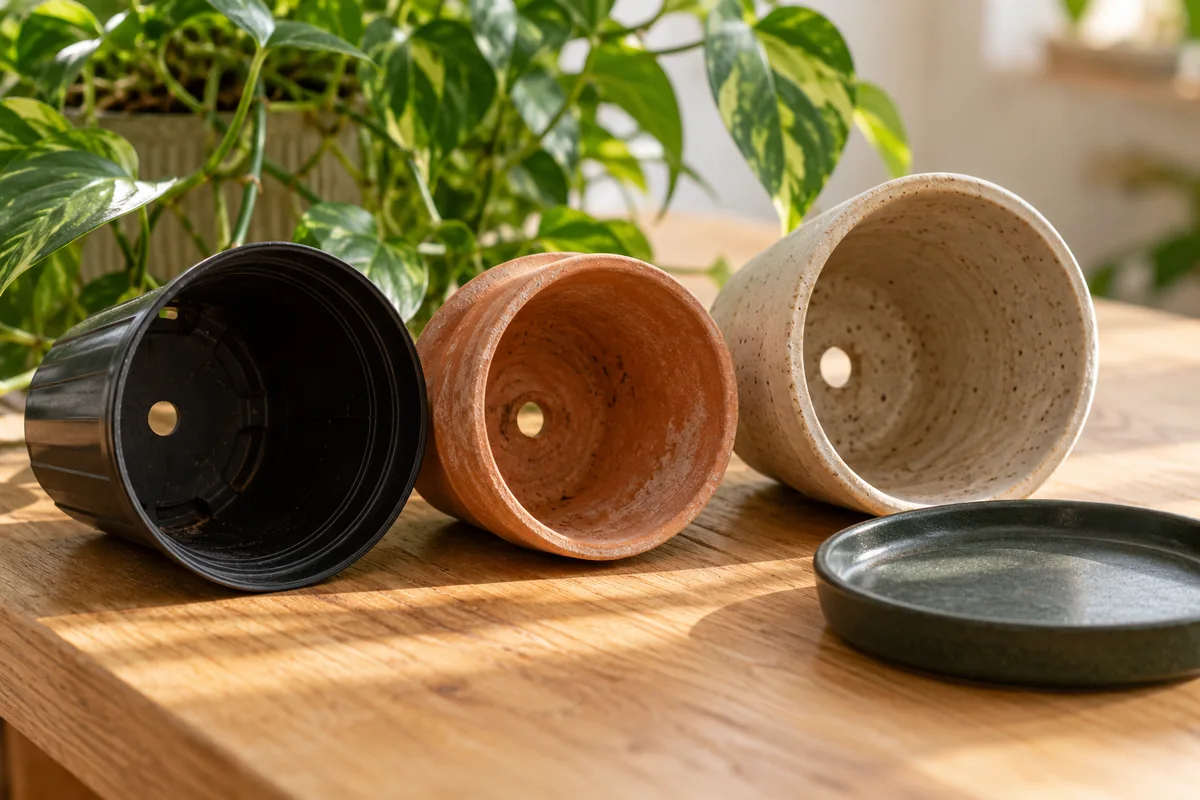
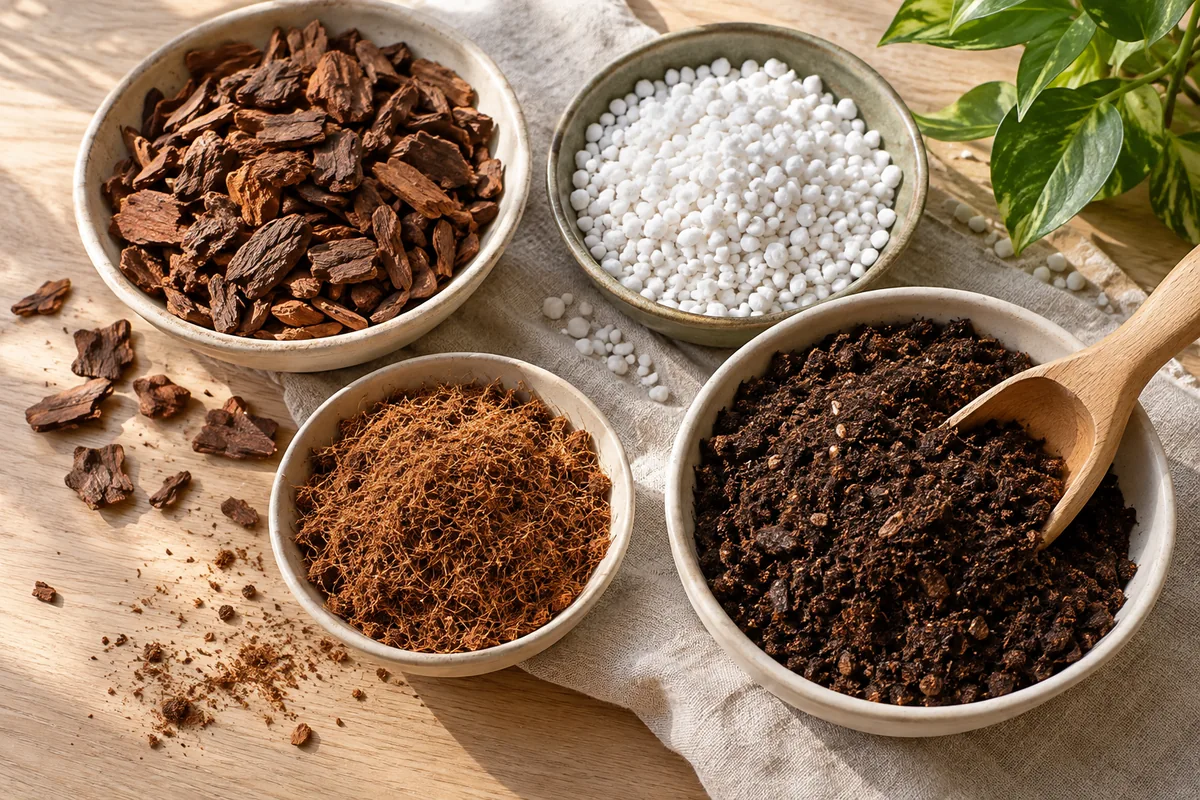
Prepare the pot and medium sensibly. Clean a previously used container, remove old debris, and inspect for cracks that might worsen when the wet pot is lifted. If you moisten or soak the empty clay before potting, let surplus water drain and keep the medium's starting moisture in mind. Use the selected growing mix throughout the root zone rather than putting a stone layer beneath it. Set the plant at its previous depth and settle the sides gently. Leave room below the rim for watering. The drainage hole should remain open, with a suitable saucer underneath to protect furniture from the initial runoff.
Water thoroughly when the plant reaches its appropriate threshold, applying evenly across the mix. Allow excess to leave and empty the saucer. Moist clay does not necessarily mean the interior root ball is uniformly wet, especially when the old mix has shrunk away from the wall. Watch for water bypassing a dry center and escaping quickly along the edge. Conversely, a dry looking outside wall does not prove that the lower mix has dried enough for another watering. Check beneath the surface where practical and compare the container's weight. The clay adds its own weight, so learn the range of this particular pot rather than comparing it with a plastic one nearby.
White or pale deposits can appear on unglazed clay as dissolved minerals move with water and remain at the surface. Their presence is a clue about water and feeding residues, not a reason to scrub the planted pot aggressively with household chemicals. Wipe the exterior appropriately and consider the quality of the water and the amount of fertilizer used. A suitable occasional flushing of the mix may be relevant for some plants when drainage is reliable, but avoid repeated extra watering simply to clean the outside. Empty pots can be cleaned more thoroughly between plantings according to the material and any product instructions, with rinsing before reuse.
Placement affects performance. A pot close to warm moving air can lose moisture faster than one in a sheltered position, and direct sun can warm the container and leaves. Do not assume that a succulent in clay needs the same watering interval across every season. Shorter days and cooler temperatures can slow moisture use even in a porous pot. An outer decorative cover can reduce airflow around the clay and change the behavior again. If you use terracotta inside another container, preserve access for inspection and remove collected runoff. The material's useful properties are part of the complete setup rather than a fixed promise independent of the room.
Over time, notice whether the plant's watering needs feel manageable and whether new growth is appropriate for the species. If the pot dries too quickly for consistent care, reconsider the mix, size, or container material rather than continually rescuing a very dry root ball. If it stays damp, inspect light and root volume before blaming the clay. Terracotta offers weight, a porous wall, and a clear visual response to moisture. Those features can be helpful when they fit the plant and your routine. The right container is the one that supports steady root conditions and remains practical through ordinary changes in weather, growth, and household care.