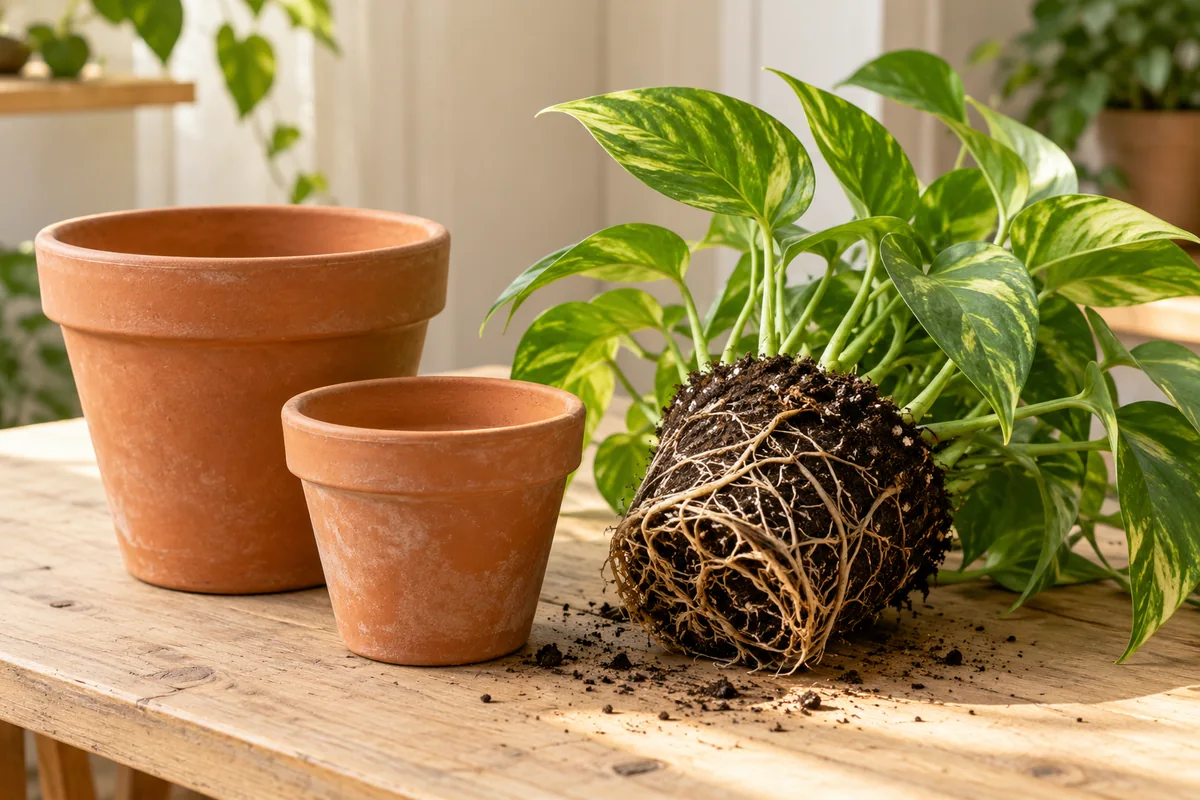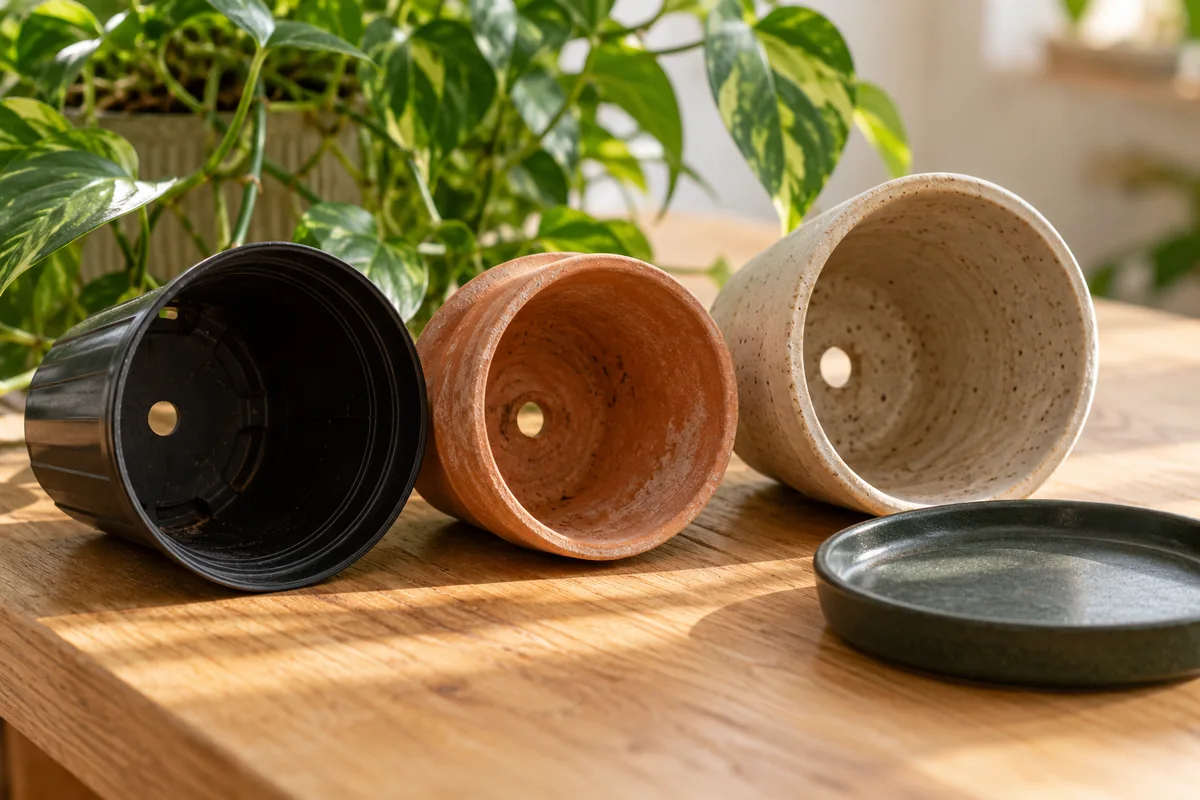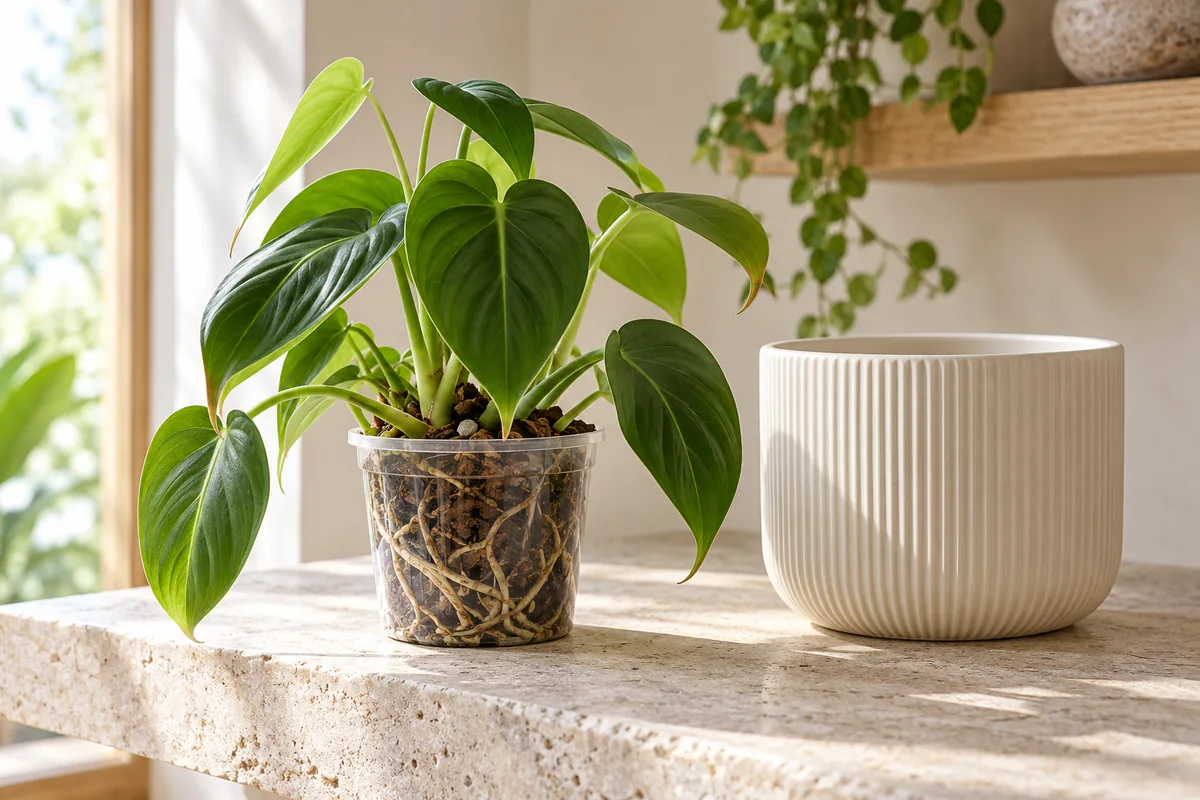
A decorative cover can make a simple nursery pot look finished without changing the growing container at all. That is the useful idea behind a cachepot: the inner pot serves the roots, while the outer one provides the appearance and sometimes additional stability. Problems usually begin when the hidden space between them is forgotten. Runoff can collect below the nursery pot, and the plant may stand in water long after the visible surface has begun to dry. Choose the two containers as a working pair. An attractive fit should still leave room to lift the inner pot, inspect the base, and remove surplus water comfortably.
Start with an inner pot that suits the root ball and has functional drainage. The outer cover should not dictate an unnecessarily large growing volume. If the decorative planter is much wider, a stable insert or support can hold a smaller nursery pot at the right height. Make sure that support cannot collapse when wet or tilt during watering. The plant should sit securely without its weight resting on leaves or stems. Leave enough space beneath the inner base to notice accidental runoff, yet do not treat that gap as a permanent reservoir. Ordinary drained growing and a purpose designed reservoir system are different arrangements with different management needs.
Check the opening and shape of the cover. A narrow neck can trap a wider nursery pot once roots push the sides outward, making later removal difficult. A straight sided cover with a little clearance is often easier to use. Keep enough access at the rim to grasp the pot itself rather than pulling the plant. If the inner pot sits too low, watering may be awkward and lower leaves can rub against the decorative edge. If it sits too high, the arrangement may be unstable or visually unfinished. Choose a practical height that leaves the growing medium accessible and the plant supported by the container beneath it.
The clearest watering method is to remove the inner pot and water over a sink or suitable tray. Apply water evenly to the medium when the plant reaches its appropriate threshold, then let it drain until the main dripping has stopped. Empty and wipe the outer cover before returning the plant. Check later if the pot tends to release more water after standing. For a heavy specimen that must be watered in place, use a method that lets you inspect and remove collected water at the base. Do not assume that a small amount of runoff will disappear quickly inside a sealed ceramic cover, particularly in a cool room with little evaporation.
Be cautious with absorbent materials tucked into the bottom for height or decoration. A sponge, cloth, or porous packing material can hold water against the nursery pot and change its drying behavior. Stable nonabsorbent supports are easier to understand, provided they do not block the drainage holes. Avoid filling the gap around the inner pot with loose growing mix unless you intend to create a different planting arrangement entirely. Roots can extend into damp material outside their original container, making removal harder and hiding the actual root volume. Keep the distinction between growing pot and cover clear so ordinary care remains straightforward.
Inspect the concealed area during routine care. Fallen leaves, insects, mineral residue, and roots can accumulate at the bottom unnoticed. A quick check when the pot is lifted prevents the cover from becoming a sealed storage space for damp debris. Wash it as appropriate to the material and let it dry before returning a drained pot. Some porous covers can mark furniture, while others may develop cracks or leaks over time. Use a suitable protective surface and inspect it occasionally. The plant's roots should be managed inside the growing container, and the decorative piece should remain a practical outer shell that does not conceal a changing water supply.
Watering intervals may differ after adding a close fitting cover because less air reaches the nursery pot sides. The effect varies with container material and clearance, so observe rather than assuming it will be substantial or negligible. Learn the weight of the inner pot separately from the heavy outer one. A ceramic cover can make a nearly dry plant feel heavy in your hands, masking the useful change in root ball weight. Check the medium directly as well. If the plant remains wet unexpectedly, inspect the base before changing the mix or blaming the species. Hidden runoff is a simple explanation that can be verified immediately.
A well chosen cachepot arrangement keeps appearance and root care compatible. Use the right size inner container, leave removal clearance, and establish a repeatable way to empty water after each thorough watering. Reassess the fit when repotting, since the next nursery pot may be wider or shaped differently. There is no need to plant directly into a decorative vessel simply because it looks substantial. Keeping a removable growing pot inside gives you control over drainage and inspection while retaining the chosen finish. The most successful cover is the one that remains easy to manage after the plant has grown, been watered, and spent several months in the room.