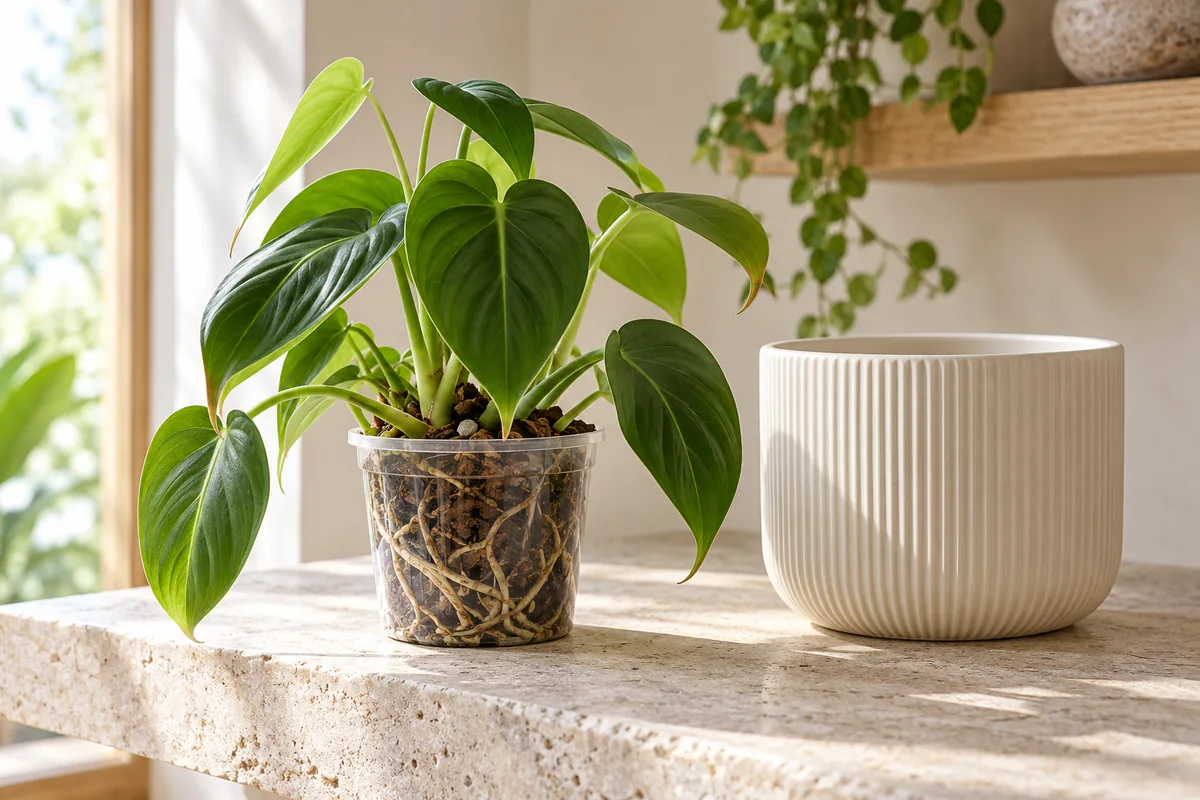
A clear pot can turn watering day into a useful glimpse beneath the surface. You may see new roots extending along the wall, moisture darkening the mix, or droplets collecting after watering. Those clues can help you understand a plant's root zone, yet the visible wall is only a small part of the container. The center can remain wetter or drier than the edge. A clear pot is an observation tool rather than a guarantee that every root is visible or that watering decisions become automatic. It works best when combined with the same checks of drainage, container weight, and plant growth used for an opaque nursery pot.
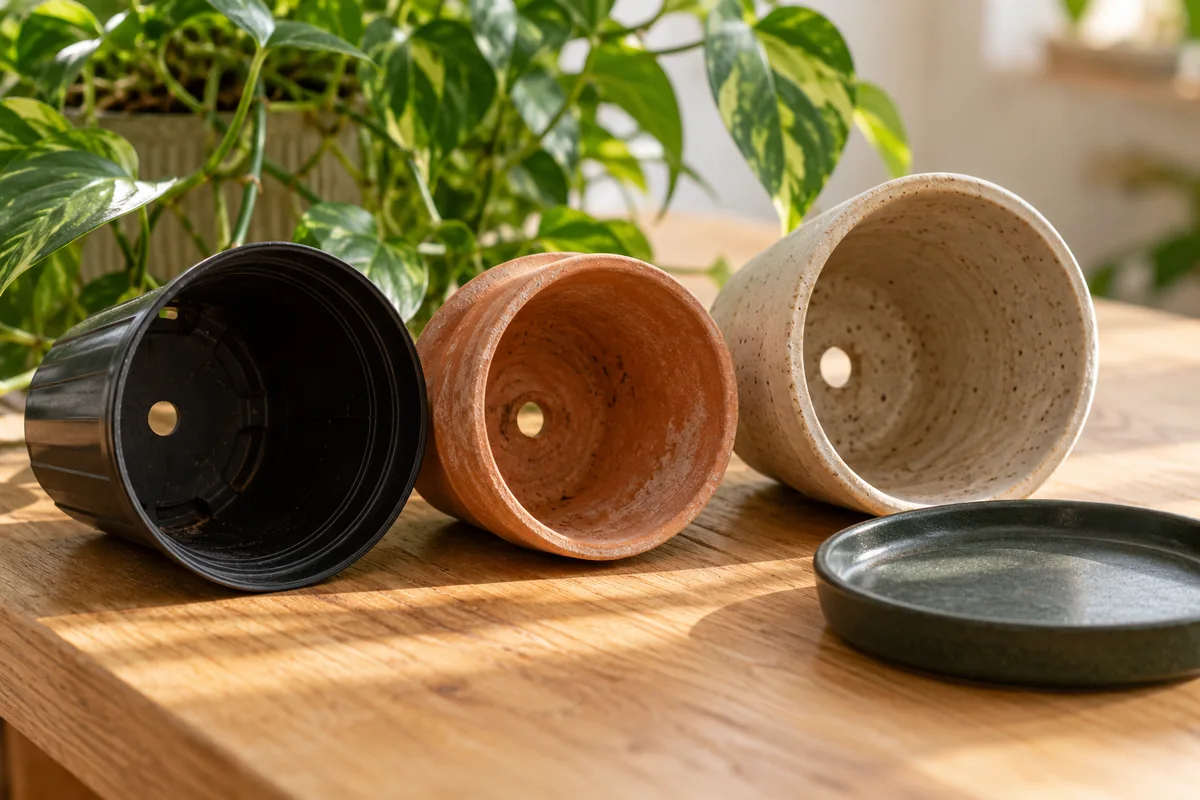
Choose a container designed for growing plants, with suitable drainage openings and enough strength to support the wet mix. Transparency alone does not make a food container an ideal nursery pot. Thin sides can buckle, and an improvised base may not drain freely when set on a flat surface. Compare the internal size with the root ball and keep the increase modest when repotting. A wide clear pot still holds an excessive volume if the roots occupy only its center. The purpose is to observe an appropriate root environment, not to surround a small plant with a large amount of visible but unused growing medium.
Notice the roots that actually reach the wall. New root tips and branching can indicate active growth, while a dense network may suggest that the container is filling. Root color varies by species and growing conditions. Some roots are naturally pale, others tan or stained by bark and mix. Texture and growth over time matter more than judging one color through plastic. A root pressed against the wall can also dry or age differently from one in the interior. Avoid taking the plant out repeatedly to compare every visible mark. Use the view to follow broad changes and reserve disturbance for a clear reason to inspect more closely.
Moisture patterns can be informative when interpreted cautiously. Darker material near the lower wall may show that the base remains damp after the upper mix has lightened. Condensation can appear with temperature differences and does not prove that every part of the root ball has the same moisture level. A dry looking patch at the wall may be beside a crack or an air space. Check the mix directly where practical and compare the pot's weight before deciding to water. Clear sides make differences easier to notice, but they do not eliminate the need to understand the ingredients and the amount of roots inside the container.
Light reaching the moist interior can encourage algae on the pot wall. A thin green coating may be mostly an appearance issue, yet a heavy film can obscure the very view you wanted. A removable opaque cover can reduce light exposure while letting you inspect the pot during care. Keep the inner container easy to remove and empty the cover after watering. Do not let the clear pot sit continually in collected runoff. If the cover fits too tightly, moisture and debris can remain hidden around the base. The arrangement should preserve access rather than turning the transparent container into an inaccessible insert that is rarely checked.
Use the view to refine your watering observations over several cycles. After a thorough appropriate watering and complete drainage, note the pot's weight and the appearance of the mix along the sides. As it dries, compare the visible changes with a careful surface or deeper check. Record the condition that corresponds to the plant's suitable next watering point. A fern should not be taken to the same dryness as a jade plant just to make a clear demonstration. Each species has its own needs. The best information comes from watching normal care, not from deliberately pushing the plant to an extreme to discover a visual endpoint.
Clear containers can be especially convenient for small plants and newly established cuttings because the root system is easier to observe without unpotting. Use a pot proportionate to the roots, with a suitable medium rather than an oversized transparent chamber. When roots begin appearing at the wall, resist moving up immediately if there is still useful growing space inside. Look for a broader pattern of crowding and changing water use. A single root can travel to the edge early. The view can also show whether water is bypassing a dry central plug, prompting slower application and a closer moisture check rather than more frequent watering by habit.
Treat transparency as extra information within an ordinary growing routine. Keep drainage open, compare weight, and watch the plant's new leaves as well as its visible roots. Clean or replace damaged pots when the plant next needs appropriate work, and keep any outer cover practical to remove. If the view becomes obscured, the plant can still be cared for through the usual observations. A clear nursery pot is useful because it helps you ask better questions about the root zone. It does not supply a universal answer. Used thoughtfully, it makes gradual root growth and moisture change easier to understand without repeatedly disturbing the plant.