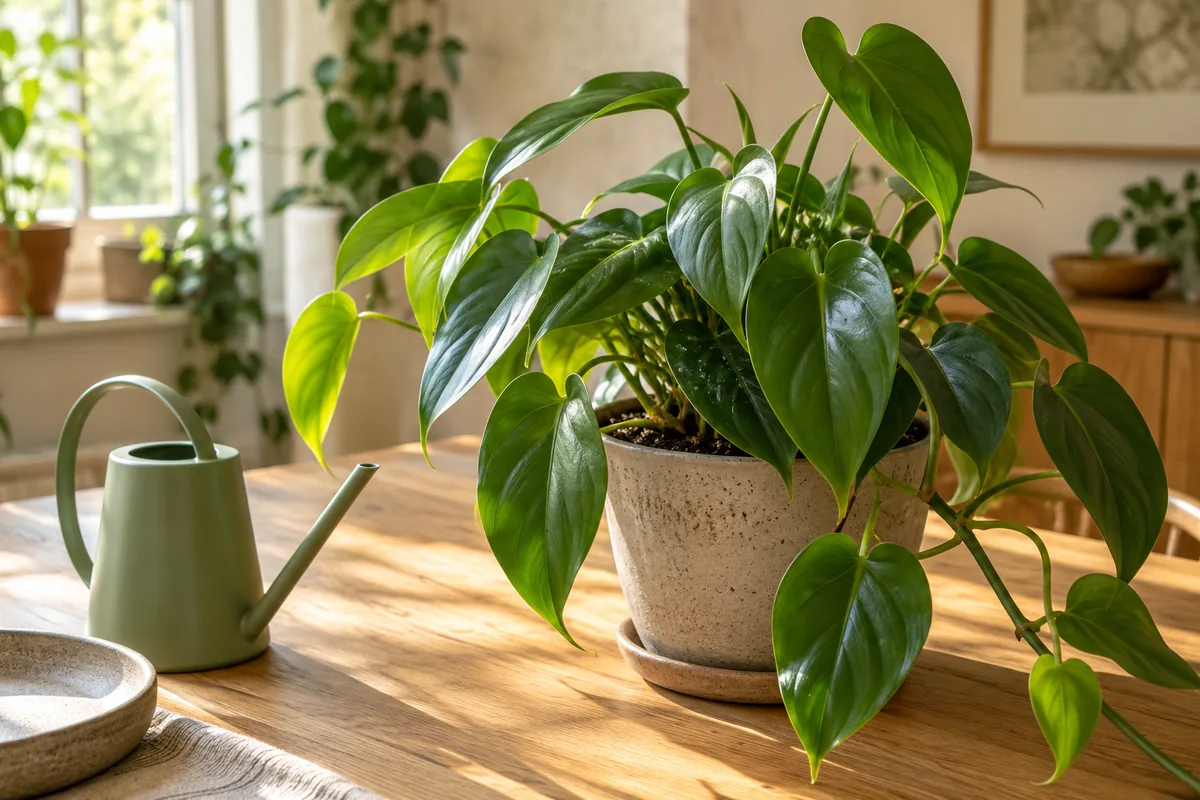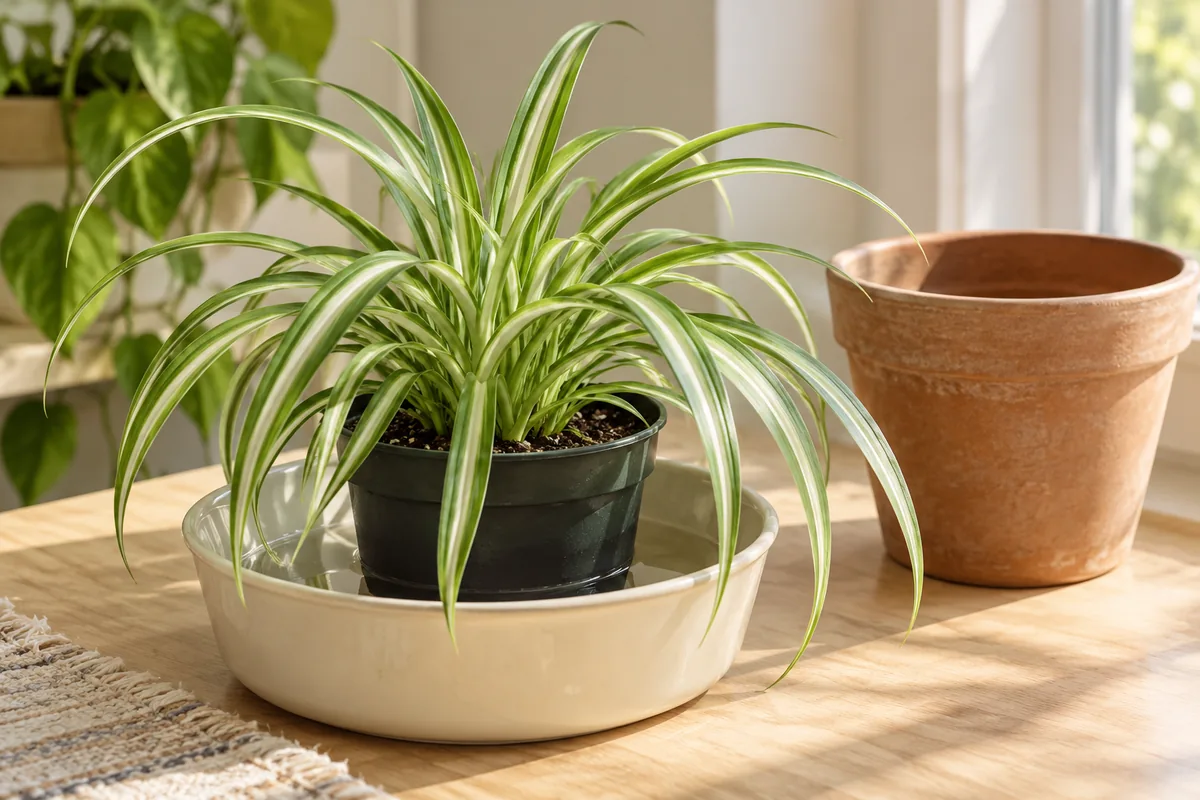
Fresh mix around a plant can look dry at the surface while the old root ball in the middle remains damp. That hidden contrast is one reason watering after repotting takes a little more attention than an ordinary watering day. The plant now occupies two materials that may absorb and release water differently. Its roots may also have been moved, loosened, or trimmed. Before adding water, think about the condition of the original root ball and the kind of plant you have just handled. A leafy aroid with mostly undisturbed roots and a succulent with freshly cut roots should not automatically receive the same treatment.
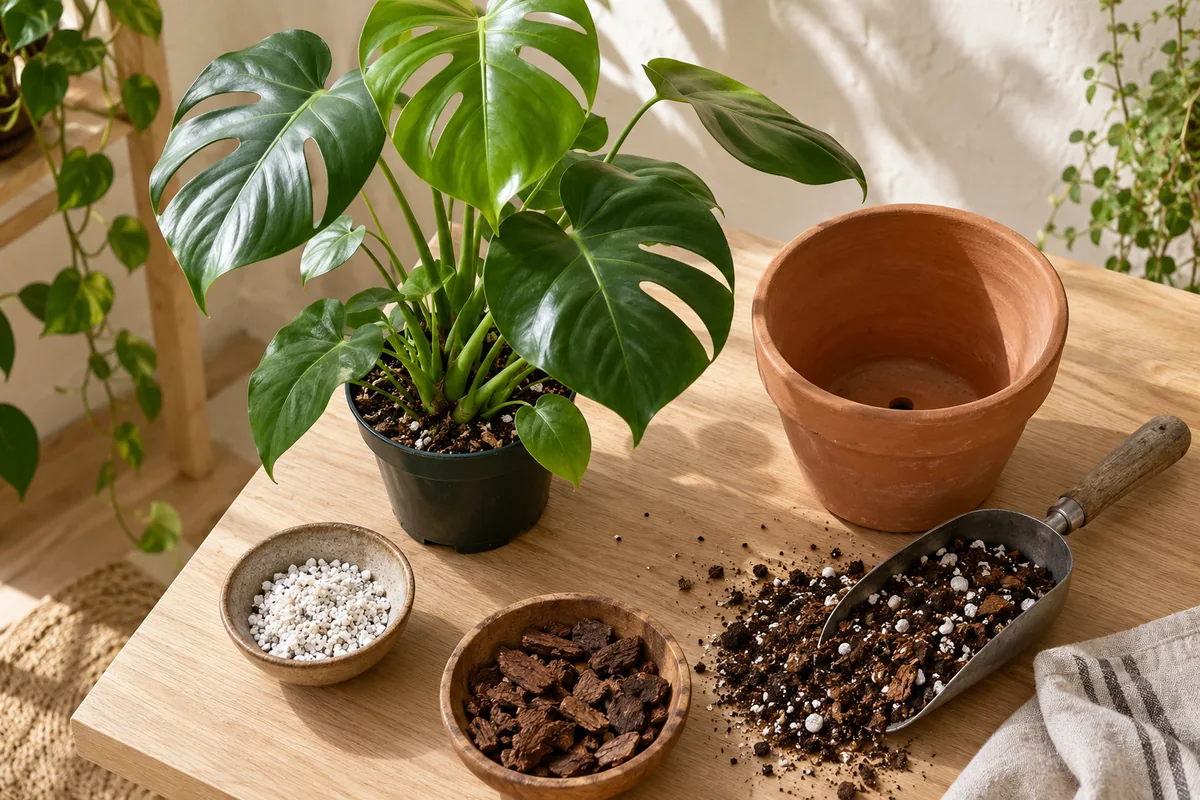
Prepare the new growing mix before filling the pot. Many ordinary foliage mixes are easier to wet evenly when they are lightly moistened in advance. Add water gradually in a separate container and turn the material until it feels slightly damp rather than dripping. Dry compressed ingredients should be expanded according to their instructions before use. The prepared mix can settle around roots without requiring repeated heavy watering just to remove dry pockets. Use a pot only modestly larger than the existing root ball and confirm that drainage holes are open. An excessive volume of unused mix creates a moisture reserve that a recently moved plant may be slow to use.
For many established foliage plants with firm, mostly intact roots, a thorough watering after repotting helps settle the mix and bring the old and new areas into more similar contact. Apply water slowly around the surface and allow excess to drain freely. If the mix sinks, add a little more at the edges without burying the stem deeper than it was before. Do not compact the surface firmly to stop all movement. The roots need air spaces as well as moisture. Empty the saucer once drainage has finished, and check again later if water continues to collect inside a decorative outer pot.
Succulents and plants with substantial root cuts may need a different approach. Fresh cut surfaces can benefit from a short dry settling period in an appropriate airy mix, with timing influenced by the species, the amount of disturbance, and the room conditions. Avoid applying a universal waiting period to every succulent regardless of its state. A plant whose roots were barely touched is different from a division with large exposed cuts. Keep it in suitable bright light without intense new heat while it settles. Follow species specific guidance when the work involved extensive trimming, and do not use a soaking as a way to anchor an unstable plant in a pot that is too large.
The next watering is usually the more important decision. Fresh mix often holds moisture differently from the old material, and a slightly larger pot changes the drying interval. Check both the outer ring and the original root ball where practical. A dry outer layer does not necessarily mean the center is ready for more water. Conversely, a very dry compact original root ball can remain poorly moistened while water escapes through loose new mix around it. Slow applications and careful observation reveal the difference. Container weight is useful once you have established a new baseline after drainage. Do not rely on the weight you remember from the previous pot.
Give the plant a stable location during the adjustment. Keep it within its normal light range and protect it from sudden strong sun, cold glass, and direct airflow from vents. Moving it into a dark corner to rest can slow water use considerably and make a damp pot persist longer. Mild temporary drooping can follow root disturbance, so inspect the mix before assuming the plant needs another drink. Repeated watering cannot correct every form of wilt. A plant with roots that have lost contact with the mix may need the pot settled gently; a pot that is already wet needs time and appropriate conditions rather than more water.
Check the growing mix label before feeding. Some mixes contain an initial fertilizer supply, and adding more immediately may be unnecessary. A plant that has undergone major root work should first establish a predictable watering pattern and show stable growth. Keep concentrated feeds away from newly exposed roots. During ordinary active growth, resume a suitable feeding routine according to the product instructions and the plant's response. Avoid treating pale old leaves as a reason to increase the concentration. New growth, container drying, and the firmness of stems offer better clues to how the plant is settling than the appearance of one leaf that may already have been declining before repotting.
For the following several weeks, make short observations rather than repeated interventions. Note when the pot was watered, how quickly its weight changes, and whether new leaves expand normally. Leave firm roots undisturbed unless a clear problem develops. If the center remains wet far longer than expected, reconsider the pot size, drainage, and light before adding more water. Once the old root ball and fresh mix begin behaving as one growing space, care usually becomes more predictable. The aim after repotting is even moisture suited to the species, free drainage, and enough time for roots to explore their new surroundings without constant changes above the surface.