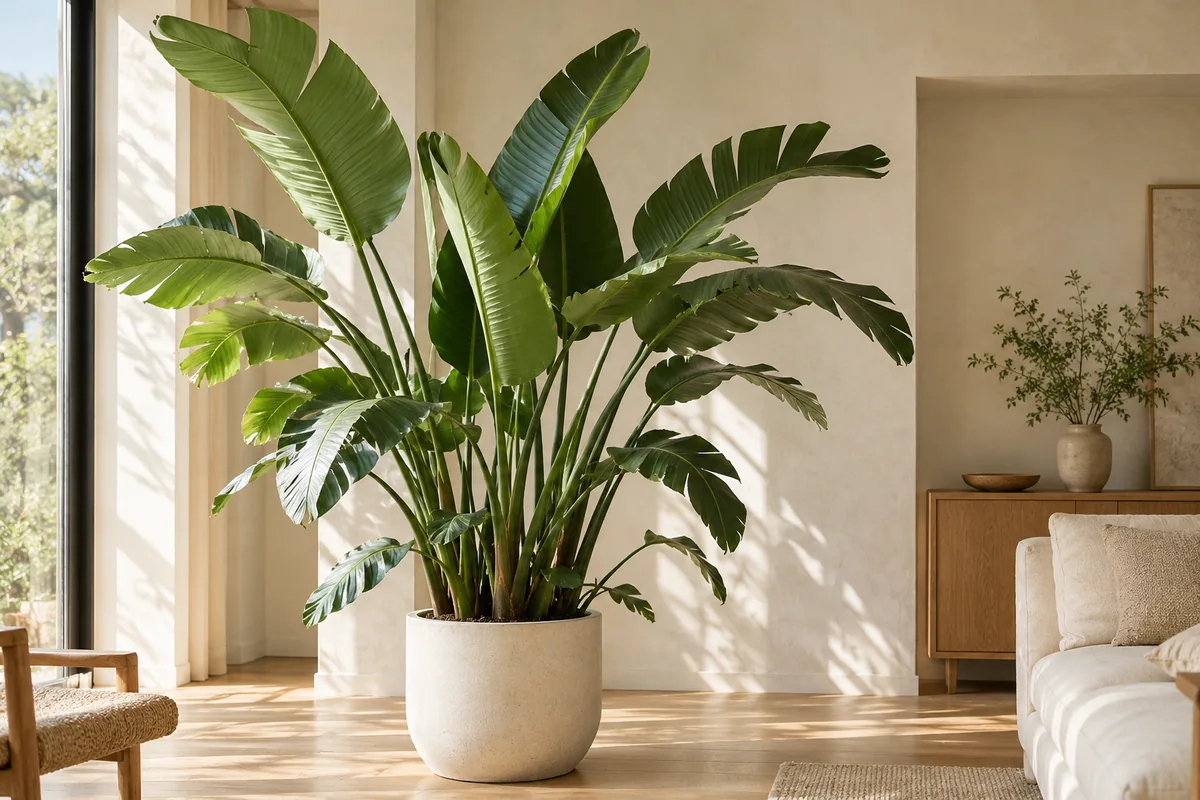
A large floor planter can hide a great deal of water below an innocent looking dry surface. The top dries in room air while the center and base remain damp, and the container is too heavy to lift for a quick check. That makes a familiar weekly watering routine especially unreliable. Before adding water, find out what is happening deeper in the root zone and how excess can leave. The plant's height does not tell you how much moisture is available. A tall canopy may sit in a modest inner pot, or a small root system may be surrounded by far more wet mix than it can use.
Identify the actual growing container. Many decorative floor planters hold a separate nursery pot, sometimes raised on an internal support. Water can collect beneath that inner pot without being visible from above. Check the arrangement directly and keep a clear way to remove collected water. If the plant grows in the outer container itself, drainage holes and a suitable tray are important for ordinary watering. Stones at the bottom do not replace an outlet. A planter chosen only for its height may create a deep wet zone that is difficult to inspect, so consider access and root volume alongside appearance when setting up a large plant.
Use a wooden probe to check below the surface, inserting it gently near the edge and avoiding force against substantial roots. Inspect whether damp mix clings to it and compare more than one area if the container is broad. The result is approximate, especially in coarse bark, yet it gives more information than the surface alone. A moisture meter may provide another clue when used according to its instructions, though minerals and poor contact can affect readings. Combine the observations with the plant's requirements. A fern and a bird of paradise do not necessarily need the same drying point even when both occupy impressive floor pots.
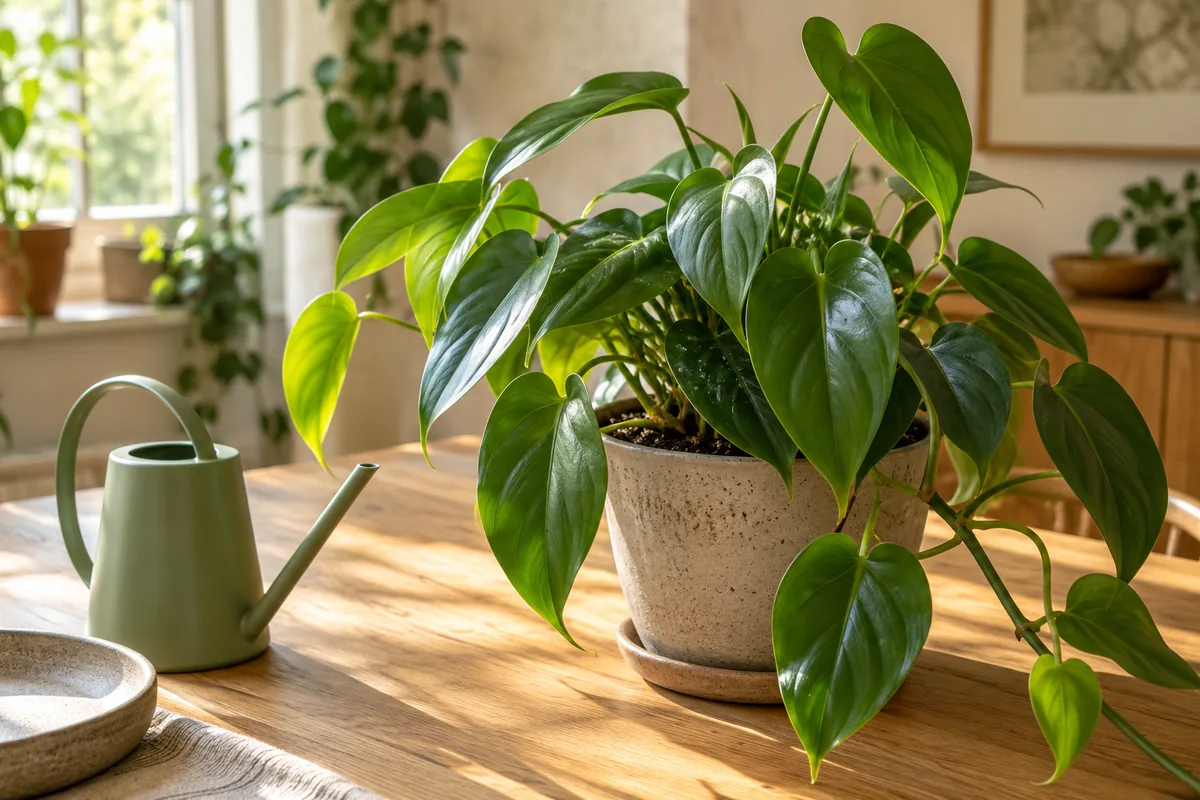
When watering is needed, apply it slowly across the surface rather than pouring the entire amount at one side. Large root balls can develop channels that let water bypass dry areas. Pause between passes so the mix has time to absorb moisture. Watch for drainage where possible and check whether the deeper root zone has actually become evenly damp. A dry shrunken ball may require a controlled rewetting approach rather than a sudden large pour. Avoid flooding the rim or covering sensitive crowns. A narrow spout and a stable watering position make it easier to reach beneath broad foliage without bending the leaves or soaking the room.
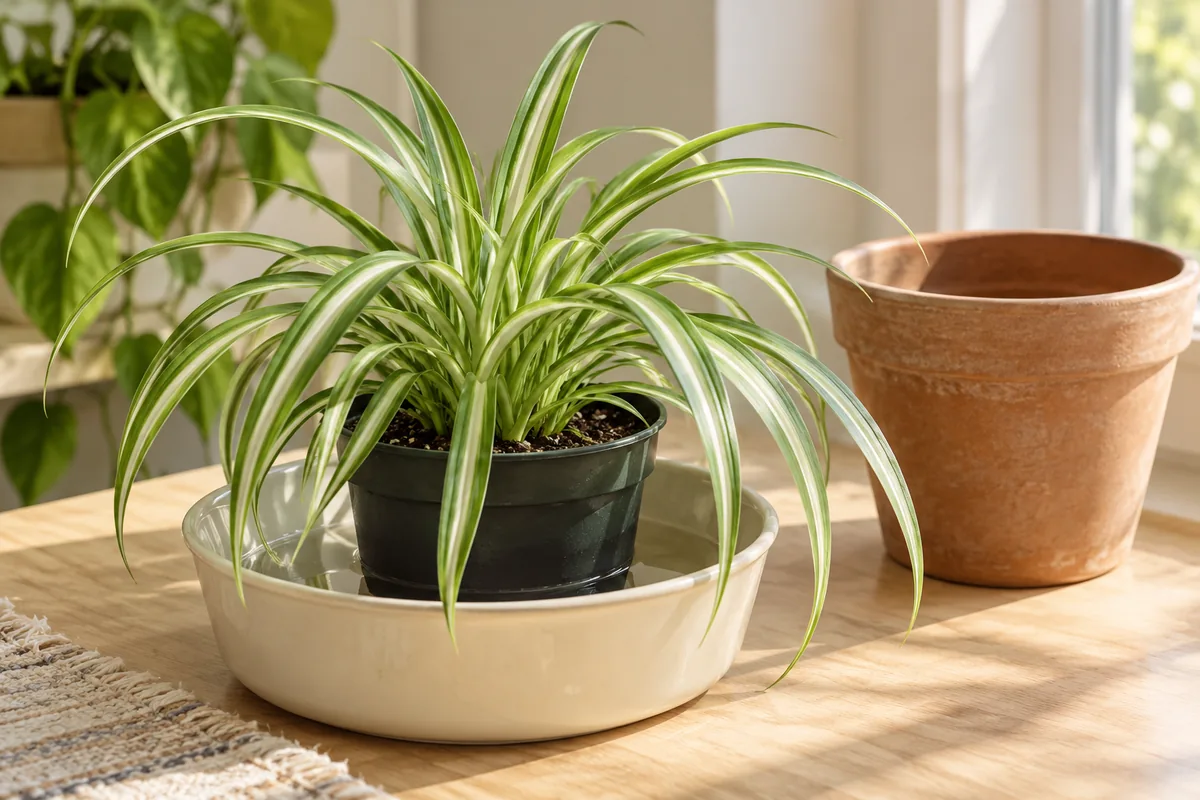
Remove excess from the tray or outer planter after the pot finishes draining. For a very large arrangement, plan a practical method before watering, such as an accessible saucer or an appropriate water removal tool reserved for the task. Do not leave the roots sitting in runoff because the container is inconvenient to move. A hidden reservoir can remain for days and make the next moisture check misleading. If the planter is too difficult to inspect, simplify the arrangement. A manageable inner pot in a decorative shell often offers better control than a massive container filled entirely with mix around a much smaller root system.
The interval between waterings changes with usable light, room temperature, season, root growth, and mix structure. A mature plant in bright active growth may dry a large container surprisingly quickly. The same plant in a dim cool room may use water slowly. Keep brief notes after thorough waterings and check again rather than repeating a fixed quantity. If the root zone stays damp much longer than expected, inspect drainage and available light. If it dries almost immediately, look for a crowded root ball, channels, or mix that no longer absorbs evenly. The changing pattern can reveal a need for repotting before the foliage becomes visibly affected.
Repot only when the roots justify more space or the mix needs renewal. Increase the container size sensibly and keep the original planting depth. Burying a trunk to improve stability can leave stem tissue damp. A secure support or a heavier outer planter may address balance without adding unnecessary root volume. Large specimens may need help to move safely, so plan the task and protect broad leaves from doorways and sharp bends. Fresh mix can change the drying interval significantly. Continue checking deeper moisture after repotting instead of carrying over the previous routine automatically or assuming that a new pot always needs more frequent water.
A reliable floor planter setup makes three things visible or accessible: the root zone, the drainage path, and any collected water. Once those details are clear, watering becomes a measured decision rather than a guess based on plant size. Photograph the canopy occasionally and note whether new growth remains firm and proportionate. If leaves droop while the mix is wet, inspect roots and conditions before adding another drink. Large plants bring generous foliage into a room, yet their care still depends on ordinary practical details. Deep checks, slow even watering, and an empty drainage tray keep the scale of the container from obscuring what the roots actually need.