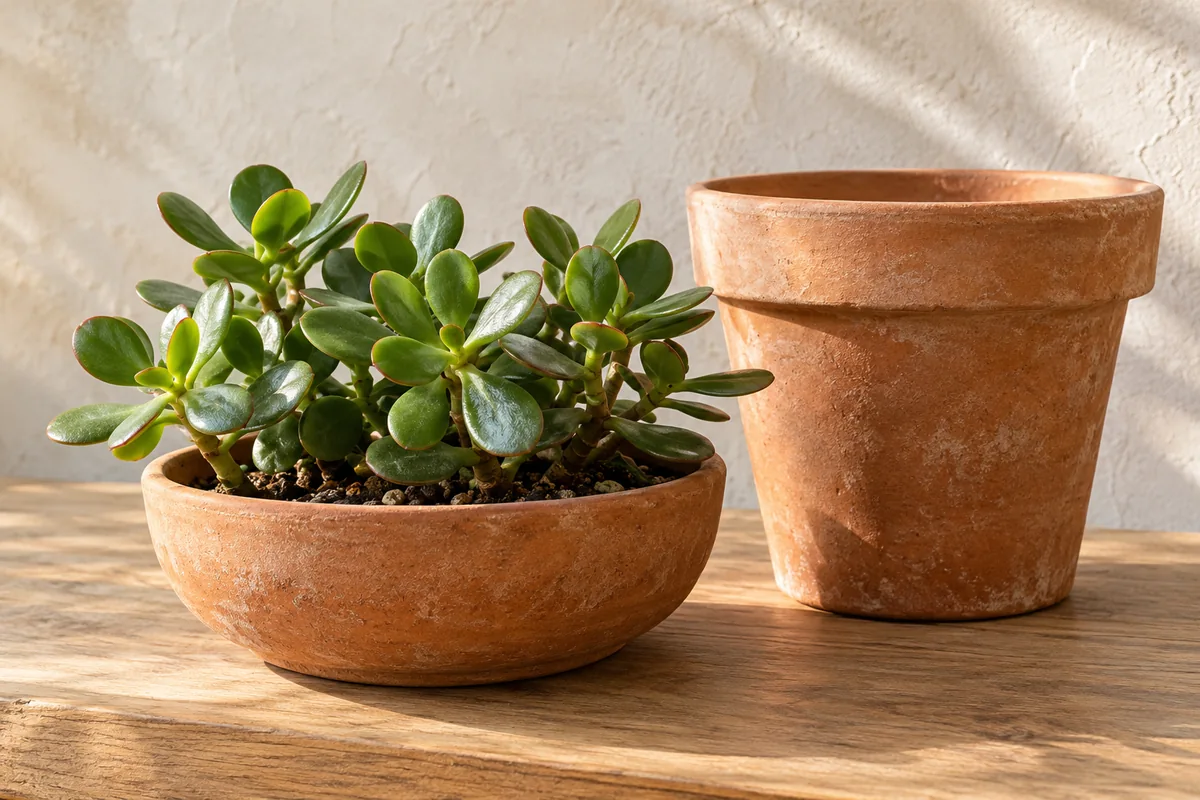
A pale ring on a clay pot often appears slowly enough to become part of the background. The same residue may gather on the mix surface or around a drainage hole. It is worth noticing because dissolved minerals remain after water evaporates, and fertilizer can add more of them. A visible crust does not identify the exact concentration around every root, yet it is a useful prompt to review the routine. Look at the water source, feeding rate, and drainage together. Wiping the outside of the pot may improve its appearance while leaving the cause unchanged inside the root zone.
Mineral deposits commonly develop where water repeatedly moves and evaporates. Porous clay makes this especially visible because moisture travels through the pot wall and leaves material behind. A glazed pot may show less on the outside while still accumulating residues in the mix. Fertilizer instructions matter too: stronger or more frequent applications can add salts faster than the plant uses the nutrients. Fresh potting mix may already include a nutrient supply, making additional feeding unnecessary for a period. Review those inputs before assuming that a white surface means the plant needs more food or a larger container.
Leaf tips and edges can develop marks for several reasons, including uneven moisture and dry air. Mineral accumulation is one possibility rather than a diagnosis made from a single brown tip. Look for supporting evidence such as a crust, frequent feeding, a heavily mineralized water supply, or a pot that is always watered from below. Check the roots and drainage when growth declines. If the mix remains saturated, address that condition as well. A plant can face more than one difficulty at the same time, and adding water or fertilizer without inspecting the container can extend the original problem.
Use a suitable water source when the household supply leaves substantial deposits. Water that has passed through a sodium based softening system may be inappropriate, and a separate unsoftened outlet can be useful where available. Filters differ, so check what a particular system removes rather than assuming every filtered source has low mineral content. Standing water does not make dissolved salts disappear. Rainwater quality depends on collection and storage conditions. The practical aim is to reduce unnecessary mineral input while keeping the routine manageable. Specialist plants may have stricter requirements, so use guidance suited to the species when a familiar general supply is not appropriate.
A deliberate flush can help carry soluble residues out of an ordinary freely draining pot. Check that the container has clear holes and place it where a generous amount of suitable water can leave without damaging the room. Remove a loose surface crust carefully when appropriate, avoiding damage to roots near the top. Apply water from above in a controlled manner and allow it to pass through the mix rather than leaving the pot standing in the runoff. Do not add fertilizer during a flush intended to remove excess salts. The volume and frequency should suit the container, mix, and plant rather than becoming another automatic weekly task.
Let the pot drain completely before returning it to a saucer or decorative outer planter. Empty collected water so the roots do not draw residues back from the runoff. If the old mix is compacted, poorly draining, or heavily affected, repotting into suitable fresh material may be more useful than repeated flushing. Choose a container sized to the roots and maintain the original planting depth. Clean reusable pots appropriately before using them again, following suitable horticultural cleaning guidance. A larger pot is not automatically the answer; unused wet mix around a small root system can introduce a separate watering difficulty.
Revise the feeding routine after the immediate correction. Follow the product directions, account for nutrients already in fresh mix, and feed during active growth rather than trying to force a plant through dim conditions. Top watering that allows some excess to drain can help move residues out during ordinary care, while exclusive bottom watering deserves periodic review. Keep the mix surface visible enough to inspect. A thick decorative layer can hide deposits and moisture changes. Record when the pot was flushed or repotted so the next decision is based on its actual recent treatment rather than a vague impression that nothing has been done.
Judge progress through new leaves and the return of a sensible drying pattern. Old brown tips do not become green after the mineral input changes, so repeated trimming is not a useful measure of success. A clean pot rim can make fresh deposits easier to notice over time. Keep the routine moderate and review the source of each input before adding another product. Pale residues are a practical clue about water moving through the container. Reading that clue alongside feeding, drainage, and root condition helps turn a cosmetic mark into useful information about the growing arrangement rather than a reason for unnecessary treatment. Check the drainage openings during cleaning, where residues can remain visible even when the upper surface looks clear.