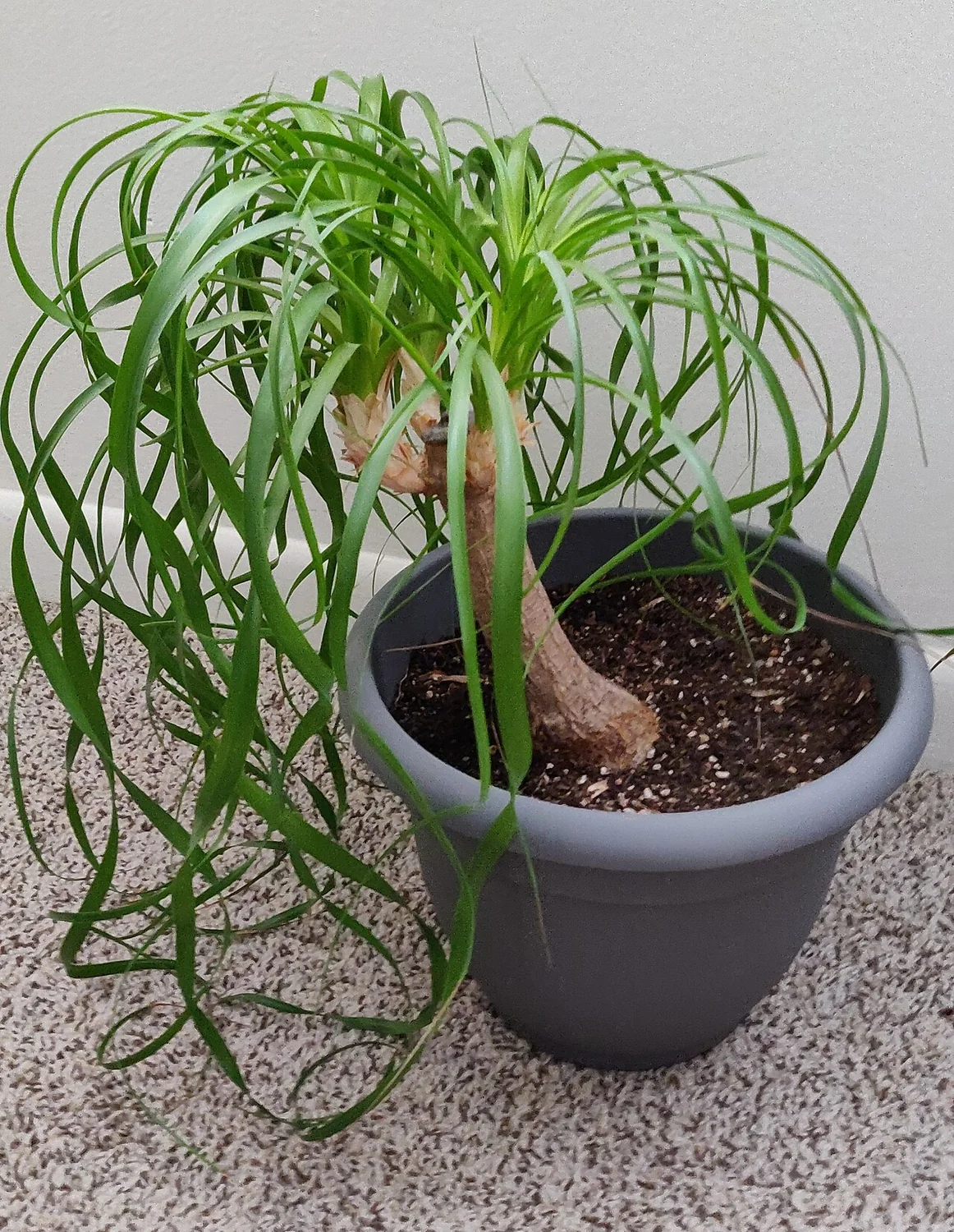
A Mexican Storage Tree, Not a Palm
Ponytail palm is memorable because its swollen base and fountain of narrow leaves appear to belong to different kinds of plants. Beaucarnea recurvata is not a true palm. It is a Mexican, water-storing tree in the asparagus family, and the enlarged stem base is an important part of its survival strategy. The long leaves curve and hang from the crown, creating the familiar ponytail effect. A young plant can be a striking small specimen, but its bulbous outline should not be mistaken for a disposable decorative bulb that can be watered or stored according to the routine used for seasonal flowers.
The species originates in Mexico, where dry rocky conditions help explain its thick storage base and tolerance of drying intervals. Cultivation has spread it widely as a houseplant, but that familiarity does not make the wild species an inexhaustible resource. Choose nursery-propagated plants with a reliable identity rather than unusual specimens of uncertain origin. The distinction between a cultivated pot and natural populations is worth including in its story. An indoor plant may develop slowly for years, and its scale can remain manageable, yet it still carries the architecture and growth pattern of a tree rather than a permanently fixed desktop ornament.
Bright Light and Stored Water
Give it a bright position, ideally a sunny window with gradual acclimation if the plant was previously shaded. A ponytail palm in a dim office can persist for some time without developing the vigorous compact crown seen in a better-lit setting. The thick base is not a substitute for light. Leave enough space below the leaves so they do not drag through a wet saucer or become tangled in frequently moved objects. On a stand, check stability carefully. A small root pot and a top-heavy leaf fountain can be knocked over if the display is balanced on a narrow, slippery surface.
Water thoroughly when the medium has dried substantially, then let the excess leave. The swollen base stores water, so the plant does not need the constantly moist root zone of a cat palm or banana. In winter, reduced light and cooler conditions can lengthen the interval considerably. Check the mix rather than watering automatically when the leaves look untidy. Older drooping leaves are part of the form. A soft base or a root ball remaining wet for a prolonged period deserves investigation. Adding more water because the canopy seems tired can worsen a problem already caused by saturation.
A Visible Base and an Untrimmed Fountain
Choose a gritty, freely draining medium suitable for succulent container plants. A pot only modestly larger than the occupied roots is easier to manage than a deep mass of unused wet compost. Keep the swollen base at its established depth, visible rather than buried to make a conventional tree trunk. Its shape is part of both the attraction and the plant's biology. When repotting, support the base and root mass carefully, avoiding unnecessary damage. A decorative cover should not trap runoff. The owner needs a way to check drainage even when the plant is displayed in an elegant container that looks permanently closed from the outside.
Pruning should be minimal for an ordinary young specimen. Do not cut the crown simply because the ponytail is longer than expected; that is a substantial change to the plant, not a routine haircut. Remove fully dry leaves gently and retain sound green foliage. Trimming every leaf to a uniform length creates blunt ends without changing how the next leaves grow. If tips are cosmetically tidied, leave a small dry margin instead of repeatedly cutting into green tissue. Keep long strands clear of paper shredders, wheeled chairs, and pets that may treat moving leaves as a toy. Physical wear often explains localized damage better than nutrition does.
Modest Inputs and Inspection beyond the Swollen Base
Feed lightly while new growth is active, following a suitable labelled product and recognizing that this slow plant has modest requirements. Strong fertilizer does not rapidly enlarge an old-looking base or produce the character of a mature landscape tree. Browning tips can be associated with salts, roots, or ordinary ageing, so inspect the pattern before applying another dose. Cleaning is best done by gently lifting and supporting sections of narrow foliage, not pulling them tightly through a cloth. A shower may be convenient only if the medium is protected from unwanted extra soaking and the plant can drain properly afterward.
Check the crown and leaf undersides for mealybugs or scale when introducing a new specimen. The dense leaf fountain can hide early insects near its center. If pests are found, isolate the pot and select a response after identification. Also examine its transport history. A chilled plant or a crown suddenly exposed to strong sun can retain scars even when later growth is normal. Because the base remains visually impressive, an owner may overlook a declining root system until a problem is advanced. Regular inspection of firmness, moisture, and new leaf development is more informative than admiring the swollen trunk alone.
Giving a Dryland Plant to the Right Caretaker
Ponytail palm can be a thoughtful gift for someone with a sunny room who prefers a plant that tolerates a measured, less frequent watering rhythm. Its water-storing base may personally suggest preparation or resilience, while the flowing leaves can add humor to the message. Those are chosen associations rather than evidence of an established promise of good luck. Do not describe it as needing no care. Discuss the actual light available and the recipient's habit of watering other plants. A person who likes to add water daily may find a more moisture-loving species easier to understand than a succulent tree that benefits from being left to dry.
With time, the base, trunk, and leaf fountain develop a more individual relationship. That slow change is the attraction, not a fault to overcome through oversized pots and heavy feeding. Keep its identity clear so it is not confused with true palms that require different moisture management. Allow drainage checks, protect long leaves from everyday equipment, and let bright conditions support sound replacement growth. Beaucarnea recurvata offers a distinctive indoor-tree form when its dryland character is understood. The most successful display respects the stored reserves in its base while still supplying the light and root aeration needed for a living Mexican tree.