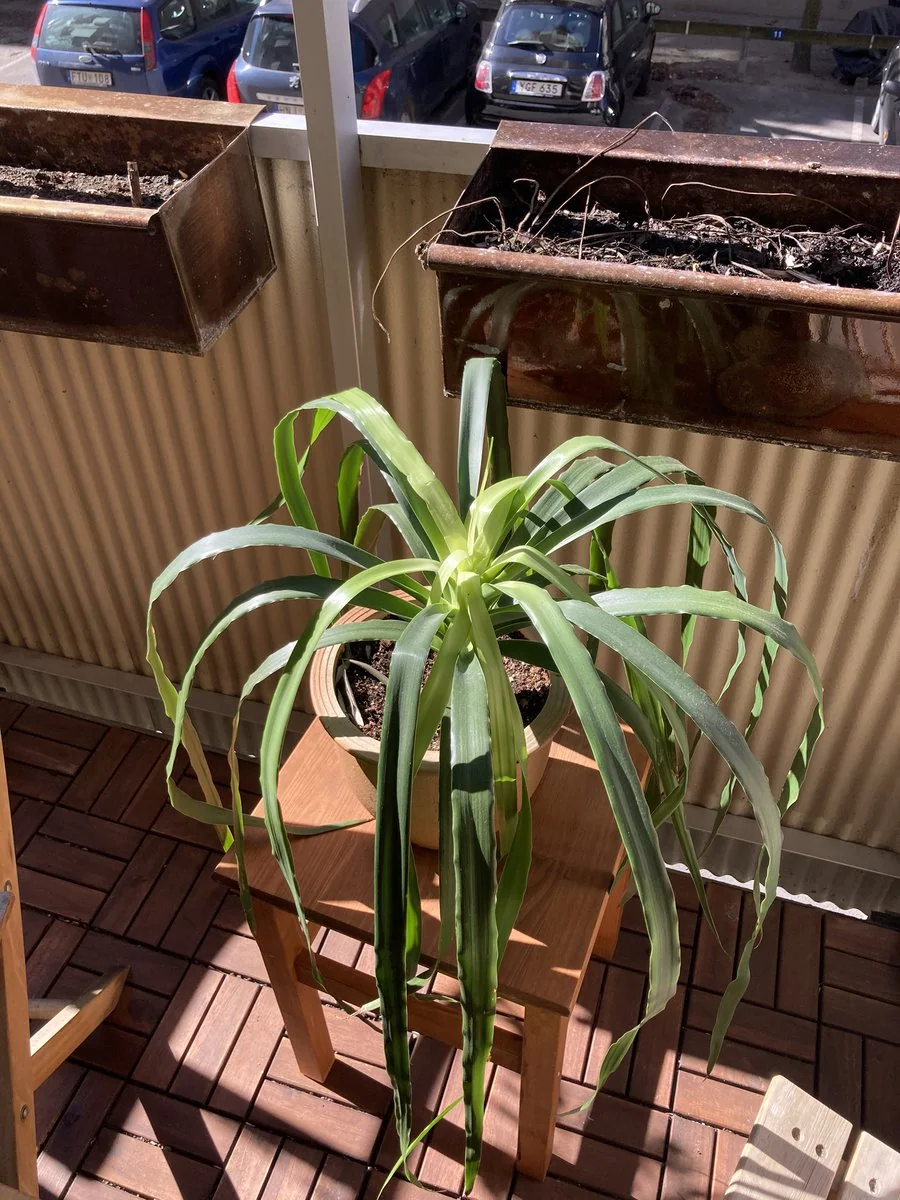
An Island Tree and the Dragon-Resin Story
Dracaena draco should be approached as a slowly developing tree, not simply another easy dracaena for the back of an office. Its blue-green sword leaves gather into dense crowns, and a mature outdoor specimen eventually develops an extraordinary branching structure. A young container plant has only an early part of that architecture. It belongs in a very bright room or conservatory where its leaves and substantial root base can develop without repeated compromise. If the only available space is a dim interior corner, a more shade-tolerant plant is a better choice than attempting to keep a sun-loving sculpture permanently starved of light.
The Canary Islands dragon tree has a strong connection with Macaronesian island landscapes, especially the Canaries and Madeira. Historical descriptions sometimes include populations now treated separately by taxonomists, so precise modern identity matters when discussing its range. The name and the red resin associated with dragon trees have contributed to a long cultural fascination. Different plants elsewhere also supply materials called dragon's blood, and they should not be assumed to be interchangeable. An indoor owner does not need to wound a trunk or harvest resin to appreciate that history. The living tree's shape is sufficient reason to cultivate it.
Sunlight and a Meaningful Drying Interval
Give the plant the brightest suitable indoor position, introducing direct sun in stages if it has been nursery-grown in shade. A conservatory or large sunny window offers a more realistic prospect than ordinary office ceiling lights. Watch the shape of new growth: a compact crown is different from leaves stretching toward a distant window. Keep the container clear of cold glass during winter and check that a glazed room does not become excessively hot without ventilation in summer. Its island-tree character does not remove the need to evaluate the actual conditions around the leaves and root ball during both daily and seasonal changes.
Water generously enough to wet the occupied medium, then allow a meaningful drying interval. Do not copy the continuously moist routine used for a tropical palm or banana nearby. The thick stem and relatively slow growth reduce the need for constant additions, particularly when temperatures and daylight fall. Still, a dry-looking gravel surface does not establish the condition beneath it. Check the root zone carefully and drain surplus from any outer pot. A container that remains persistently heavy should be investigated before more water is added. Chronic saturation is a much more serious threat than the absence of a perfectly regular calendar interval.
Root Aeration and Slow Tree Structure
Use a gritty, open container medium and a pot with reliable outlets. The tree needs stability, but stability should not be created by surrounding a small root system with excessive damp compost. A well-proportioned, heavier container or outer planter can help. Repot when the occupied roots and medium condition justify it, preserving sound roots and the previous trunk depth. Avoid piling wet material around the stem to conceal its base. The characteristic lower trunk should remain visible enough for inspection. Handle the leaves carefully when moving the plant because stiff tips can mark nearby surfaces or catch a person reaching around the crown.
Branching is a long-term event rather than an instant response that can be demanded from a young plant. Mature dragon trees develop their characteristic crowns through their own growth and flowering history. Cutting a young trunk to manufacture an ancient umbrella shape is a major intervention and not routine maintenance. If pruning becomes necessary, seek species-specific guidance and choose a suitable growing period rather than making a speculative cut in a dim room. The realistic aim for an indoor specimen is a balanced living tree, not a miniature copy of a famous old island monument achieved through repeated shortening.
Moderate Feeding and a Visible Healthy Stem
Feed sparingly while there is active growth, using an appropriate labelled product and recognizing any nutrients already present in new compost. A slow trunk does not mean the plant is deficient. Excess feed can add salts and encourage an inappropriate response when the real limitation is light. Clean dust from supported leaves with a damp cloth, keeping sharp tips under control. Remove entirely dead lower leaves carefully without tearing living tissue from the stem. Some exposure of older trunk is normal. A tree gradually showing its structure should not be treated as a failing houseplant simply because it no longer resembles a dense juvenile nursery rosette.
Check for scale and other sap-feeding pests around protected leaf bases, and compare any new blemishes with the plant's recent exposure and watering history. A cold move or sudden strong sun can leave permanent marks that do not disappear after treatment. Investigate a soft base or widespread collapse of new growth promptly at the roots rather than trimming the damaged leaves and continuing the same wet routine. Do not use resin folklore as a reason to apply homemade treatments to the trunk. Care should remain grounded in observation, suitable horticultural practice, and the actual condition of living tissue.
An Agreed Gift with a Long Perspective
As a gift, dragon tree can carry an honest personal message of endurance or long-term perspective because of its developing form and slow pace. Its documented resin history may be interesting to a recipient who enjoys plants and cultural materials, but historical use is not proof of a home remedy or supernatural protection. The gift is best agreed with someone who has a genuinely sunny space. Dracaenas can be harmful to pets if chewed, and stiff leaves also affect safe placement. Provide the exact botanical identity so it is not confused with Madagascar dragon tree or Socotra dragon tree when future care is researched.
Choose nursery-propagated stock and think in years rather than weeks. Keep its growing position stable enough that the next crown can show the benefit of correct light and drainage. If the tree becomes too large, plan an appropriate new location instead of assuming every branch can be cut back indefinitely without consequences. The distinctive appeal of Dracaena draco lies in an architectural process that takes time. A suitable interior gives that process enough light, room, and root health to continue, while accepting that an island tree's dignity cannot be manufactured through heavy feeding or a succession of dramatic interventions.