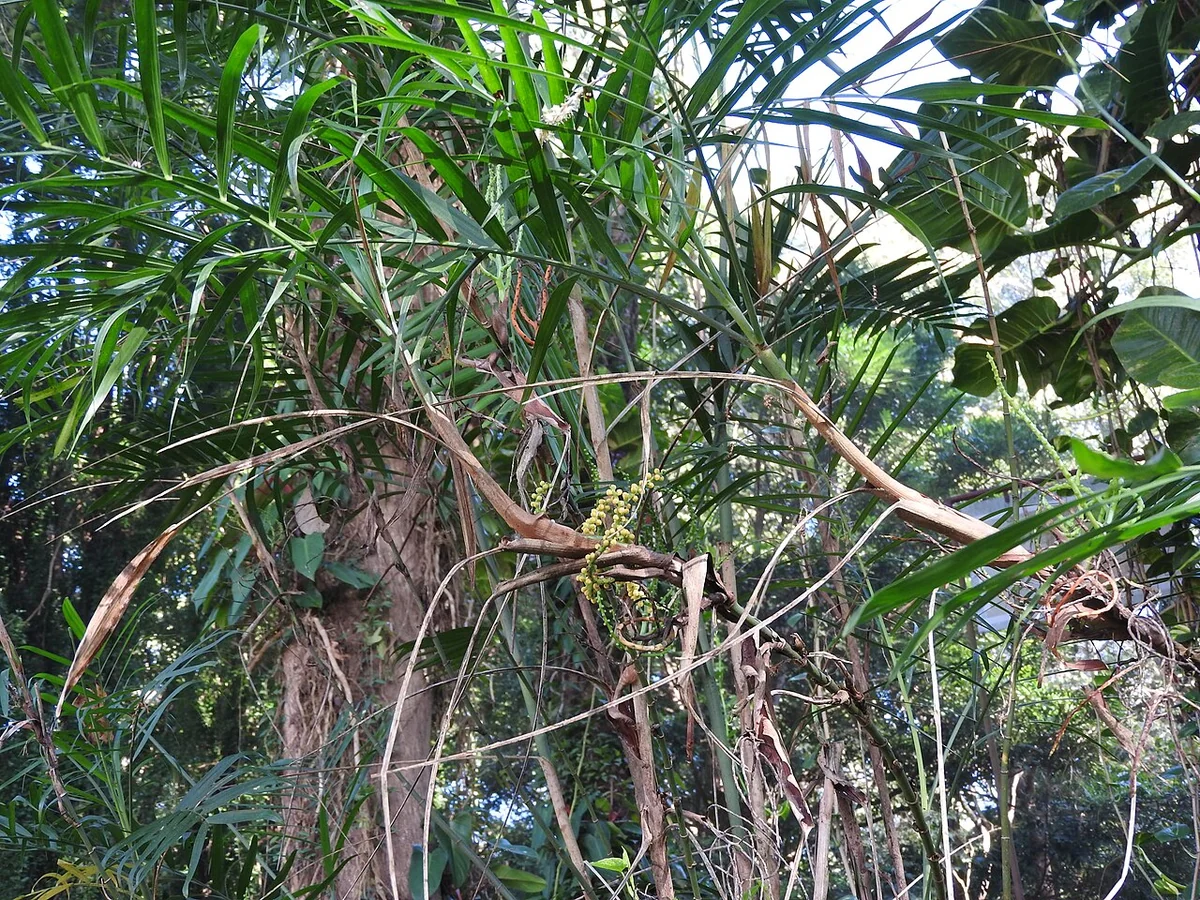
A Palm with Bamboo-Like Canes
A bamboo palm earns its place through repetition. Several slender ringed canes rise together, each carrying feathered leaves, so Chamaedorea seifrizii can soften the edge of an office lounge without becoming a solid visual barrier. It belongs to the palm family, not to the grasses that include true bamboo. The segmented appearance of its stems explains the common name. Unlike many solitary palms sold as multi-seedling arrangements, this species naturally produces basal shoots. A container can therefore become a genuine connected clump, although new canes do not appear quickly enough to justify treating it as a rapidly renewing indoor hedge.
Its native range extends from southern Mexico toward Honduras, including seasonally dry forest environments. That background does not make a potted specimen a desert plant. Forest shade, soil depth, seasonal rainfall, and root access differ considerably from a shallow ornamental pot in heated air. The species name commemorates the collector William Seifriz, while the broad botanical identity connects it with other small American forest palms. Keeping the name on the pot is useful because cat palms and parlor palms may stand nearby at the nursery but have different habits, moisture behavior, and eventual shapes in a room.
Light and Water for a Living Screen
Medium to bright indirect light is a realistic starting point. A position near a large window can support a fuller clump than a dim corner chosen merely because a screen would look attractive there. Although the palm can persist in lower light, water use and growth fall accordingly. Leave clearance on the outside of the clump: older canes and fronds can lean away from the center, producing an outline wider at the top. Before placing it beside a workstation, test the route people take with bags and rolling chairs. Continual brushing damages the fine leaflets more effectively than careful maintenance can repair them.
Keep the potting medium slightly moist during active growth while allowing surplus water to drain away. The most common practical mistake is watering a dense outer canopy without checking the hidden container. Push foliage aside gently and inspect the medium itself. A tall cover pot can conceal a substantial pool beneath the inner nursery pot, particularly when several coworkers share responsibility. Another failure occurs when an old root ball has dried away from its sides and water runs directly past it. Check whether the occupied root mass has actually absorbed moisture rather than judging solely by water appearing at the drainage holes.
Keeping a Connected Clump Sound
An airy, organic container mix supplies the moisture retention needed for the canes without compressing into a wet block. Repot when crowding and the condition of the medium make it worthwhile. Retain the correct planting level around the cane bases, and do not use a thick wet top layer to hide bare stems. A stable planter can be wider at the base without requiring an enormous volume of compost around a small root ball. If a substantial clump must be divided, preserve useful roots and multiple canes on each portion. Separating every shoot into a tiny isolated pot often produces a long, unimpressive recovery.
The most effective shaping is selective removal. A fully dead cane can be cut near its base without damaging neighboring growing points. A living cane that is too tall cannot be shortened above its crown and expected to branch like bamboo. Removing it completely changes the clump, so assess whether a larger location would be the better answer. Keep the newest spears protected while handling older foliage. The ringed canes are part of the display and need not be hidden with a tight arrangement of other plants. Open sight lines also make pest inspection and watering more straightforward.
Feeding the Clump and Looking between the Canes
Feed during actual growth at a rate suitable for indoor palms, following the product directions. Strong feeding cannot compensate for insufficient daylight. If older leaves show a recurring pattern of discoloration, consider root condition, water quality, and accumulated salts alongside nutrition. A single brown tip provides too little information to identify a specific deficiency. Let water pass through the medium at ordinary thorough waterings rather than allowing every addition to remain trapped in the cover. Where the container has become too heavy to move safely, provide a planned drainage method instead of simply accepting hidden standing water as unavoidable.
Bamboo palm deserves regular checks for scale, mealybugs, and mites. The cane bases and leaf undersides can shelter early infestations beyond a casual glance at the canopy. Examine a new purchase before positioning it beside other indoor plants, and isolate any affected specimen while the pest is identified. Dry air moving from a vent can stress the fine leaflets and favor a persistent mite problem. Increasing ambient humidity may help the growing conditions but does not replace a targeted pest response. Avoid misting foliage repeatedly while leaving the root zone and air movement unexamined.
An Agreed Gift for a Shared Space
As a gift, a clumping bamboo palm can represent cooperation or a group taking shape, provided that meaning is presented as a personal interpretation of its habit. It has no need for an invented promise of financial success. The footprint makes it more suitable for an agreed office-opening gift than a surprise for an unknown apartment. Confirm who will water it during holidays and whether cleaning staff move large pots. Supply a manageable inner container, an accessible saucer, and the botanical name. A gift that includes a sensible care arrangement is more generous than a lush screen left with no assigned caretaker.
Over time, evaluate the clump by the balance between new shoots, sound mature canes, and retiring fronds. A few losses at the shaded center may be less important than the condition of outward growth receiving the best light. Remove debris, keep leaves away from door hinges, and allow enough space for another generation of canes. A drainage check should remain possible even after furniture and other containers have been rearranged nearby. If the plant becomes crowded, make one considered intervention rather than continually cutting and repotting. Properly situated Chamaedorea seifrizii offers a permeable green structure whose visual calm comes from repeated living stems, maintained through light, accessible roots, and deliberate care.