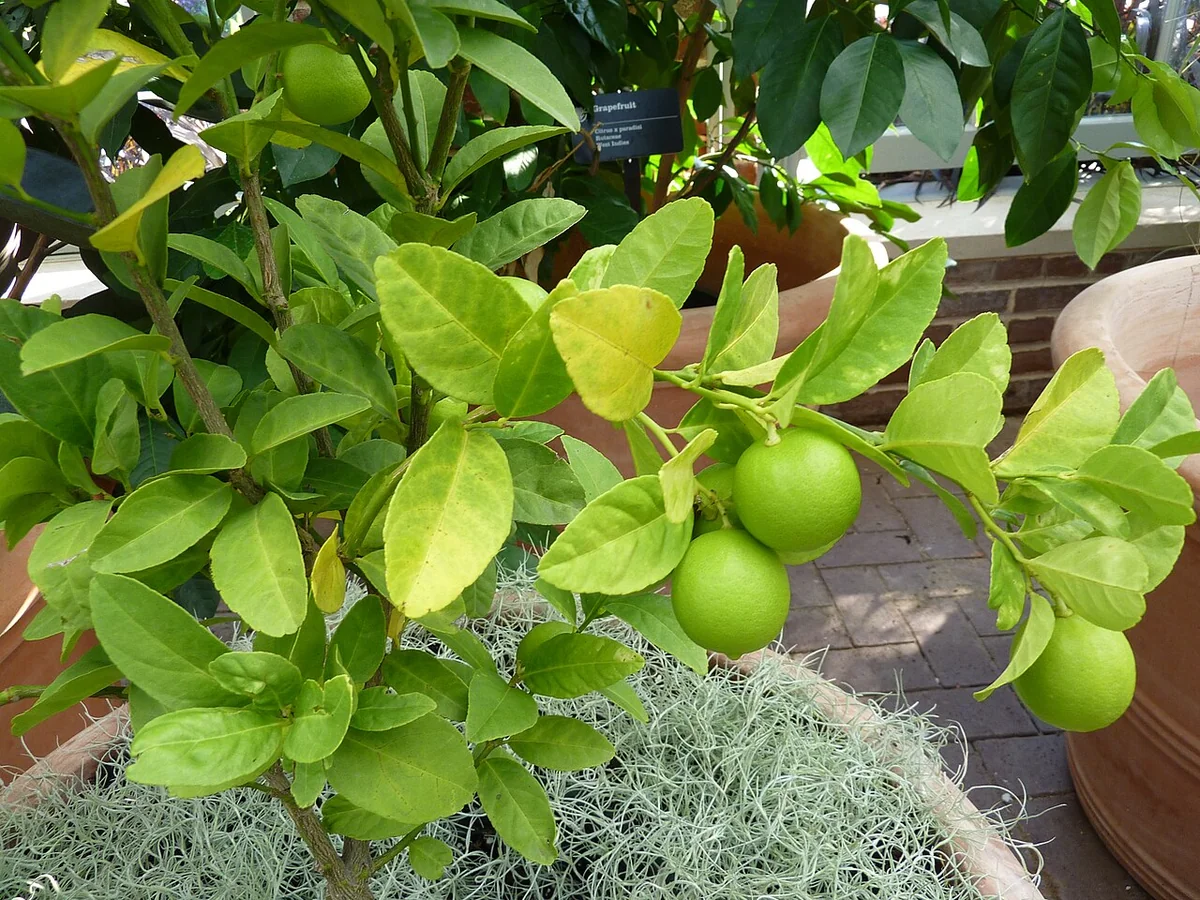
The lime is a warm climate project
A Key lime tree offers fragrant foliage, delicate flowers and the possibility of small aromatic fruit, but it belongs at the warm, bright end of an indoor tree collection. It should not be chosen on the assumption that all citrus tolerate the same chilly winter accommodation. A conservatory that is suitable for another citrus may still become too cold for a tender lime. Before buying, measure the available light and minimum temperature around the proposed pot. An enthusiast who can manage those conditions may enjoy the tree; a dim office with an unreliable weekend heating schedule is a difficult starting point.
Botanically the Key lime is commonly written Citrus aurantiifolia or Citrus × aurantiifolia, reflecting its hybrid ancestry. Mexican lime and West Indian lime are other familiar names for the same crop group. The name Key lime describes an association with cultivation and use, not proof that the plant originated in the Florida Keys. Distinguish it from a larger Persian or Tahiti lime offered by another supplier. The two crop types can differ in vigour, fruit and seeds. A clear cultivar and propagation label helps the grower know what kind of tree is actually being invited indoors.
Light that reaches a compact crown
Choose a window or growing room offering strong daylight and some direct sun, while introducing a new plant gradually to intense exposure. The sunniest place may also be the hottest beside the glass, so observe both light and leaf temperature during the first week. Keep the upper crown out from behind blinds and avoid placing it under a deep shelf. If the room cannot supply enough winter light, a suitable grow light is a practical requirement rather than an optional decorative accessory. Ordinary desk lighting is intended for people and should not be assumed to meet the tree's growing needs.
Outdoor summer conditions may provide better light, but wait until the weather is reliably suitable for a tender citrus. Acclimate the plant under shelter before stronger sunshine and avoid a windy exposed position that dries a small container rapidly. The foliage should not rub continuously against a railing. Plan where the tree will return before its branches lengthen, since thorns can make handling awkward. An early controlled move into adequate protection is easier than rescuing a fruiting pot at the last moment. A plant already carrying fruit still depends on the temperature and root conditions around it.
Drainage and a visible graft union
Use a fertile but open container medium that allows water to move through the occupied root ball. An intact nursery root ball can behave differently from fresh material around it, so inspect both before assuming the whole pot has dried uniformly. Keep the stem at its established depth, with any graft union above the mix. Vigorous growth from below that union may be rootstock rather than desirable lime branching. A modest increase in container size is usually easier to manage than an oversized decorative tub. The outlet holes must remain open even when the pot is displayed inside a cover.
Let the root zone approach its next watering need before adding more, checking beneath the upper surface. Then wet the occupied mix thoroughly and let the excess drain away. In a warm bright room the interval may be relatively short, especially on a leafy tree with fruit. In weaker light, a wet lower layer can persist while the top looks dry. Avoid trying to raise air humidity by leaving the pot standing in water. The roots and the surrounding air are different environments. If supplementary humidity is needed, use a method that does not keep the root container submerged or the room stagnant.
Flowers are not a promise of a harvest
The lime's white flowers can be attractive even when the indoor crop is small. When insects are absent, a clean soft brush can move pollen between accessible open flowers. Fruit development still depends on adequate resources and the particular tree. Some young fruits may be shed; their loss is not automatically a reason to increase fertilizer or water every day. A young plant may be better served by establishing a firm canopy than by supporting every initial fruit. Expect variation with the season and do not use the nursery's heavily fruiting display as the standard for the first months at home.
Feed with an appropriate citrus fertilizer during active growth and follow the dilution instructions. Avoid layering a flowering tonic, a general feed and separate mineral supplements simply because growth looks pale. Look first at the shape of the symptom: new leaves yellowing between veins, old leaves fading and an entire canopy losing firmness raise different questions. Check the root temperature, water and drainage as part of that inspection. A confined pot can accumulate salts if feeding is excessive. More product does not provide more sunshine, and it cannot make a cool wet root system behave as though it were actively growing in summer.
Maintaining a safe small framework
Thin or shorten branches only where the tree needs structure, clearance or the removal of damage. Identify rootstock shoots and remove them appropriately, but do not strip all the fine new growth in an attempt to keep a permanently formal sphere. Allow light into the crown and keep space to inspect the interior. Many Key lime trees can carry sharp thorns, so avoid positioning a pot where people brush past at face level. A narrow office corridor is not improved by an attractive plant if ordinary movement means repeated contact with its branches.
Check for scale, mites and other sap feeding pests before bringing an outdoor plant into the house. Look underneath leaves and along sheltered twigs, not only at the fruit. Sticky residue is worth investigating, while pale speckling may call for a closer examination of leaf undersides. If a recently moved tree drops leaves, record the change in light and temperature and check the mix before reacting. Keep it in one suitable position while the cause is assessed. Repeated moves between a dark room and a hot window can add new stress without resolving the original problem.
A gift for a cook who also gardens
A Key lime can make a considered gift for someone who likes both plants and cooking, provided their growing space is suitable. Its personal meaning might be a connection between a kitchen and a living seasonal project, rather than an asserted traditional promise. Discuss the thorns, winter warmth and drainage requirements before selecting the gift. A tree with a known nursery history is preferable to an unidentified citrus chosen solely for fruit colour. Do not assume the fruit already attached to an ornamental retail plant can be used in food without checking its treatment history.
The handover should include the exact name, the current container setup and a practical way to empty runoff. A recipient living in a cold apartment with only a shaded window may be better served by a different tree. That is a matter of matching the gift to the room, not of the recipient's willingness to care. For the first season, look for firm leaves and sustained new growth in appropriate warmth. Any sound fruit that follows is an additional reward. Keeping a tender lime well over winter is a more meaningful achievement than briefly displaying a large crop on a declining plant.