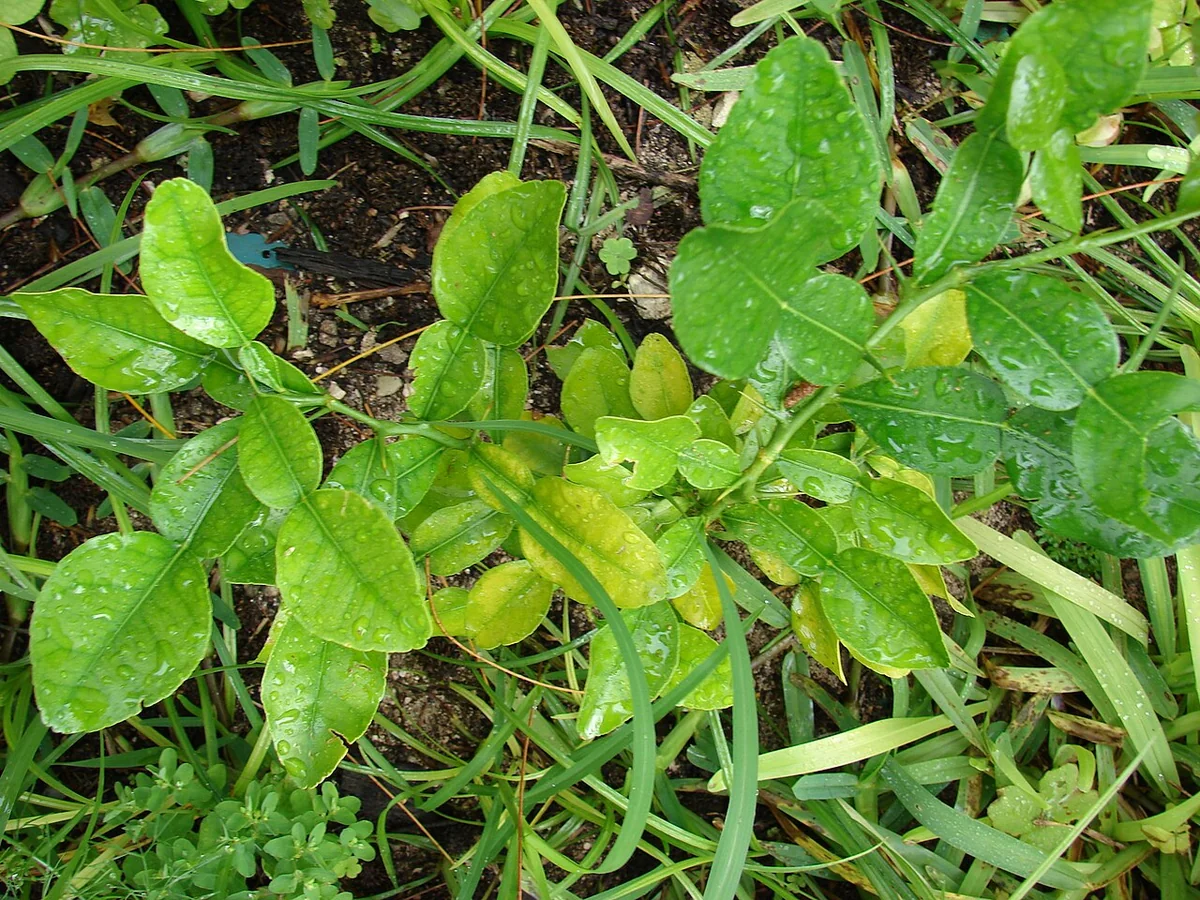
Recognise the makrut lime by its leaves
Makrut lime can be worth growing for its distinctive foliage even when an indoor tree never carries a useful crop. The apparent paired leaf shape comes from a broad winged leaf stalk adjoining the blade. It gives Citrus hystrix a different outline from many other citrus trees and helps explain why a branch can be ornamental without fruit. Its textured fruit, when present, should not be confused with the smooth lime commonly sold for juice. This is a warm climate citrus for a bright protected space, rather than an all purpose low light indoor tree.
The plant is associated with Southeast Asian cultivation and food traditions, and the name makrut is widely used in horticultural and culinary contexts. Older sources use other common names, but the botanical name provides a consistent reference when comparing labels. Do not assume the treatment history of a decorative nursery plant makes its leaves immediately suitable for cooking. If culinary use is part of the intention, discuss that purpose with the supplier. A labelled, appropriately produced tree gives a more reliable starting point than an ornamental citrus identified only from a picture of its leaves.
Make room for bright growth and thorns
Put the canopy where it receives strong usable daylight, with direct sun introduced gradually to foliage that has been raised under shade. A warm room with weak light can encourage long shoots without providing a satisfactory growing environment. Evaluate both summer and winter exposure through the actual glass. Blinds that remain closed during office hours can remove much of the benefit of a sunny orientation. A supplemental plant light may be appropriate when the available window cannot meet the tree's needs, but its coverage must reach the crown rather than only one small section of leaves.
Plan the tree's location around its branching and thorns. Young shoots can extend into a neighbouring work area before the owner notices that the useful floor space has changed. Leave a clear route to reach the root pot and avoid placing a thorny branch beside a child's face level or a narrow passage. If summer outdoor conditions are suitable, harden the plant gradually and protect it from strong wind. The move back into winter protection should happen before unsuitable cold arrives. A sunny sheltered outdoor position during the growing season is an opportunity, not permission to ignore a tender tree's winter requirements.
A root zone that drains without disappearing
Choose a freely draining container mix with enough moisture holding capacity for an actively leafy citrus. The pot should fit the roots it presently contains, leaving sensible space for growth without surrounding a small root ball with excessive wet material. Keep the previous planting depth and any graft union visible. Inspect the lower trunk for shoots arising from the rootstock. Those shoots can differ from the labelled canopy and should not automatically become additional main stems. A decorative outer planter needs to be removable or otherwise easy to drain; hidden standing water undermines an otherwise careful growing arrangement.
Feel within the occupied root ball before watering. The upper layer may dry quickly in a heated room while the lower mix stays wet, particularly when winter daylight is weak. When roots need water, wet the full occupied volume and allow excess to leave. Then check how the tree changes before choosing the next interval. A regularly harvested plant should not be kept continually saturated in an attempt to replace lost leaves. Growth depends on both the roots and a functioning canopy. Repeated complete drying is also unhelpful when tender new leaves are expanding.
Harvesting is a form of pruning
Taking a few leaves from an established tree is different from repeatedly stripping a small newly purchased specimen. Retain enough mature foliage to support new growth, and avoid concentrating every harvest on one small branch. If leaves are intended for food, use only material whose production and treatment history are suitable for that purpose. The same species can be grown ornamentally without being supplied as a culinary crop. A nursery label and the supplier's instructions should settle that question. Do not treat the attractive smell of a crushed leaf as evidence that any leaf from any retail plant is ready for cooking.
Use measured citrus nutrition while growth is active, allowing for fertilizer already present in fresh medium. A tree growing slowly through winter does not automatically require stronger feeding because fewer leaves are available to harvest. Examine the pattern of any yellowing before selecting a treatment, and check irrigation water, temperature and drainage. Avoid several overlapping products without a clear reason. When the plant resumes firm new growth in better light, adjust the routine to that activity. A stable supply of suitable conditions is more useful than repeatedly forcing a flush that the room cannot support.
Keep the canopy open to inspection
Prune deliberately for safe clearance and a balanced framework. Remove damaged shoots and confirmed rootstock growth, then consider how the remaining leafy branches share light. Thorns make blind shearing particularly awkward; see the structure before putting a hand into the crown. Check supports and ties where stems thicken. Small flowers and developing fruits can be enjoyed as part of the tree's growth, but indoor fruiting is not guaranteed. Do not remove useful leafy growth merely to expose every fruit for display. A manageable tree that can be inspected and watered comfortably has a better chance of remaining a useful household plant.
Look for scale insects on twigs and beneath the broad leaf stalks as well as on the leaf blades. Mites or other small pests may first show through fine stippling or changing foliage. Inspect a tree after an outdoor season before placing it close to other indoor plants. If leaf fall follows a move, compare light, root moisture and temperature rather than assuming that more water will solve it. A separate observation period for a new purchase helps reveal problems while access is easy. Keep cleaning gentle so that the foliage being inspected is not damaged in the process.
A useful gift only with consent
Makrut lime can suit a recipient who already enjoys Southeast Asian cooking and has a genuinely bright warm growing space. Its personal meaning might be the connection between a plant and a shared meal, rather than a claim of luck, healing or cultural authenticity. Discuss leaf use, thorns and winter accommodation before giving it. A shaded kitchen shelf may be convenient for cooking yet unsuitable for growing citrus. Include the supplier's food use information and a clear drainage arrangement. A well matched small tree is a more considerate gift than a larger plant that immediately creates a struggle over space and care.