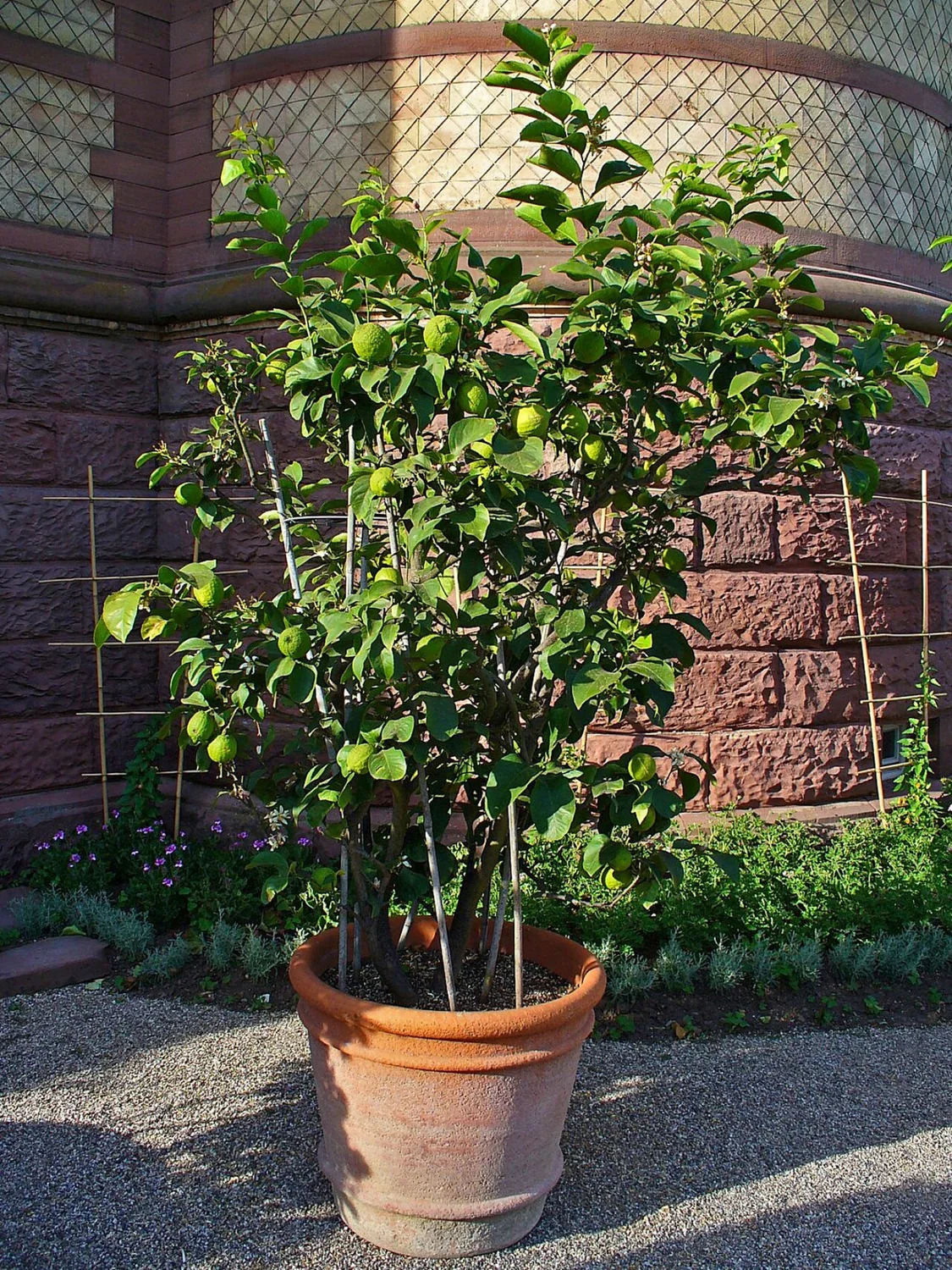
A fruit tree with a demanding address
A lemon tree can be a satisfying indoor specimen when its address is a sunny window, a well lit sunroom, or a conservatory. It is a poor choice for the decorative corner several steps behind an office desk. The glossy leaves and fragrant flowers are worth growing even when fruit production is modest. Begin with that distinction: keeping an attractive living tree and producing a useful crop are related projects, but they do not have identical light demands. A purchased tree covered in lemons represents the nursery's previous growing conditions, not a forecast for its first winter in your room.
The cultivated lemon is generally written Citrus limon or Citrus × limon. It belongs to the citrus family of crops with Asian ancestry and a long history of selection and movement by people. Mediterranean lemon terraces are important cultural landscapes, but they should not be mistaken for proof that the plant originated in Italy. Names such as Eureka and Lisbon identify cultivated selections within the lemon group. A nursery label should also identify whether the tree is grafted and, ideally, its rootstock. That information is more useful to a container owner than a vague promise that the tree will remain naturally miniature.
Make the window do real work
Give the crown direct light for a substantial part of the day where possible. In the Northern Hemisphere a clear south facing window is often useful, but roof overhangs, neighbouring buildings and tinted glazing can change the result. The top of a tall tree must not end up hidden behind a curtain pelmet. If a room offers only a short weak period of daylight, consider a properly positioned grow light before buying the plant. Turning the pot a little can balance growth, but rotation does not manufacture light that the room does not receive.
A summer outside can improve the growing opportunity, provided the move is gradual. Start under shelter with less direct sun than the final position and increase exposure as the leaves adjust. A tree that has spent winter behind glass can scorch when placed straight onto bright paving. Choose a stable container and leave space between the crown and a hot wall. Plan the return journey while the tree is still easy to carry. Prickly branches, a heavy wet root ball and a narrow doorway become a difficult combination if the move is left until a cold evening.
Roots before another watering
Use a draining container mix that retains enough moisture to wet the existing root ball without remaining a dense saturated mass. The pot needs real outlet holes; a sealed decorative planter should function only as an outer cover. Keep the root collar at its previous level and make a modest increase in pot size when roots justify it. The graft union should remain visible above the mix. A shoot emerging beneath that union may belong to the rootstock and can grow more strongly than the desired lemon canopy. Identify its origin before allowing it to become another main branch.
Water according to the root zone, not a fixed weekly appointment. Feel below the upper surface and learn the difference between the weight of a recently watered pot and one approaching its next drink. When water is needed, distribute it around the occupied root ball and allow runoff to escape. Then empty the saucer. A small splash beside the trunk can leave part of a dry nursery root ball untouched. In winter, reduced light can slow water use even while room heating makes the upper surface look dry very quickly.
Flowers and fruit without forcing
Support genuine new growth with an appropriate citrus fertilizer used at its labelled rate. Take account of any nutrients already present in fresh mix and avoid adding several products because one leaf has yellowed. Iron, magnesium, root damage and changing conditions can produce different symptoms; yellow is a description rather than a diagnosis. A salt crust at the rim or surface deserves a review of feeding and irrigation water. Correct light and root conditions come before increasing the fertilizer concentration. Soft growth produced in a dim room does not create a stronger framework for carrying fruit.
Lemon flowers may appear while older fruit remains on the branches. Indoors, gentle transfer of pollen with a small clean brush can assist when insects are absent, although successful pollination is only one part of fruit development. A young tree may shed many tiny fruits naturally. Do not try to save every fruit by making the root zone permanently wet. On a small recently purchased specimen, retaining fewer fruits can reduce the burden while it establishes. Harvest timing depends on the selection and conditions, so use the variety's expected appearance and maturity rather than one universal number of weeks.
Keep a usable framework
Prune with a reason: remove damaged growth, rootstock shoots and branches that make the tree impossible to place or inspect. Avoid repeatedly clipping all the newest tips simply to maintain a perfect ball, since the tree needs useful leafy growth. Support a branch carrying an unusually heavy fruit rather than letting it split against the pot rim. Check ties as stems thicken. A manageable crown should let light reach more than its outside shell and should leave enough clearance that people are not brushed by thorns while walking past the container.
Before returning a summer specimen indoors, examine leaf undersides, stems and branch junctions for scale, mites or other pests. Sticky surfaces can be a useful clue that sap feeding insects are present. Treat a newly arrived tree as a separate addition until its condition is understood. Sudden leaf loss after a move can reflect a changed environment, but it still calls for checking moisture and temperature. Do not place the root pot directly above a heater or against freezing glass. A more stable bright position usually makes the pattern easier to interpret.
A thoughtful gift for the right grower
As a design interpretation, a lemon tree can suggest freshness and a new beginning because it combines evergreen foliage with fruit associated with everyday cooking. That is a personal reading, not a promise of prosperity or a universal traditional meaning. It can suit a housewarming for someone with a sunny conservatory, or a retirement gift for a gardener who wants a seasonal project. Ask about the recipient's space first. Someone who travels frequently or has only a windowless workplace is receiving an obligation rather than an easy ornament, however attractive the gift looks on arrival.
Include the cultivar label, a drainage saucer and a short note describing the tree's current watering pattern when giving it away. Do not assume fruit from an ornamental retail plant is ready for culinary use without knowing how it was treated. Choose an accessible position where the future keeper can inspect the pot without moving furniture. During the first month, observe the window, root moisture and new growth before scheduling major pruning or repotting. A lemon that becomes a dependable leafy companion is a worthwhile result even if its first homegrown crop consists of only a few fruits.