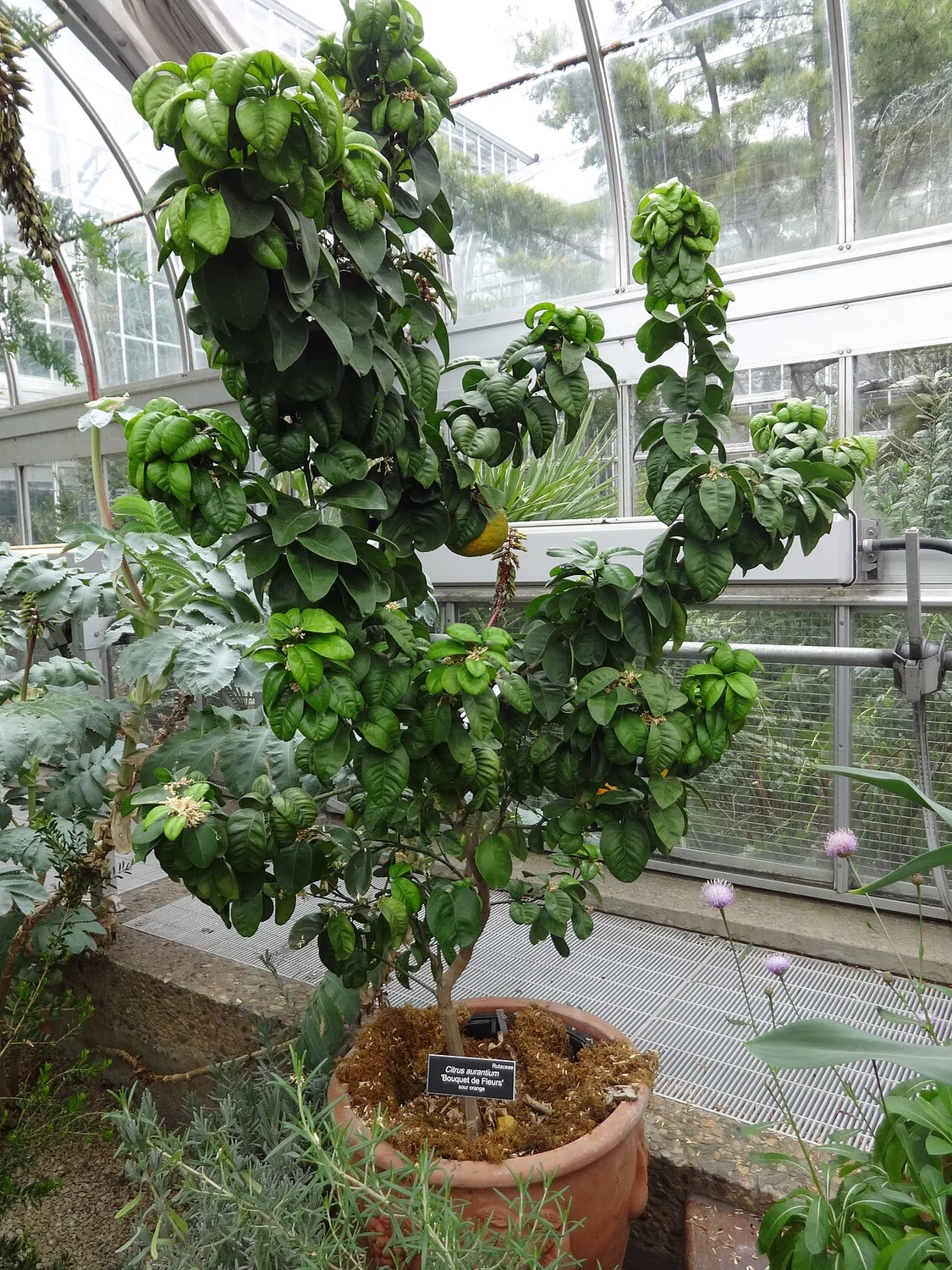
The orangery tree rather than the desk plant
Bitter orange has the formal outline many people imagine when they think of a citrus tree in a terracotta tub. Its dark leaves, scented blossom and orange fruit can suit a conservatory particularly well. That association should guide the choice of room: Citrus aurantium needs a bright growing environment, not merely enough floor space beside a sofa. A compact nursery selection may be manageable in a home, while an unrestricted tree can become much larger. Determine the selection and rootstock before buying a specimen already trained as a standard, since the shape produced at the nursery will still need maintenance.
The plant is also called sour orange or Seville orange, although the broad group contains selections with different characters. It is generally treated as a cultivated citrus hybrid with Asian ancestry. The name Seville records a strong association with cultivation and use in Spain, rather than a simple statement of botanical origin. Bitter orange also has a horticultural life as a rootstock for other citrus. Consequently, a shoot rising from below the graft of a different fruit tree may not produce the same fruit as the crown. Knowing which part of a tree is growing is an essential container skill.
Build an annual light plan
A cool bright glazed space can be a more workable winter position than a very warm dim living room. Give the leaves substantial daylight and protect the pot from cold surfaces and draughts. Measure conditions at canopy and root level rather than relying on the house thermostat. In a shared office, the weekend temperature and the duration of useful daylight deserve particular attention. Ordinary overhead lights cannot be counted on to sustain flowering citrus. If a supplemental plant light is necessary, include its mounting position and running schedule in the arrangement before placing a large formal specimen.
During suitable summer weather the tree can stand outdoors in a sunny sheltered place after acclimation. Begin in gentler exposure if it has been protected behind glass. Avoid letting a trained crown strike a wall or railing when the wind moves it. A standard tree creates leverage above its stem, so select a stable pot and inspect the stake and tie. A container trolley can make a seasonal move easier, provided it supports the full watered weight. Choose a route without steps if possible and anticipate the eventual crown width rather than planning around the smaller plant you purchased.
Keep roots and form in proportion
Plant in a porous container medium with enough body to support a woody tree. The previous collar level and graft union should remain visible. Moving a small root ball into a very large tub may seem generous, but unused wet material makes the next watering harder to judge. Repot only when roots, stability or deteriorating mix justify the work. Inspect the rootstock area for vigorous unwanted shoots. Remove confirmed suckers before they become a competing framework. Keep the drainage outlet accessible, particularly when a heavy tub stands on paving where roots or debris can eventually obstruct the holes.
Water when inspection shows that the occupied mix is beginning to need it. A clipped leafy crown still uses moisture, and a small root volume may dry faster than the formal appearance suggests. Apply a thorough watering, permit drainage, and remove runoff from a decorative cover. The next interval depends on sunshine, temperature and the tree's activity. Do not maintain the summer schedule automatically through a cool winter. If the canopy wilts above wet mix, pause to investigate root conditions. More water is not a universal response to a tree that looks temporarily less crisp than its neighbour.
Blossom and a realistic fruit load
The fragrant flowers are a significant part of bitter orange's appeal even when an indoor crop is small. A clean soft brush may help transfer pollen in a room without visiting insects. Many tiny fruits may still be shed as the tree adjusts its load. Support the tree with useful light and appropriately timed feeding rather than attempting to retain everything it initially sets. Use a citrus fertilizer as directed during growth and note applications. An already fertilized potting mix changes what needs adding. Pale foliage should lead to a diagnosis of the pattern before several mineral supplements are combined.
Pruning a standard involves more than clipping the outside into a ball. Check the central framework, remove damaged or crossing branches, and preserve enough light within the crown. Avoid shortening all potential flowering growth repeatedly. A heavy fruit close to the end of a thin branch can alter its balance, so observe the tree as the crop develops. Clean tools and a clear reason for each substantial cut make a better starting point than a rigid monthly haircut. Any rootstock growth below the selected canopy requires a different decision from a suitable shoot extending within it.
Inspection before a seasonal move
Scale insects can blend with woody stems and remain unnoticed while a tree is outside. Check branch crotches and leaf undersides before bringing the container near an established indoor collection. Sticky residue, pale stippling and webbing are different clues that deserve closer inspection. Support leaves gently while removing dust rather than pulling on their stalks. If leaves drop following relocation, compare the previous and present light, temperature and moisture. A stable suitable position gives the grower a clearer picture than repeated moves between rooms, each of which introduces another change to the plant's environment.
As a design reading, a bitter orange standard can suggest order and the cultivated garden through its structured trunk and evergreen crown. This is an interpretation of the plant's appearance, not a claim that it brings a particular outcome to a household. It may be a thoughtful anniversary or housewarming gift for someone who already keeps a conservatory collection. It is not an easy surprise for a person who has no bright winter accommodation. The cost of moving, lighting and maintaining a heavy tub should be understood by the recipient, not concealed beneath a decorative wrapping.
A gift that retains its identity
Give the exact nursery name, rootstock information if available, and the tree's recent care record with the plant. Bitter orange is different from a sweet dessert orange, so a label prevents both horticultural and culinary confusion. Before treating retail fruit as food, obtain the supplier's treatment history and intended use. A stable draining pot, room for thorny growth where present, and clear responsibility for watering are more useful than a promise of a large harvest. Aim first for a manageable annual cycle that keeps the framework firm and the roots functioning through both summer display and winter protection.