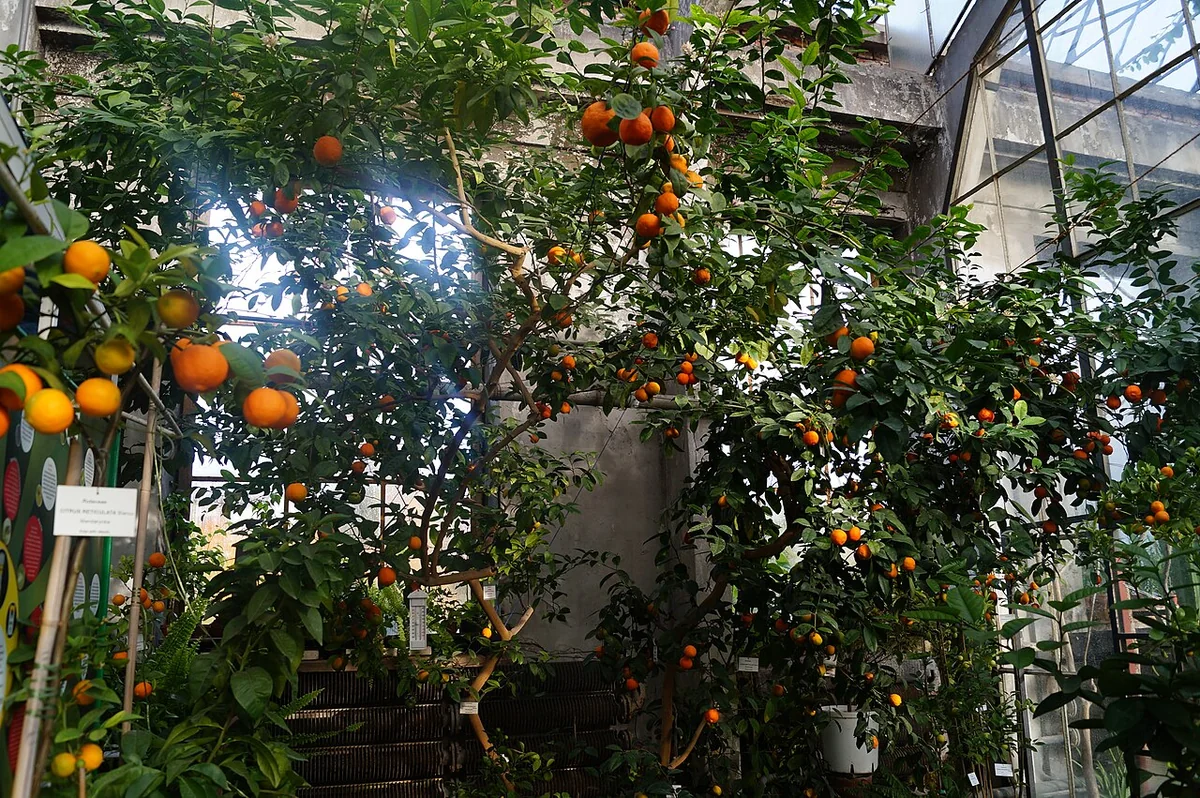
Understand the mandarin label
The appeal of a potted mandarin is the relationship between a small branching tree and the rounded fruit it may eventually carry. It can bring that orchard scale into a bright home without behaving like an undemanding foliage plant. Citrus reticulata belongs to a complex group of mandarins and related cultivated selections. A satsuma, clementine or named mandarin sold for container growing may have a more specific botanical or horticultural label than the broad name on this page. Read it carefully, because mature vigour, ripening season and pollination behaviour can differ considerably between selections.
Mandarin ancestry is Asian, while the familiar commercial fruits reflect many generations of cultivation and crossing. Their long association with food and seasonal celebration does not mean every orange coloured retail tree is a mandarin. Calamondins, for example, produce much smaller sour fruits and have a different parentage. If the intention is to harvest easy peeling dessert fruit, buy a correctly named, vegetatively propagated tree from a nursery that can explain its rootstock. A seed saved from a favourite fruit can be an interesting experiment, but it is not a reliable route to a compact tree carrying that same fruit soon.
A crown that can see the sky
Assess the future position before judging the nursery specimen. A mandarin needs considerably more useful daylight for flowering and fruit development than a shade tolerant office tree needs for maintaining leaves. Put the crown near a sunny window, not behind another tall plant. Check where the sun falls through the whole day and through different seasons. If the best room is too dim during winter, a suitable grow light may be part of the permanent arrangement. The purchase decision should include that equipment and its placement rather than assuming normal ceiling lights will be sufficient.
A sheltered summer position outdoors can provide valuable light, but the foliage must adjust to it. Begin with protection from strong direct exposure and move toward the final site gradually. A fruiting tree needs a stable base where wind cannot rock the root ball or pull a loaded branch against a rail. Keep the pot away from dark heat absorbing surfaces where possible. When autumn approaches, allow time to inspect for pests and adjust the plant back to its indoor position before cold weather forces an abrupt move. Fruit already present is not a reason to leave it exposed to unsuitable temperatures.
Balance the root ball and canopy
A grafted mandarin has a selected crown supported by a different root system. Find the union near the lower trunk and keep it above the container mix. If a vigorous shoot starts below it, compare its leaves and point of origin with the main canopy before treating it as desirable branching. Use a porous citrus or similar container mix with dependable drainage throughout. A slightly larger pot may help an established root ball, but surrounding a small tree with a very large mass of wet material can make moisture management harder rather than improving its prospects.
The correct watering interval changes as the tree produces new leaves, carries fruit, moves outdoors or spends a dimmer winter inside. Examine moisture beneath the surface and water the full occupied root zone when it begins to need replenishment. Let excess drain, then remove it from the outer container. Fruit swelling does not justify leaving roots continuously submerged. Conversely, repeated complete drying can interrupt growth and contribute to fruit loss. If the leaves wilt while the mix remains wet, investigate the root environment instead of assuming that another drink will correct the appearance.
Treat a crop as a possible bonus
Flowering is not the end of the work. A mandarin must support the young fruit through many changes in light and moisture, and a small indoor tree may drop much of its initial set. Whether another variety improves pollination depends on the selection, so ask the supplier instead of buying a second tree automatically. A clean soft brush can transfer pollen between open flowers in an insect free room. Keep flowers accessible and avoid wetting them simply to raise humidity. A modest stable crop is more realistic than trying to reproduce a commercial orchard's yield in a living room.
Feed while the tree is making useful growth, choosing a citrus product that supplies the required nutrients without exceeding its instructions. A large fertilizer dose cannot compensate for insufficient light or poorly aerated roots. Watch the newest leaves and the pattern of any yellowing before changing products. Keep written notes on applications, especially when more than one person helps with watering. This avoids the common problem of two well intentioned people feeding the same tree. Growth, flowering and fruit load should be judged together rather than using the darkest possible leaf colour as the only measure of success.
Pruning a small fruiting tree
Maintain an open enough framework to reach the interior and inspect fruit stalks. Remove broken growth and rootstock shoots, and shorten an overextended branch thoughtfully rather than shearing the whole crown every few weeks. A fruiting branch can bend further as its crop develops, so check its clearance from glass and furniture. Take out an unsuitable shoot while it is still small whenever possible. If the pot and crown have become seriously unbalanced, first decide what size can actually fit the winter position. Repeated emergency cuts will not make an oversized selection an ideal indoor tree.
Scale insects and mites can be overlooked among glossy leaves until a summer tree comes indoors. Inspect branch crotches and leaf undersides before placing it beside an established collection. Fine webbing, sticky residue or scattered pale stippling provide different clues and should not all be called a watering problem. Wipe accessible leaves gently when dusty, supporting them rather than pulling on the twig. Major leaf fall following a change of position warrants a review of temperature, light and soil moisture together. Preserve a stable routine while checking the cause instead of moving the tree to a different room every few days.
Giving a mandarin with clear expectations
A mandarin can be offered as a seasonal or family gift when the recipient already enjoys citrus and has a genuinely sunny growing space. Associations with celebration vary between communities, households and occasions; do not attach a universal promise of luck to the plant. A safer personal message is that the gift is intended as a small orchard project to share over time. The most useful accompanying information is the cultivar name and an honest description of its light needs. A beautiful tree is not a suitable surprise for someone whose only available position is a dim reception desk.
Think about the recipient's daily life as carefully as the design of the gift pot. A heavy container that cannot be lifted for drainage creates practical problems, while a thorny branch at a child's eye level can limit its placement. Confirm the treatment history before encouraging anyone to eat fruit that came on a retail ornamental plant. For the first growing season, aim to establish a workable annual movement between bright indoor protection and suitable outdoor conditions if available. An accurately labelled mandarin with firm new growth and manageable branches is a stronger foundation than a heavily laden tree kept in the wrong room.