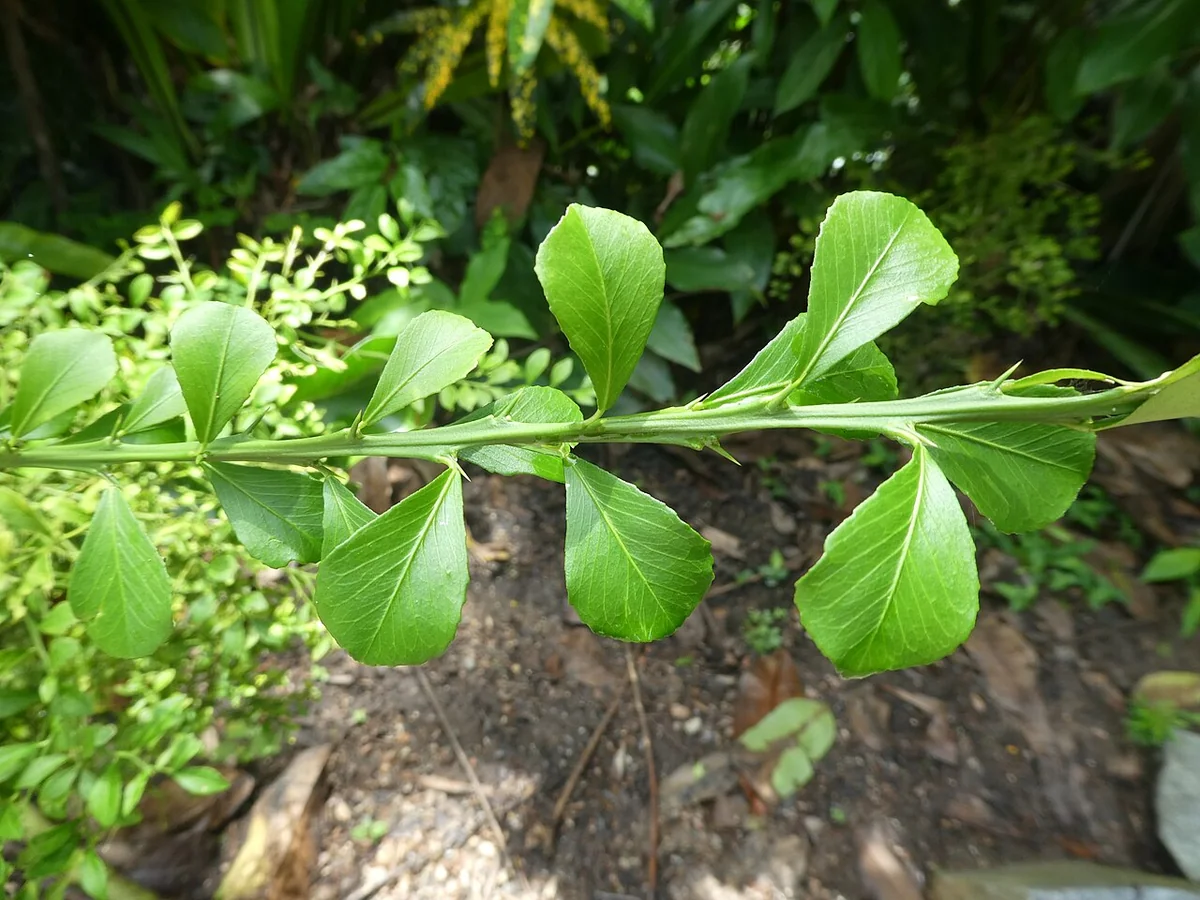
A small leaved citrus with a rainforest background
Finger lime has a distinctive character among container citrus: fine branches, small leaves and elongated fruit can give a young tree a lighter outline than a broad leaved lemon. Its many thorns and eventual vigour still require serious planning. Citrus australasica is also called Microcitrus australasica in older horticultural references. The fruit's separate juice vesicles have attracted culinary interest, but a fashionable ingredient does not make the living plant an easy indoor ornament. A bright conservatory or an appropriately equipped growing area offers a more realistic setting than a desk lit mainly by ordinary office lamps.
The species comes from eastern Australian rainforest regions, and cultivated forms can differ in fruit colour and internal appearance. That origin is a reason to examine its own requirements instead of giving it a stereotyped desert treatment simply because it is a citrus. Plants sold under a cultivar name or on a particular rootstock may differ substantially in vigour. The University of California's collection records illustrate how rootstock can affect tree size. Preserve the supplier's label rather than assuming that the small leaves guarantee a permanently tiny specimen. A seedling is not a predictable copy of a selected fruiting cultivar.
Light without an abrupt exposure change
Provide strong useful daylight, with gentle acclimation before intense direct sun. A plant raised under nursery protection should not be moved straight into a hot glass corner or onto exposed summer paving. Watch the newest shoots and leaf condition as exposure changes. A conservatory may offer enough light but become very hot at midday, so ventilation and shade control can be part of the arrangement. Avoid placing the tree behind a larger canopy that gradually takes its growing light. Fine foliage can be visually deceptive: the crown still needs energy to establish branches, flower and carry fruit.
Plan the branch clearance before choosing a floor position. Finger lime's thorny growth makes a narrow route beside a chair or doorway inconvenient, particularly when the keeper needs access to the root pot. A sheltered outdoor season may help where the climate is suitable, but the container needs stability and a staged introduction. Keep the return to protected conditions in mind as the tree grows. A plant that cannot pass through its winter doorway without damage has outgrown the practical arrangement, even if there is technically more floor space available on the balcony in summer.
Rootstock and the pot are part of its identity
A grafted finger lime is a combination of the selected fruiting crown and another citrus root system. Locate the graft and keep it above the medium. A vigorous shoot originating below it should be identified before it becomes a competing branch. Use a porous container mix that retains moderate moisture without remaining saturated. Repot proportionately when the roots and medium indicate a need, keeping the established planting level. An oversized decorative tub does not by itself create a better fruiting tree. It can leave too much unused wet material around the small root ball that is actually doing the work.
Inspect moisture beneath the surface and water the occupied roots thoroughly when they need replenishment. Fine twigs and leaves can lose water quickly in warm dry air, but that does not mean the pot should stand permanently in runoff. Let the excess escape and remove it from any outer cover. The next interval will change with leaf activity, sunlight and season. Compare the centre of the original nursery root ball with newer surrounding mix if they seem to behave differently. A tree that wilts above persistently wet material requires a root and temperature review rather than an automatic extra drink.
Manage the expectation of a specialist fruit
Flowering and fruit development depend on the cultivar and growing conditions, and an indoor crop can be irregular. Insect access outdoors may assist pollination; in a protected room, careful transfer with a clean small brush is an option when flowers are open. Retaining a huge initial set is not the aim on a small establishing tree. The characteristic elongated fruit can vary in external and internal colour, so learn the expected maturity of the specific selection. Do not assume that a fruit should match a photograph of another named cultivar before it can be considered ripe.
Use appropriate citrus nutrition to support active growth without combining several concentrated products. Account for fertilizer included in fresh medium, and keep a record of applications if the tree is part of a shared collection. Yellowing needs to be understood through its pattern and the root environment before extra minerals are added. Good growth is not simply the largest possible flush of soft shoots. A branch framework that receives light, remains accessible and carries a manageable load is more useful in a conservatory than unrestrained growth that must be severely cut back every time the plant is moved.
Maintenance among the thorns
See the branch structure before reaching into it. Remove damaged wood and confirmed rootstock shoots, then shorten or guide selected growth to keep a workable crown. Avoid indiscriminate shearing that hides the interior behind an increasingly dense outer layer. Check fruiting twigs for rubbing and inspect ties around the main stem as it thickens. When moving the pot, protect both the plant and the people carrying it from the thorny crown. A rolling support may help with a heavy tub, but it should not make the tree unstable or allow it to roll into a walkway.
Scale insects, mites and other citrus pests can be overlooked on fine twigs. Examine new additions separately and check a summer specimen before bringing it indoors beside established plants. Review sticky residue, damaged new growth or pale speckling closely rather than treating all changes as a nutrient shortage. Maintain enough ventilation around the canopy to inspect it, especially in a crowded warm conservatory. If a move is followed by leaf loss, compare light, moisture and temperature. Change one justified condition at a time where practical so the cause remains visible rather than being buried beneath several simultaneous interventions.
A collector's gift rather than a fashionable accessory
Finger lime can suit a keen citrus grower or a cook who already has the facilities and interest for a specialist plant. Its personal meaning might be curiosity about plant diversity or a connection to Australian horticulture, rather than a promised effect on luck or wellbeing. Discuss thorns, available light and seasonal protection before choosing it as a gift. Obtain the nursery's food use and treatment information before encouraging the recipient to harvest retail fruit. An accurately labelled modest tree, with its rootstock and cultivar recorded, is a more useful present than an oversized specimen selected only because the ingredient is fashionable.