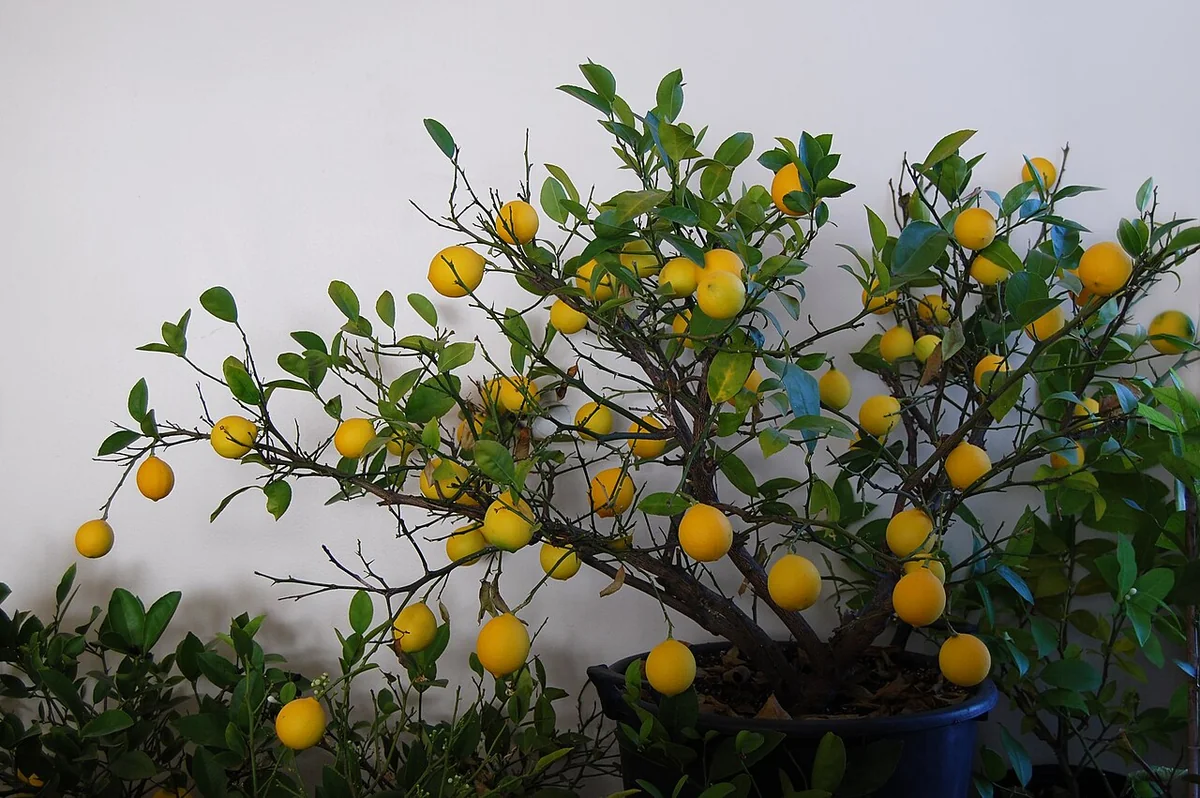
Choose the actual Meyer lemon
Meyer lemon is popular in container collections because its fruit and growth habit can be more manageable than some vigorous standard lemons. That reputation should be paired with the correct nursery identity. Citrus meyeri is usually written Citrus × meyeri to show its hybrid status, and plants sold as Improved Meyer have a particular propagation history. A generic lemon with a Meyer label added by a retailer is not an equally informative purchase. Ask about the selection and rootstock, then assess whether your home offers the strong light and seasonal handling that a productive small citrus requires.
The Meyer name is connected with its introduction from cultivation in China by the plant explorer Frank Meyer in the early twentieth century. It does not identify a wild lemon native to a modern American growing district. The crop has a complex citrus ancestry, and its fruits differ from familiar market lemons in flavour and appearance. Those differences are interesting reasons to grow it, but they are not a promise of effortless indoor fruiting. A tree that arrived heavily laden has benefited from its nursery's conditions; its next crop depends on the environment you can provide after purchase.
A bright window with a yearly plan
Give the canopy ample daylight and direct sun where possible, with a gradual introduction when the tree has been held under shade. Measure the actual exposure rather than relying on the name of the room. A south facing apartment window shaded by another building may offer less useful light than a clear east or west window elsewhere. If winter conditions are inadequate, plan suitable supplementary lighting. An ordinary warm office several metres from glass is not the same environment as a conservatory. A smaller crop or an interval without fruit is more realistic than expecting the nursery display to continue unchanged.
Where summers permit, a protected outdoor position can provide a valuable growing season. Acclimate the leaves before strong sunshine and guard against wind rocking the container. The return indoors should allow time for inspection and adjustment before cold weather becomes urgent. A container trolley can help, but it must be stable beneath the tree's full watered weight. Keep the route and final crown width in mind as shoots extend. It is easier to maintain a tree that fits both its summer and winter positions than to make severe reductions each autumn just to push it through a doorway.
Read the root ball before repotting
Use an open citrus or comparable mix and a container with functioning drainage. Keep the established collar level and any graft union above the surface. Repot when inspection shows that roots or deteriorating medium justify a change, not merely because flowers have appeared. A large empty ring of wet mix around a small root ball can make care more difficult. Identify strong shoots from beneath the graft rather than treating every vigorous branch as part of the Meyer canopy. A decorative outer pot is fine only if excess water can be removed promptly after each thorough drink.
Learn the changing weight and moisture of the occupied root zone. A tree in full summer growth may use water rapidly, while the same plant in dim winter light can leave its lower mix wet for a long time. Water evenly when needed, allow runoff to escape and check the next interval afresh. Do not maintain permanent saturation to prevent fruit drop. If the canopy wilts above wet soil, review drainage, temperature and the condition of the roots. Conversely, a dry central nursery root ball may need careful even wetting rather than another small splash around its outside edge.
Flowers, fruit and the scale of the plant
Meyer lemons may flower while older fruit remains on the branches, making the tree especially appealing to watch. In a room without visiting insects, gentle pollen transfer with a small clean brush may help. Some tiny fruits will still be shed, particularly after a move or on a small plant. A modest retained crop can be more appropriate than supporting every initial fruit. Observe whether a loaded twig bends into the window or rests against a hard rim. Fruit development is a whole tree project, not a process controlled solely by the amount of fertilizer put into the pot.
Feed useful active growth with a citrus fertilizer at its stated rate, remembering that fresh medium may already contain nutrients. Pale foliage has several possible explanations, so compare younger and older leaves and examine the root environment before adding separate supplements. Keep a record when more than one person cares for the plant. Stronger feeding in a dark season can create weak shoots or salt accumulation without improving the crop. Prune for a balanced reachable structure and remove confirmed rootstock growth. Repeatedly shearing the entire crown into a tight ball is different from maintaining a framework that can carry useful leaves and flowers.
Keep changes small enough to understand
A Meyer lemon can shed leaves after a shift from bright outdoor conditions to a protected winter room. That change deserves observation, not an immediate assumption that the plant is beyond recovery. Check root moisture and the actual temperature beside the glass, and keep it away from direct radiator heat. Inspect leaf undersides, stems and branch junctions for scale or mites before bringing it near other houseplants. Sticky residues and pale speckling are clues to investigate. Avoid simultaneously changing pot size, feeding, pruning and location, since several interventions together obscure the reason for the tree's response.
A Meyer lemon can be an engaging housewarming or anniversary gift for a person who already wants a sunny window project. Its personal symbolism might be the pleasure of a small harvest or the patience involved in tending a living tree; neither interpretation is a factual guarantee of future yield or prosperity. Ask about the recipient's growing space and ability to move the pot seasonally. A fully grown specimen is not automatically more generous if it overwhelms their only suitable window. A correctly identified smaller plant can be easier to establish and more rewarding to understand over time.
A handover that helps the next keeper
Keep the propagation and nursery labels with the tree, and provide the recent watering and feeding history rather than a rigid instruction to water every Sunday. Confirm the treatment history before using fruit supplied on an ornamental retail plant as food. Choose a pot and saucer that can be handled safely, leaving the root system accessible for inspection. During the first season, judge success through firm new leaves, a workable annual position and a balanced canopy. Any fruit that follows is an additional benefit. The lasting attraction of Meyer lemon is the complete growing cycle, not a photograph of one unusually heavy crop.