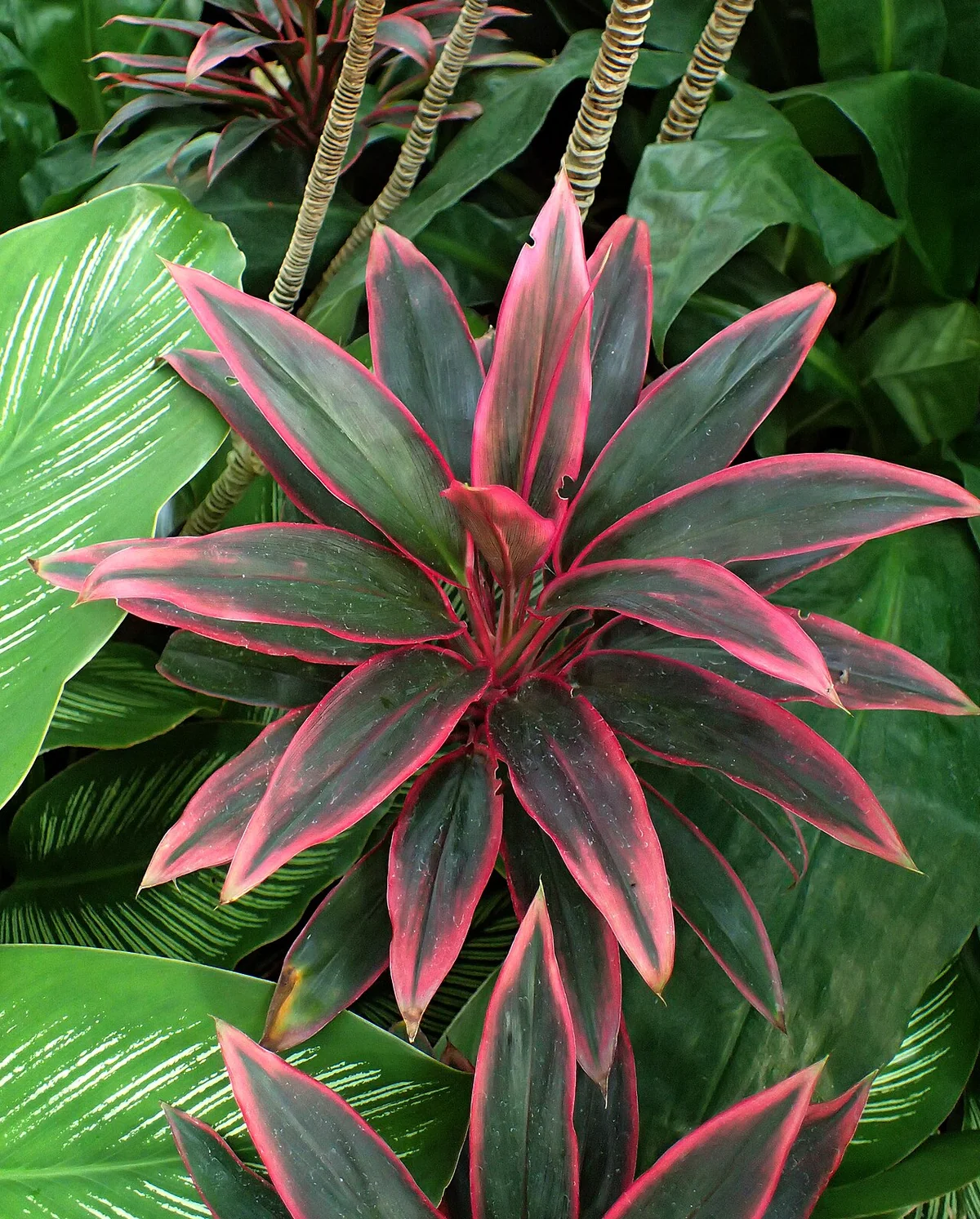
Ti Foliage and Its Pacific Context
Ti plant brings broad, glossy leaves and a range of cultivated colors to an indoor display. Cordyline fruticosa can carry green, burgundy, pink, or mixed foliage, depending on the named form. Its leaves gather along upright stems that may eventually create a small tree-like outline, though a young pot is often much bushier. It belongs to the asparagus family and is not a true palm. That identity matters when deciding how to prune, propagate, and describe it. A bright-leaved nursery specimen is best chosen with an understanding of both its future stem structure and the light needed to maintain its color.
Its broader origins lie in tropical Asia, Australasia, and the western Pacific, while people carried cultivated ti across the Pacific. Hawaiian institutions document its arrival with Polynesian voyagers and its importance in cultural practice. The leaves have been used for lei and other purposes, and protective associations belong to particular Hawaiian traditions. Those are cultural beliefs and histories to describe respectfully, not a horticultural guarantee that a purchased pot will ward off harm. A modern variegated cultivar is also not automatically equivalent to every green-leaved form used traditionally. Keep that distinction clear when connecting a gift plant with a Pacific story.
Light and Moisture for Living Color
For indoor cultivation, bright filtered light is a sensible starting point. Many strongly colored forms lose some of their appeal in a dim office, while harsh sudden direct sun can scorch leaves raised under shade. A spacious bright room near a window is more realistic than a dark reception desk. Examine the color and shape of newly emerging foliage after the plant has settled. Those leaves reflect current conditions more closely than the original nursery canopy. Keep the pot away from heating outlets and cold drafts, both of which can produce unattractive margins even where the overall room seems comfortable.
Water regularly during active growth but allow a modest surface drying interval. The root ball should be moist and aerated rather than permanently sodden. A small decorative cover without a working outlet makes it difficult to achieve that balance. Use a draining inner pot if necessary and check for collected surplus after watering. In a reduced-light winter period, demand falls even if the room remains warm. Avoid adding water simply because the broad leaves look tropical. Inspect the medium and compare the container's weight. A recently repotted plant may contain two different textures whose wetting and drying patterns need to be learned separately.
Stems, Humidity, and Thoughtful Renewal
Choose a fertile open container mix with enough organic material to retain useful moisture. Size the pot to the roots and make a moderate increase when repotting is warranted. Burying stems more deeply to conceal an exposed base can create problems around living tissue. A cane that has become soft deserves inspection rather than a decorative top layer hiding it. Maintain access to the lower stems and soil surface for cleaning and pest checks. If several young plants share a container, allow enough room for individual crowns to receive light instead of compressing them into a dense bundle tied to preserve a temporary shop shape.
Ti can be shaped by selective pruning when conditions support new shoots. An overlong sound stem may be shortened, with regrowth developing from viable points below the cut. The removed material can sometimes be propagated, but freshly cut cane sections are not already established plants and need appropriate moisture and warmth. Keep enough healthy growth on the original display to support recovery. Do not combine a severe reduction with a move into a dark winter position and expect immediate leafy branching. The bare interval is part of the decision, so prune with a realistic plan for how the plant will look while it recovers.
Humidity, Water Quality, and Colorful Crown Care
Humidity and water quality can influence leaf margins. A humidifier may improve conditions in a very dry room, while a spray bottle used occasionally has a limited effect on the surrounding air. Cordylines may also react to fluoride and accumulated salts. If browning persists, review the water supply alongside root condition and the watering rhythm rather than selecting one explanation from a list. Feed moderately during active growth according to the product label. A richer dose will not make a shaded plant retain its brightest pattern, and old scorched areas do not recover their former color after the growing position is corrected.
Wipe dust from supported leaves and check both surfaces for mites, scale, and mealybugs. Dense leaf bases and stem junctions can shelter insects beyond an ordinary glance at the colorful crown. Isolate an affected plant while identifying a suitable response. Also watch for physical damage where large leaves rub against blinds or a nearby wall. A single torn leaf is not the same as a pattern spreading through new growth. Keep a record of major changes in care so that dropping older leaves can be interpreted in context. A stem naturally becoming more exposed over time does not necessarily require urgent repotting or stronger fertilizer.
Respectful Meaning and Practical Gift Choices
As a gift, ti can carry a personal message of welcome or a connection with Pacific heritage when that context is relevant to the recipient. Refer to documented traditions respectfully and avoid claiming to confer a blessing on someone else's behalf. Practical suitability remains essential: the plant needs brightness, warmth, and a caretaker willing to monitor moisture. Cordyline can be harmful to pets if chewed, so discuss animal access before delivery. Include the botanical name and cultivar when known. A thoughtful card can distinguish a chosen modern message from the cultural history of green ti leaves without turning either into a promise of protection or good fortune.
A lasting ti display may gradually reveal more stem as the crowns extend. That change can be attractive when the plant has room and appropriate light, rather than being forced to remain a dense juvenile shrub. Keep the roots accessible, prune for a considered reason, and use new foliage as the main evidence of current conditions. If the office cannot supply enough brightness for a strongly variegated form, choose a better setting or another plant. Cordyline fruticosa is most rewarding when its living color, architectural growth, and Pacific context are all appreciated with care, rather than reduced to a decorative name and an unsupported promise.